


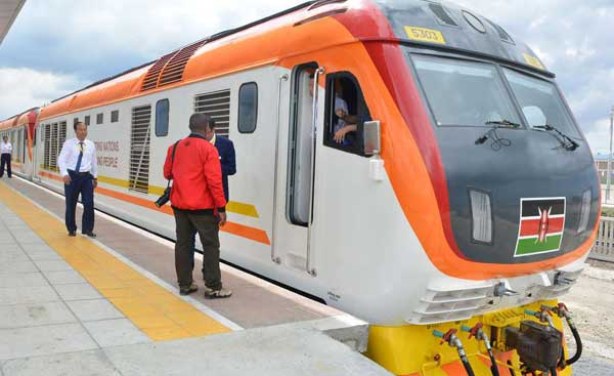
Kenya Railways has sounded an urgent alarm over a growing number of motorists obstructing trains at railway level crossings, a trend the corporation says has triggered preventable accidents across the Metre Gauge Railway network. The institution has warned that it will intensify enforcement operations, prosecute offenders, and hold road users liable for damages, injuries, or loss of life resulting from unlawful behaviour.
The concerns follow several recent incidents where drivers reportedly attempted to outrun approaching trains or ignored established safety protocols at designated crossing points. According to the agency, such actions have put motorists, pedestrians, rail passengers, and train crews in immediate danger, undermining ongoing national efforts to strengthen transport safety.
In a public notice issued on December 1, 2025, Managing Director of Kenya Railways reaffirmed the legal obligations that govern interactions between road users and rail operations. The notice emphasised that obstructing a moving train or refusing to give way constitutes a direct violation of safety regulations that apply across the national rail system.
“Any road user who interferes with the safe movement of trains is liable to prosecution, penalties, and full responsibility for any resulting damage, injury, or loss of life,” the statement reads. The corporation urged the public to exercise “utmost caution” and to comply with all safety instructions at level crossings.
The growing concern comes at a time when rail transport has been gaining renewed significance in Kenya’s mobility landscape. The government has continued to revive and expand the Metre Gauge Railway network to enhance commuter and cargo movement, particularly along the Nairobi–Nanyuki, Nairobi–Kisumu, and Mombasa–Nairobi corridors. Increased train frequency across several populated routes has, however, heightened the need for stricter adherence to safety rules.
Transport safety experts note that level crossing accidents remain a persistent challenge globally, especially in places where road traffic intersects with active railway lines. In Kenya, the majority of level crossings on the Metre Gauge system are either manually controlled by trained attendants or marked with appropriate signage, giving road users clear instructions on when to stop. Despite this, some motorists reportedly ignore signals, attempt to bypass barriers, or misjudge the speed and distance of oncoming trains.
A senior official within the corporation, who spoke on condition of anonymity because enforcement measures are ongoing, said the agency is now reviewing additional interventions, including collaboration with county traffic police units and automated monitoring at high-risk crossing points. The official said that although most rail operations are signalled and coordinated, a single act of negligence by a driver can lead to catastrophic consequences.
“Trains cannot brake instantly. Once a motorist decides to cross illegally, the train crew has limited options,” the official explained. “We want to prevent avoidable injuries and property loss. That is why enforcement will be intensified.”
Kenya Railways has in the past partnered with the National Transport and Safety Authority (NTSA) to conduct awareness campaigns, particularly in regions where accidents have historically been more frequent. These campaigns often target public service vehicle drivers, boda boda operators, and residents living near active rail lines. The latest warning signals a shift from purely sensitisation efforts to a more stringent enforcement approach.
Legal experts point out that obstructing railway operations attracts penalties under Kenyan law, including fines and, in more serious cases, possible jail terms. Offending motorists may also face civil liability for the costs associated with repairing damaged rail infrastructure or compensating victims of accidents.
Railway infrastructure damage has wider economic implications. Delays caused by accidents disrupt cargo movement, affect commuter schedules, and increase operational costs for the state corporation. In the case of cargo services, a single obstruction can disrupt supply chains and result in costly delays for businesses relying on timely deliveries.
The corporation’s notice emphasised personal responsibility, urging both motorists and pedestrians to treat rail crossings with caution and follow instructions issued by crossing attendants or automated signals. Kenya Railways noted that in many incidents, motorists misjudged the speed of oncoming trains, which are often faster and heavier than they appear from a distance.
Commuter services around Nairobi have recorded notable growth in recent years, especially on the Makadara, Pipeline, Syokimau, and Ruiru routes. As passenger numbers increase, the frequency of scheduled trips has risen, placing greater importance on safe interaction between trains and road traffic. The agency has also expanded freight operations on the revived routes, increasing train activity along sections that previously saw minimal use.
In addition to enforcement, Kenya Railways says it will continue its public sensitisation efforts. The corporation maintains multiple communication channels, including telephone hotlines and online platforms, allowing members of the public to report dangerous behaviour at crossings or raise safety concerns. Authorities are also considering incorporating additional signage and barriers at crossings with higher accident risk.
Despite the warnings, some road users continue to underestimate the risks associated with level crossings. Safety analysts attribute this to a combination of impatience, lack of awareness, and poor road discipline. In congested urban areas, some drivers are tempted to make illegal manoeuvres to save time, especially during peak traffic hours. The rising use of motorcycles as a preferred mode of transport has also introduced new safety concerns, as riders often weave through vehicles to bypass queues near crossing points.
The renewed safety warning arrives as Kenya intensifies investments in both the Metre Gauge and Standard Gauge systems. The government considers rail transport a key component of its long-term logistics strategy, aimed at reducing road congestion, lowering freight costs, and enhancing efficiency across the transport sector. Ensuring safety at level crossings is therefore seen as essential to sustaining public confidence in rail transport.
Kenya Railways urged all Kenyans to prioritise safety, avoid risky shortcuts, and obey instructions when approaching any crossing along the network. The corporation reaffirmed its commitment to supporting safe and reliable services, noting that the cooperation of the public is a central part of that goal.
The agency encouraged members of the public seeking further information to reach out through its official communication channels, including customer service lines and its website. The corporation reiterated that enforcement actions will continue, and offenders will be held accountable under the law.