


Community representatives from Kenya’s mineral-rich regions have called on the Ministry of Mining and Blue Economy and the National Environmental Management Authority (NEMA) to step up oversight and fully implement the Mining Act 2016, accusing mining companies of repeated violations of human rights, environmental standards, and local land laws.
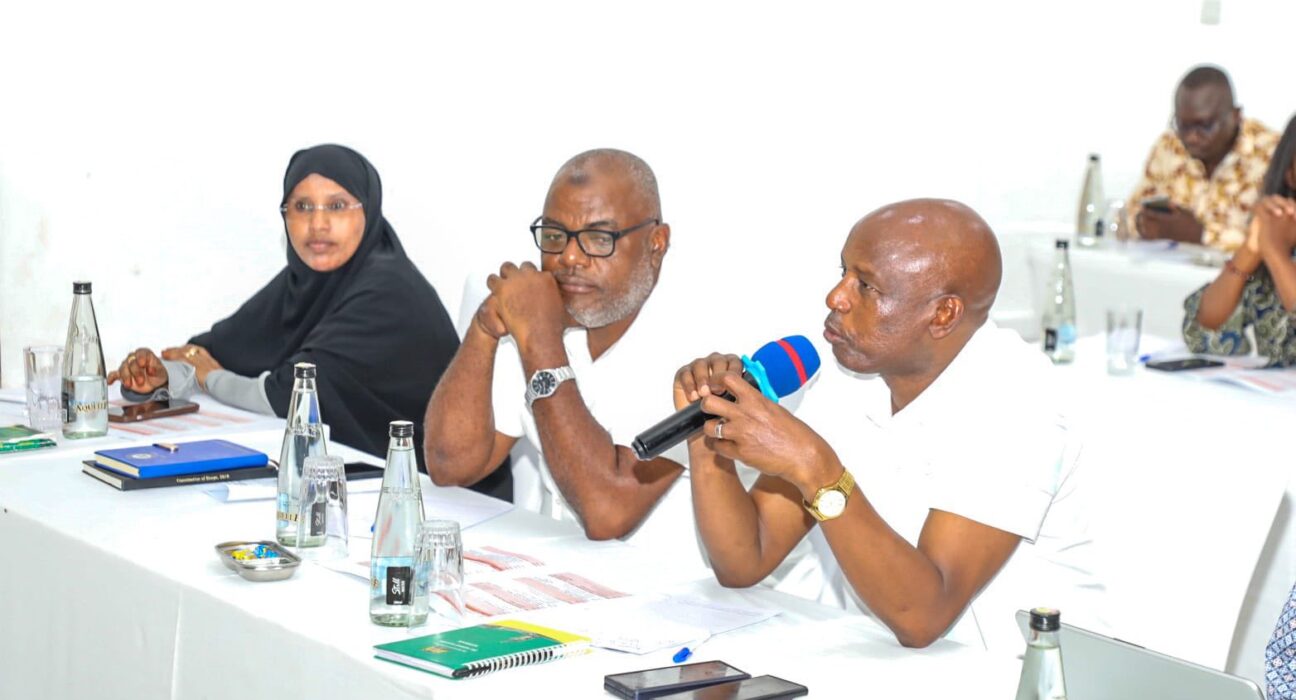
The call was made during a joint session of the National Assembly’s Departmental Committee on Environment, Forestry and Mining, chaired by Hon. Charles Kamuren, and the Senate Standing Committee on Lands, Environment and Natural Resources, led by Hon. Mohammed Faki. Delegates from Siaya, Vihiga, Kakamega, Kajiado, Kwale, and Kilifi counties highlighted alleged misconduct by mining operators and lapses in enforcement by government agencies.
Representatives from Siaya and Vihiga counties, Mr. Leonard Mbidhi and Mr. Silas Asitiba, claimed that local administrations and security agencies were complicit in shielding a regional gold mining company accused of land exploitation and failing to comply with environmental guidelines.
“In Siaya, Vihiga, and Kakamega gold mines, there is nothing like human rights adherence. We have petitioned county governments, NEMA, and the local administration, but the criminal activities keep resurfacing,” Mr. Mbidhi said.
Mr. Asitiba added, “Artisan miners, landowners, the church, and other local groups from Vihiga have sent me here, accusing this gold mining company of interfering with our land without consent from locals who own these parcels. We are requesting that land compensation reflect both current land value and the value of minerals beneath it.”
Communities from Kajiado and Kambe-Ribe in Kilifi counties also voiced grievances regarding land displacement, pollution, and the lack of benefits from mining activities. Mr. Roda Parantai and Ms. Neema Mwadena accused NEMA management of ignoring complaints even after prior assessments and visits, including one led by Cabinet Secretary Hassan Ali Joho last year.
“In Magadi and Isinya, families have been displaced due to water and air pollution. Roads are closed, local employment is minimal, and our attempts at demonstrations have produced no results. It was better under previous regimes,” the representatives told the Committees.
The complaints focused on key issues, including inadequate land compensation, human rights violations, environmental degradation, and weak regulatory enforcement. Communities also called for greater transparency in licensing and mining operations to ensure local participation and benefit-sharing.
In response, NEMA Director-General Mr. Mamo Boru Mamo assured the Committees that the authority is committed to addressing the concerns. “Hon. Members, I thank all community representatives who have spoken here. Their concerns are genuine and need to be addressed,” he said.
Regarding Shanta Gold operations in Siaya, Kakamega, and Vihiga, the DG confirmed that a public hearing is scheduled for December 24 in Ramula, Siaya, following earlier inspections and approvals by government agencies. He emphasised that licenses may be revoked if consultations were not properly conducted.
On Kambe-Ribe in Kilifi County, Mr. Mamo said NEMA will inspect the site to determine whether the factory resumed operations without proper authorization. Similar inspections are planned for Magadi, Kajiado County.
Principal Secretary for Mining, Harry Kimtai, proposed a government-led engagement forum to coordinate action across affected counties. The forum will involve relevant agencies to ensure that the concerns raised in Kakamega, Vihiga, Siaya, Kajiado, Kwale, and Kilifi are fully addressed.
The retreat that convened the discussions was organised by the Kenya Human Rights Commission (KHRC) under Executive Director Mr. Davis Malombe. The initiative seeks to strengthen oversight, inter-agency coordination, and community engagement in the extractive sector, ensuring adherence to human rights, corporate accountability, and Kenya’s commitments under the National Action Plan on Business and Human Rights.
KHRC highlighted that the retreat will focus on issues including land governance, resettlement procedures, environmental protection, and fair compensation mechanisms. The Commission stressed that harmonised action between government bodies and communities is crucial for fostering sustainable mining operations that respect human rights and environmental standards.
Analysts say Kenya’s mining sector has been under increasing scrutiny over allegations of rights violations and environmental degradation, particularly in regions rich in gold, titanium, and soda ash. While the sector contributes significantly to local and national revenue, insufficient regulatory enforcement has in some instances exacerbated community grievances and hampered sustainable development.
The issues raised during the joint Committee session are expected to inform subsequent oversight actions, including inspections, hearings, and possible regulatory interventions aimed at enforcing the Mining Act 2016. Authorities emphasised that responsible mining requires both compliance with statutory regulations and meaningful engagement with affected communities to ensure benefits are equitably shared.
By highlighting the intersection of environmental management, human rights, and resource governance, the KHRC and parliamentary committees aim to create a more transparent and accountable extractive sector. The joint engagement represents a renewed effort to align Kenya’s mining practices with international standards, including the UN Guiding Principles on Business and Human Rights, and to reinforce corporate responsibility for social and environmental outcomes.