


The National Assembly has taken legal steps to overturn a High Court ruling that declared the National Government Constituencies Development Fund (NG-CDF) unconstitutional, setting the stage for a high-profile constitutional debate on the future of one of Kenya’s key service delivery mechanisms.
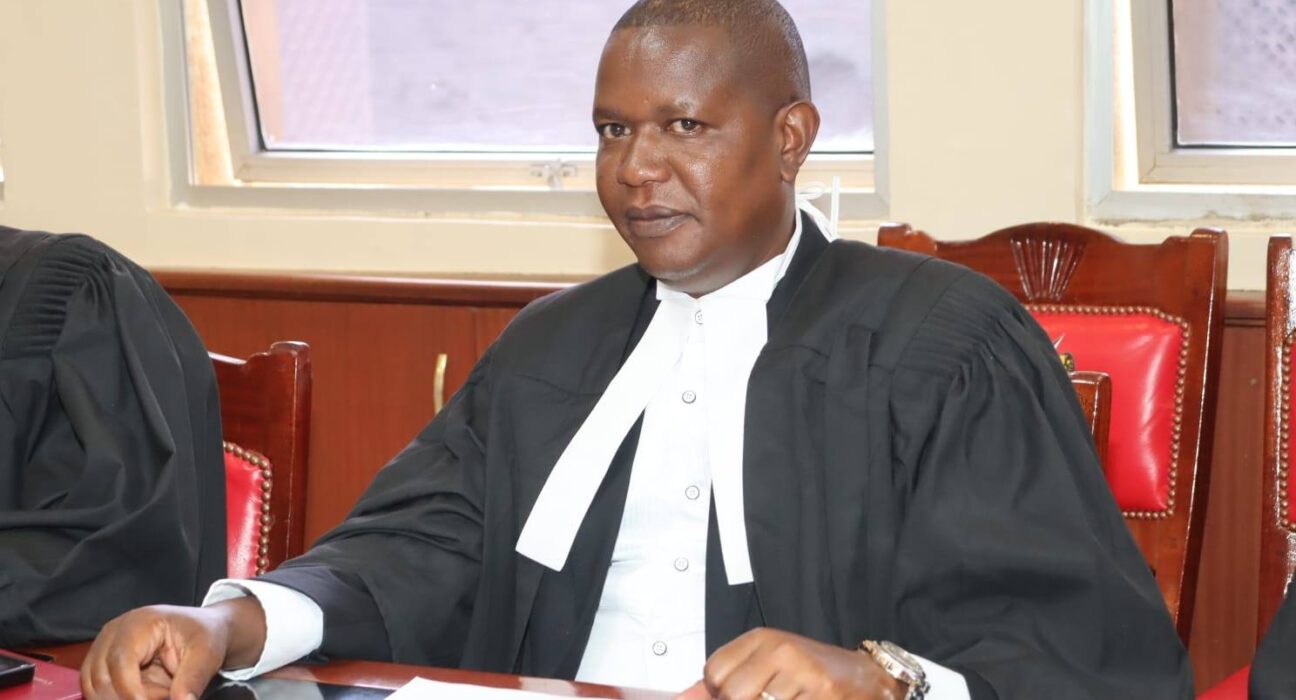
Through a legal team led by Senior Counsel and Rarieda Member of Parliament Hon. Otiende Amollo, the Assembly presented its case before a three-judge Court of Appeal Bench comprising Justices Daniel Musinga, Francis Tuiyott, and Aggrey Muchelule. The judges set February 6, 2026, as the date for delivering the judgment in the appeal.
The appeal challenges a High Court ruling dated September 24, 2024, where a three-judge bench declared the NG-CDF Act of 2015 unconstitutional and ordered that the fund cease operations by June 30, 2026. The ruling argued that the management and deployment of NG-CDF resources breached constitutional principles, particularly concerning separation of powers and oversight mechanisms.
In submissions before the Court of Appeal, Hon. Otiende Amollo argued that the High Court erred in its assessment of the fund’s operations, highlighting evidence that demonstrated the NG-CDF’s compliance with prudent management of public resources. “The Constituency is a National Government Service Delivery Unit recognized under the National Government Coordination Act, making NG-CDF a decentralization—not devolution—mechanism,” he told the bench.
He further asserted that the National Assembly’s oversight of the NG-CDF Board does not violate the doctrine of separation of powers. According to Hon. Amollo, parliamentary supervision of the fund aligns with Article 95 of the Constitution and does not constitute interference with the executive’s mandate. “The learned judges failed to deduce that the Fund only finances identified and prioritised projects in respect of the works and services falling within the exclusive function of the National Government,” the legal team argued.
The appeal also cited a Supreme Court ruling indicating that the enactment of the NG-CDF Act of 2015 did not require the involvement of the Senate, countering one of the High Court’s key findings. This, the legal team argued, reinforces the constitutionality of the Act and its amendments, including the 2022 revisions.
During the virtual hearing, other members of the National Legislative Caucus joined Hon. Amollo, including Chairperson of the Justice and Legal Affairs Committee Hon. Gitonga Murugara (Tharaka), Chairperson of the Delegated Legislation Committee Hon. Samuel Chepkonga (Ainabkoi), Homabay Town MP Hon. Peter Kaluma, Hon. Millie Odhiambo (Suba North), and Kibwezi West MP Hon. Mwengi Mutuse. The presence of multiple MPs underscores the political significance of the appeal, given the fund’s role in constituency-level development across the country.
The NG-CDF has long been a central pillar in Kenya’s decentralized service delivery, channeling resources for education, health, infrastructure, and social welfare projects at constituency level. Its proponents argue that it complements county government functions without duplicating resources and ensures that local communities benefit from targeted development initiatives.
Critics of the fund have raised concerns that its administration has at times lacked transparency and accountability. The 2024 High Court ruling reflected these concerns, suggesting that the constitutional framework does not provide sufficient checks on parliamentary control over the fund.
Supporters, however, maintain that the fund operates within clearly defined legal and operational frameworks and that parliamentary oversight is a constitutional safeguard rather than an overreach. Hon. Amollo stressed that expert evidence presented during the appeal demonstrated adherence to financial prudence, proper project prioritization, and alignment with national service delivery objectives.
“The National Assembly does not breach the Doctrine of Separation of Powers in its oversight of the NG-CDF Board that administers the kitty. The Kenyan Constitution does not impose a rigid separation of powers,” the counsel told the Court of Appeal.
The appeal raises fundamental questions about the balance of power between the legislative and executive arms of government, as well as the extent to which Parliament may oversee funds it has established. It also highlights the ongoing debate on decentralization versus devolution in Kenya, particularly in the context of resource allocation and development planning.
If the Court of Appeal upholds the National Assembly’s position, the NG-CDF will continue to operate under its current framework, providing funding for constituency-level development projects across all 290 constituencies in Kenya. Conversely, if the appeal is dismissed, the fund could face winding down ahead of the June 2026 deadline set by the High Court, prompting significant adjustments in how local projects are financed.
Legal analysts note that the appeal is likely to hinge on constitutional interpretation, particularly regarding Articles 95, 201, and 202, which outline the role of Parliament, the oversight of national funds, and the framework for decentralized service delivery. The case may also set a precedent for how Kenya balances national oversight mechanisms with devolved and constituency-level functions.
The Court of Appeal’s ruling, expected in early February 2026, will be closely watched by lawmakers, local administrators, and civil society organizations, as it will determine the future operational framework of one of Kenya’s largest publicly administered development funds.