


The National Assembly’s Budget and Appropriations Committee (BAC) has begun examining four major legislative proposals fronted by Members of Parliament, as lawmakers continue efforts to align emerging policy initiatives with the country’s fiscal realities. The review, conducted under Article 114 of the Constitution and the Standing Orders, is a mandatory step to establish whether a Bill imposes direct or indirect costs on the national government and to determine the extent of its financial viability.
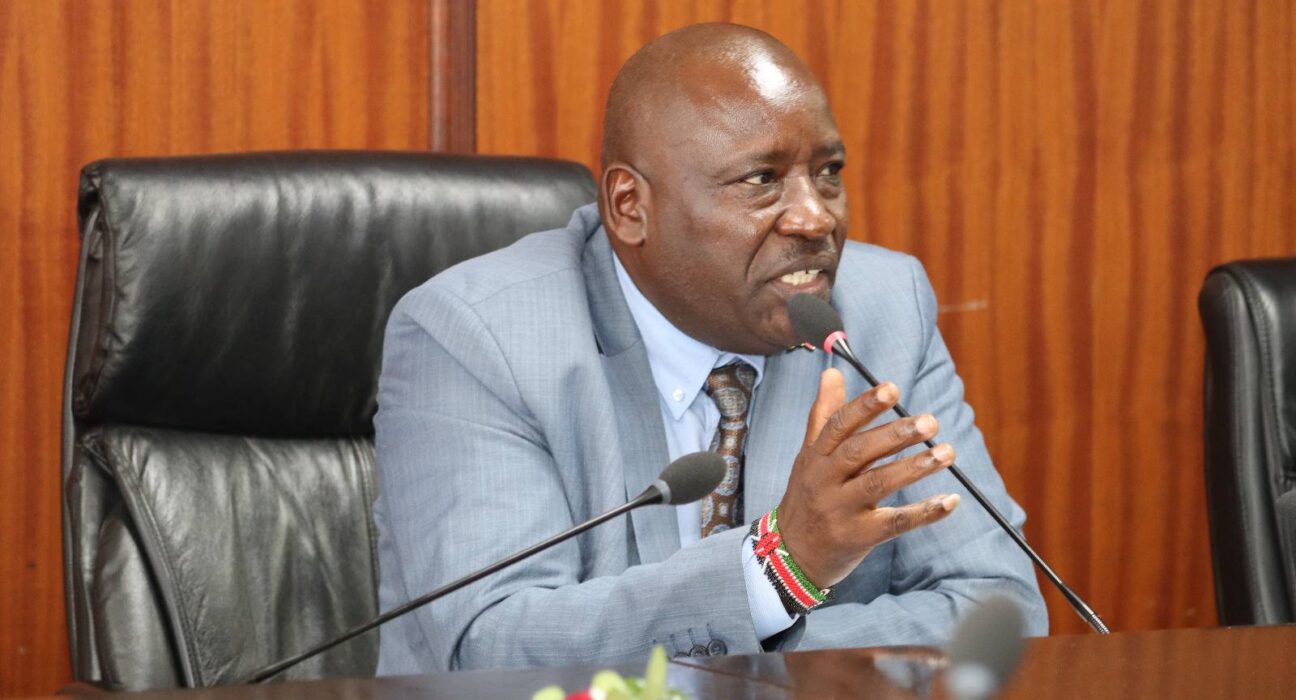
The session, chaired by Kitui Central MP Hon. Makali Mulu, focused on scrutinising the financial impact of the draft Bills and the policy challenges they aim to resolve. Hon. Mulu emphasised that the Committee’s role is not merely procedural but integral to protecting public finances, noting that only cost-neutral or self-sustaining proposals are likely to sail through.
“Our focus as a committee on these legislative proposals is to assess the money element and ensure the draft Bills save the country resources. This Committee will give a nod to self-financing legislative proposals,” he told members.
Nyikal Seeks New Legal Framework for National Blood and Transplant Services
Seme MP Hon. (Dr.) James Nyikal presented the Kenya Blood Donation, Cells, Tissues and Organs Bill, 2025, which seeks to overhaul the governance and management of blood and transplant services across the country. The proposal aims to establish the Kenya Blood and Transplant Authority as a comprehensive regulator for blood, cell, tissue, and organ donation and transplantation.
Dr. Nyikal explained that the new Authority would replace the Kenya Tissue and Transplant Authority, established in 2022 through Legal Notice No. 142. He argued that the current regulatory framework lacks the necessary independence and oversight mechanisms required in such a sensitive and ethically complex sector.
Under the draft Bill, a specialised dispute resolution tribunal would be set up to resolve appeals arising from regulatory decisions. Dr. Nyikal said this would improve public confidence by ensuring that oversight processes are transparent, fair, and aligned with ethical standards.
“If enacted into law, the Tribunal’s appeal hearings and reasoned decisions will boost public trust in the donation and transplant system by providing a fair process to contest decisions and improve confidence in regulatory outcomes,” he told the Committee.
The BAC is expected to assess the financial implications of creating the new Authority and tribunal, including the staffing, infrastructure, and operational budget required.
Bill Proposes New Standards and Registration Board for Construction Managers
Emgwen MP Hon. Josses Lelmengit defended the Construction Managers and Construction Project Managers Bill, 2025, which proposes the establishment of a new regulatory board to register and license professionals in construction management. The Bill seeks to formalise and professionalise an area of the built-environment sector that has been operating without a dedicated regulatory framework, despite the sector’s substantial contribution to economic growth.
According to Hon. Lelmengit, the proposed framework will ensure that only qualified and registered individuals manage construction projects, improving safety, reducing waste, and enhancing quality assurance across the industry.
“Once enacted, the Bill will professionalise construction management and ensure that only qualified and registered individuals oversee construction projects across the country,” he said.
Committee members sought clarification on how the proposed Board would interact with existing institutions such as the National Construction Authority (NCA), which already plays a regulatory role in construction standards and contractor registration. The interplay between the two bodies is likely to be a key consideration in determining whether the Bill creates duplication or adds value.
Barasa Seeks to Amend TSC Act to Alter Terms of Commissioners
Kimilili MP Hon. Didmus Barasa appeared before the Committee with the Teachers Service (Amendment) Bill, 2025, which proposes changing the terms of engagement for the Chairperson and Commissioners of the Teachers Service Commission (TSC) from full-time to part-time. He argued that this adjustment would reduce expenditure and promote efficiency in the Commission’s operations.
The Bill also proposes amendments to allow teachers—across primary, secondary, and tertiary levels—to nominate some of their peers to serve on the Commission. Hon. Barasa said the reforms would strengthen representation and align the Commission’s governance structure with teachers’ professional needs.
He added that the changes would not only yield savings for taxpayers but also enhance accountability. “The draft Bill will save Kenyans a lot of money and allow teachers to represent themselves by having their own representation on the Commission,” he said.
The Budget Committee will now evaluate whether shifting commissioners to part-time status would meaningfully reduce costs and whether additional administrative adjustments would be necessary to maintain continuity in decision-making.
Ikana Pushes for Stronger Legal Basis for Performance Management in Public Service
Shinyalu MP Hon. Fredrick Lusuli Ikana also presented the Public Service Commission (Amendment) Bill, 2025. The proposal seeks to amend the Public Service Commission Act, Cap. 185, to strengthen performance management systems across public bodies.
The Bill aims to establish, in law, a Performance Management Unit responsible for coordinating and supervising performance across government institutions. It also seeks to create a Negotiation and Evaluation Committee to anchor performance contracting into legislation, making it a mandatory and binding process across the public service.
Hon. Ikana told the Committee that formalising these structures would boost effectiveness and accountability in service delivery. “By entrenching these proposals into the law, there will be greater legal certainty and protection, as its provisions become binding and strengthen compliance and ensure consistency across all public entities,” he said.
He added that codifying performance contracting in law would enhance efficiency, streamline implementation of government programmes, and ensure that public bodies adhere to measurable performance targets.
Next Steps After Budget Review
With deliberations concluded, the Committee will prepare recommendations for the Speaker of the National Assembly. The Speaker will then determine whether the Bills can proceed to the next legislative stage or whether they require further refinement due to financial or policy implications.
The BAC’s cost-benefit analysis will be central to guiding the House on whether the proposals meet constitutional requirements for fiscal responsibility. The decisions taken at this stage will determine how soon each of the Bills moves to publication, first reading, and eventual debate on the floor of the House.