


Kenya’s Parliament is celebrating a major stride in advancing women’s representation and leadership after ten legislators successfully completed a specialised programme focused on gender-responsive lawmaking and equitable governance. The graduation recognises growing momentum toward mainstreaming gender priorities at the heart of national policymaking.
The women lawmakers drawn from both the Senate and the National Assembly concluded the Parliamentary Practices: Mainstreaming Gender Equality and Women’s Empowerment (GEWE) Programme, an 11-week course delivered between May and August 2025. The programme is jointly offered by the Centre for Parliamentary Studies and Training (CPST) and Canada’s McGill University, as part of an ongoing partnership designed to strengthen institutional transformation within Kenya’s bicameral Parliament.
Among the graduates were six Senators: Joyce Korir, Veronica Maina, Tabitha Mutinda, Agnes Muthama, Hamida Kibwana and Esther Okenyuri. Their achievement was hailed as an important victory for women’s influence in the upper house, where they continue to champion policies tied to economic inclusion, justice reform and grassroots development.
They were joined by four Members of the National Assembly: Beatrice Elachi, Martha Wangari, Irene Mayaka and Sabina Chege, all recognised for their commitment to gender equality priorities in the legislative agenda. The ten leaders were trained in gender-responsive legislation, institutional reforms and community-led policymaking, advancing skills aimed at shaping governance that meets the needs of the full population.
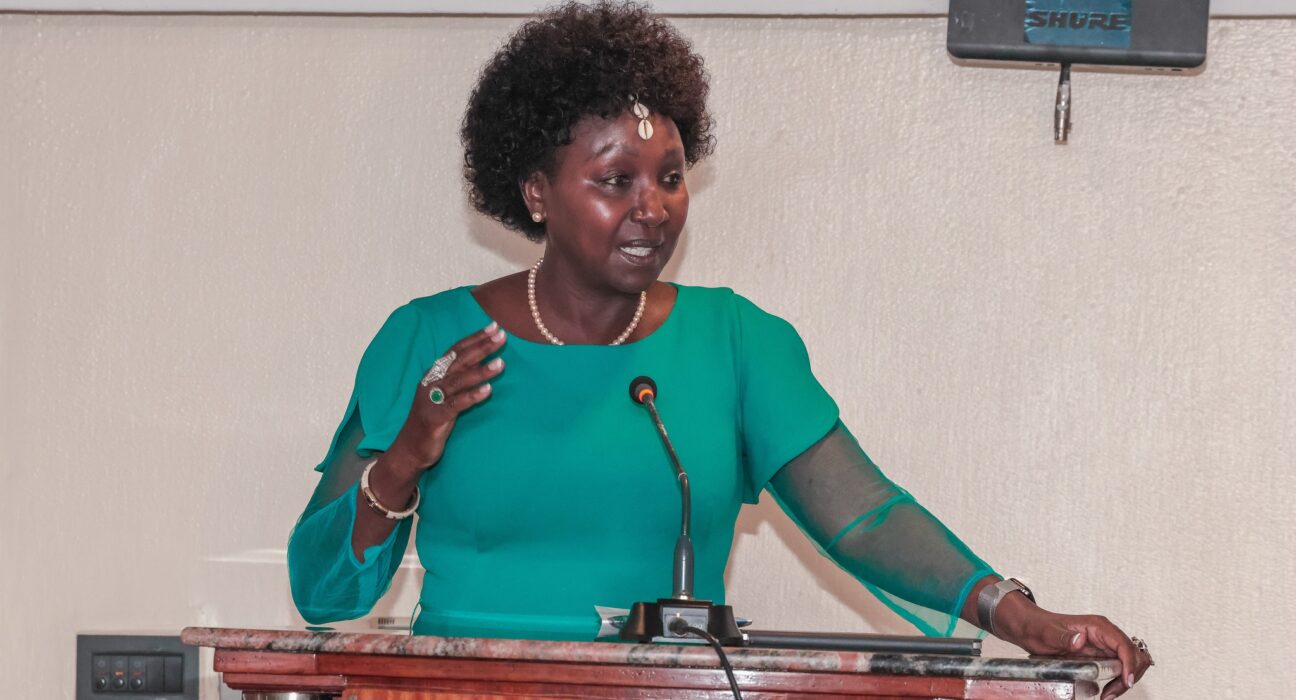
Deputy Speaker of the National Assembly, Gladys Boss, presided over the graduation ceremony, where she described the GEWE programme as “an incubator of equitable and progressive governance.” She reflected on her own leadership journey navigating challenges in politics, saying such experiences solidified her advocacy for gender-inclusive laws and representation.
“When women legislate, they legislate for society as a whole,” she told the graduates, urging them to push for gender integration across all policy sectors including economic planning, national security, health, education and climate adaptation. She argued that national growth cannot be achieved without recognising the pivotal role women play in social and economic advancement.
Her remarks underscore wider calls for Parliament to prioritise reforms that address persistent gender disparities in political participation, public resource allocation and leadership opportunities. While Kenya has made notable progress through mechanisms like the two-thirds gender rule, parliamentarians and civil society groups continue to advocate for full compliance and broader reforms to support women’s leadership beyond quotas.
The ceremony also highlighted the personal dedication required of the participants, many of whom balance demanding public roles with family responsibilities. CPST Board Chairperson Rachael Ameso Amollo noted the sacrifice and discipline demonstrated by the graduates, praising professionalism and determination in completing the rigorous course.
She emphasised the need to modernise parliamentary training in line with emerging governance challenges, including digital transformation. “AI presents enormous opportunities, and investing in tailored training is essential for strengthening parliamentary effectiveness,” she said. Her comments reflect a broader push to incorporate technology into legislative research, public engagement and oversight.
Ameso framed the programme not simply as credentialing but as a leadership mandate. “This is not just a certification, but a call to action,” she stated, urging the women to apply their advanced learning to drive reforms that improve lives, reduce inequality and sustain Kenya’s democratic progress.
The CPST–McGill collaboration, established in 2016, was developed to build the capacity of parliamentarians in Kenya and the wider region. With women historically underrepresented in politics globally, the initiative has prioritised enhancing skills, influence and visibility of female lawmakers. It supports the belief that inclusive parliaments produce more responsive laws and accelerate national development.
Through tailored modules, the programme equips participants with tools to draft gender-sensitive legislation, analyse public finance allocations through an equality lens, strengthen committee oversight and integrate community feedback into the lawmaking process. The focus aligns with Kenya’s policy commitments under the Constitution, Vision 2030 economic blueprint and international frameworks such as the Sustainable Development Goals.
Advocates say such initiatives are critical at a time when women — especially those from marginalised communities — face social, financial and structural barriers to entry and advancement in politics. Mentorship, networking and specialised professional development are seen as key enablers for expanding influence and ensuring sustained representation in leadership roles.
Parliament continues to serve as a centre of policymaking on gender and social justice reforms, including work on economic opportunity for women entrepreneurs, legal protections against violence and discrimination, access to sexual and reproductive health services, and equitable land and property rights. By strengthening the capacity of women leaders driving these reforms, stakeholders hope to accelerate the pace of change.
For Kenya’s business community, the success of such programmes is seen as vital to shaping a stable and inclusive policy environment that promotes investment and job creation. Studies have shown that equitable political participation helps strengthen governance outcomes, reduce corruption risks and foster economic resilience.
The GEWE graduates are expected to take up expanded advocacy responsibilities within committees, constituencies and national debates, helping translate training into measurable policy impacts. Their achievements have already drawn regional interest, as legislatures across East Africa seek models for increasing women’s participation.
As Parliament marked the milestone, leaders reaffirmed commitment to ensuring Kenya remains on a path toward gender parity and inclusive governance. For the ten graduates, the accomplishment symbolises not only personal progress but also a collective step forward for the voices they represent.