


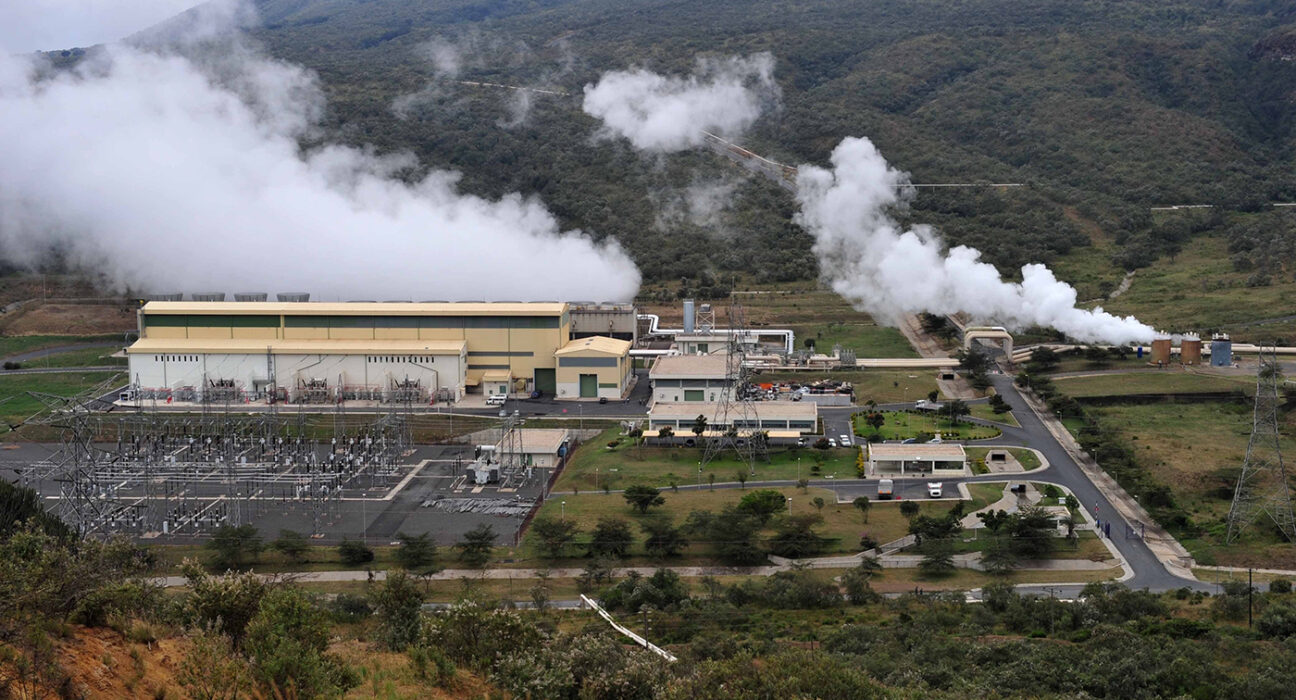
The African Development Bank Group (AfDB) has approved a $16.5 million loan to support the development of the 35-megawatt OrPower Twenty-Two (OTTL) Geothermal Power Plant in Kenya, strengthening the country’s baseload electricity capacity and accelerating its transition to clean energy.
The approval was granted in November 2025, marking a key milestone for one of Kenya’s flagship renewable energy projects located in the Menengai geothermal field, just north of Nakuru Town, approximately 180 kilometres northwest of Nairobi.
Unlocking Menengai’s First-Phase Potential
The OTTL plant is the third geothermal power project in the Menengai field, complementing the operational 35 MW Sosian Menengai Geothermal plant and the 35 MW Globeleq Menengai Geothermal project, which is currently under construction with separate AfDB financing.
Together, the three projects will unlock the full 105 MW capacity of Phase One of the Menengai geothermal field, a strategic resource developed by the government-owned Geothermal Development Company (GDC) using earlier $145 million financing from the African Development Bank.
Under Kenya’s geothermal development model, GDC is responsible for drilling, producing, and supplying steam, while private Independent Power Producers (IPPs) focus on electricity generation. For the OTTL project, Kenya Power and Lighting Company (KPLC) will be the sole off-taker under a 25-year Power Purchase Agreement (PPA).
Affordable Baseload Power for the Grid
Once fully operational, the 35 MW plant is expected to generate approximately 301 gigawatt hours (GWh) of reliable, clean electricity annually, supplying affordable baseload power to the national grid.
The project will deliver power at one of the lowest tariffs in Kenya, helping to reduce overall electricity costs and limit reliance on expensive diesel-fired generation, which is often used during periods of supply shortfall.
By providing stable baseload power, the plant will also enhance grid reliability and support Kenya’s growing industrial and commercial electricity demand.
Climate and Development Impact
The geothermal facility is expected to deliver significant climate benefits, including the avoidance of approximately 1.9 million tonnes of greenhouse gas emissions over the 25-year PPA period.
According to Wale Shonibare, Director of AfDB’s Energy Financial Solutions, Policy, and Regulations Department, the Menengai projects demonstrate the effectiveness of public-private collaboration in renewable energy development.
“The Menengai model demonstrates the power of public-private collaboration, where government-led resource development unlocks private investment in geothermal generation,” said Shonibare. “This delivers mutual benefits by securing revenues for GDC while allowing private investors to drive efficient power generation.”
Private Sector-Led Clean Energy Expansion
OTTL Director Qi Jingwen said the project will utilise independently developed next-generation geothermal technology, reinforcing the company’s commitment to environmental sustainability.
“We are honoured to be constructing the OrPower Menengai Geothermal Power Plant using fully proprietary next-generation geothermal power technology,” Jingwen said. “Support by international financial institutions will enable deeper participation in the development of new green energy in Africa.”
Financing Structure and National Energy Goals
AfDB’s $16.5 million loan complements additional financing expected from the International Finance Corporation (IFC), bringing total project debt to $64.4 million, within an estimated total project cost of $91.9 million.
The project directly supports Pillar I of Kenya’s Mission 300 Energy Compact and contributes to the country’s ambition to increase geothermal capacity from 940 MW to 1,824 MW by 2030, reinforcing Kenya’s position as Africa’s geothermal powerhouse and advancing the goal of 100% clean energy generation.