


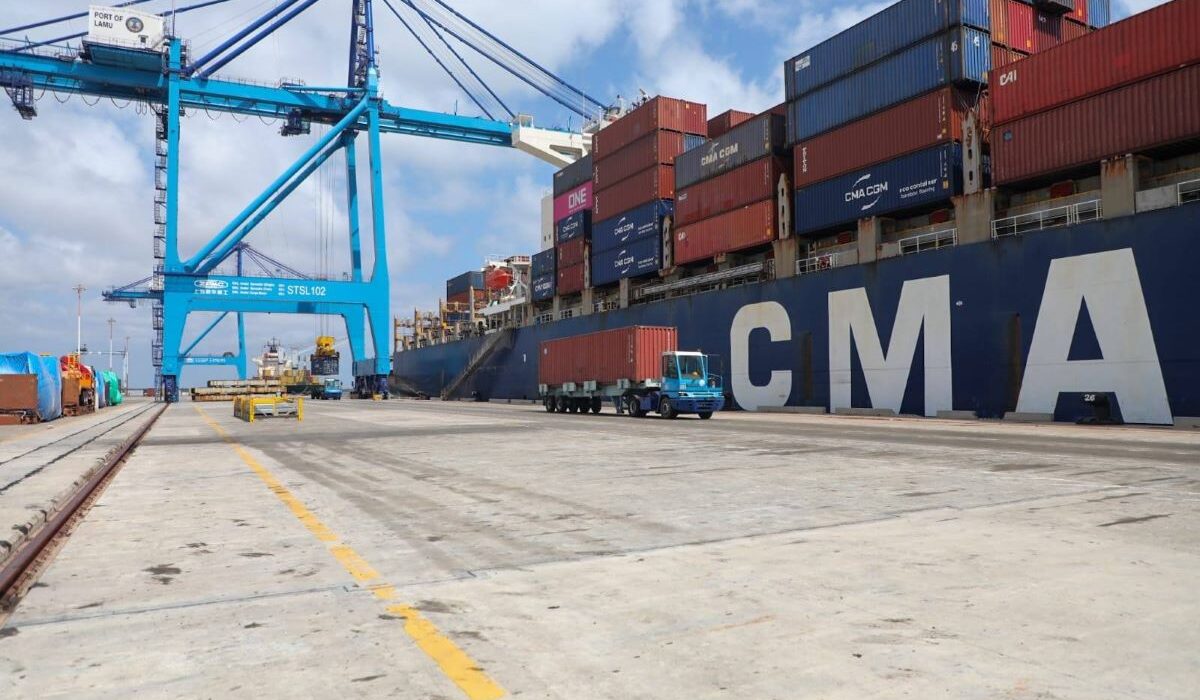
The Kenya International Freight and Warehousing Association has praised the Kenya Ports Authority for steady performance gains at the Port of Lamu, citing rising cargo volumes, improved efficiency, and growing confidence from major global shipping lines.
The Kenya International Freight and Warehousing Association (KIFWA) has commended the Kenya Ports Authority (KPA) for sustained performance growth at the Port of Lamu, highlighting the facility’s rising cargo volumes and increasing attractiveness to international shipping lines.
In a statement, the freight industry body said the gains at Lamu Port reflect improved operational efficiency and strengthening confidence from global maritime players, positioning the port as an increasingly important gateway for regional and international trade.
According to KIFWA, total cargo throughput at the Port of Lamu reached 799,161 metric tonnes last year, marking a significant milestone for the relatively young port and underscoring its growing relevance within Kenya’s port infrastructure network.
Shipping lines expand presence
The association noted that Lamu’s improved performance is already translating into expanded shipping services, with major global carriers increasing their presence at the port. Mediterranean Shipping Company (MSC), one of the world’s largest shipping lines, has recently joined CMA CGM in offering regular services at Lamu.
Industry players say the entry of additional shipping lines is a strong signal of confidence in the port’s operational readiness, turnaround times, and ability to support consistent cargo flows.
As more carriers add Lamu to their regional schedules, the port is expected to attract a broader range of importers and exporters seeking alternative routes to Kenya’s traditional maritime gateways.
Strengthening regional trade links
Lamu Port General Manager Capt. Abdulaziz Mzee said the rising cargo volumes and growing interest from global shipping lines signal the port’s strengthening role in regional and international trade networks.
“This growth reflects the increasing confidence in Lamu Port’s capabilities and its potential to serve both regional and international markets,” Capt. Mzee said. He urged industry stakeholders to actively promote the port’s capacity and services to help accelerate utilisation.
He added that Lamu Port is well-positioned to support trade along the Northern Corridor and the Lamu Port-South Sudan-Ethiopia Transport (LAPSSET) Corridor, which are central to Kenya’s long-term logistics and regional integration strategy.
The LAPSSET Corridor, once fully operational, is expected to link Kenya to Ethiopia, South Sudan and beyond, providing an alternative trade route that eases congestion at other ports while opening up new economic zones in northern Kenya.
Industry confidence builds
KIFWA branch Chairman Rajab Hamis said the port’s performance is encouraging for freight forwarders, clearing agents, and logistics companies seeking efficient and reliable trade gateways.
“The steady growth we are seeing at Lamu Port is a positive signal for businesses that depend on predictable and cost-effective logistics,” Hamis said. “It shows that Lamu is increasingly becoming a viable option for cargo movement along both the Northern and LAPSSET Corridors.”
He pledged continued collaboration between KIFWA members and the Kenya Ports Authority to support further growth at the port, noting that close engagement between port operators and the private sector is critical to sustaining efficiency gains.
Freight industry players say such collaboration is particularly important as Lamu works to build consistent cargo volumes and attract long-term shipping commitments.
Diversifying Kenya’s port network
Lamu Port forms part of Kenya’s broader strategy to diversify its port network and reduce pressure on the Port of Mombasa, which handles the bulk of the country’s maritime trade.
By developing Lamu as an alternative deep-sea port, Kenya aims to enhance resilience in its logistics system, improve service levels for regional markets, and strengthen its position as a transport and trade hub in East Africa.
The steady rise in throughput and the entry of additional shipping lines suggest that Lamu is beginning to deliver on this strategic objective, even as supporting infrastructure and corridor linkages continue to be developed.
Outlook for Lamu Port
With cargo volumes approaching 800,000 metric tonnes and growing interest from global carriers, stakeholders believe Lamu Port is entering a new phase of commercial maturity.
Freight forwarders say continued focus on operational efficiency, competitive tariffs, and seamless coordination with customs and logistics agencies will be key to sustaining growth and attracting more shipping lines.
As utilisation increases, Lamu Port is expected to play a larger role in facilitating trade not only for Kenya, but also for neighbouring countries seeking alternative access to global markets.