


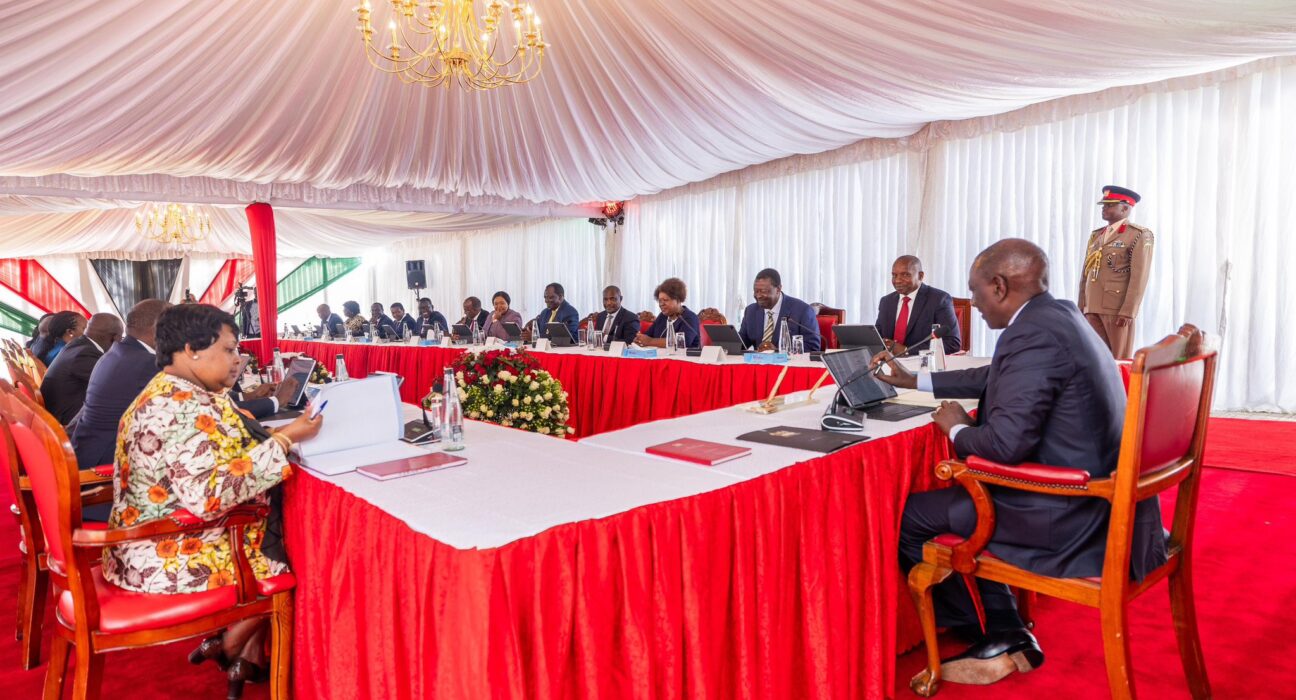
Kenya’s Cabinet has approved the proposed 2026/27 national budget totalling KES 4.7 trillion, setting the stage for the next financial year amid continued pressure on public finances, debt servicing, and demands from counties.
According to the Cabinet dispatch, the government projects total revenues of KES 3.53 trillion against total expenditure of KES 4.7 trillion, resulting in a fiscal deficit of approximately KES 1.17 trillion. The gap will be financed through a combination of domestic and external borrowing, in line with the government’s medium-term fiscal consolidation plans.
Breakdown of expenditure
The largest share of the 2026/27 budget is allocated to recurrent expenditure, which stands at KES 3.46 trillion. This covers public sector wages, debt servicing, pensions, and routine operational costs across ministries, departments, and agencies.
Development expenditure has been set at KES 749.5 billion, reflecting the government’s intention to continue funding infrastructure projects, social programmes, and priority economic initiatives. However, the development allocation remains significantly lower than recurrent spending, highlighting the continued strain posed by fixed costs, particularly debt obligations.
The Cabinet has also approved KES 2 billion for the Contingency Fund, which is meant to cater for unforeseen expenditures such as emergencies and natural disasters during the financial year.
County allocations and revenue sharing
County governments will receive a total of KES 495.7 billion in the 2026/27 financial year, following approval of several revenue-sharing instruments.
Under the Division of Revenue Bill, 2026, counties are set to receive KES 420 billion, representing 21.9 percent of the most recent audited national revenue. This allocation forms the equitable share that is constitutionally guaranteed to county governments.
In addition, the Cabinet approved an allocation of KES 15.2 billion to the Equalisation Fund. The fund is intended to support development projects in marginalised areas, particularly in arid and semi-arid regions, to help bridge long-standing disparities in access to basic services.
A further KES 75.7 billion has been proposed under the County Governments Additional Allocation Bill. This amount includes funds from both the national government and development partners, bringing total transfers to county governments to KES 495.7 billion for the financial year.
Fiscal pressure and deficit outlook
With expenditure significantly outpacing projected revenues, the KES 1.17 trillion fiscal deficit underscores the continued challenge of balancing spending needs with revenue mobilisation. The deficit reflects ongoing commitments to service public debt while maintaining funding for devolved units and essential government operations.
The heavy weighting towards recurrent expenditure also points to limited fiscal space for new development projects unless revenue performance improves or expenditure is rationalised.
The Cabinet approval marks a key step in the budget-making process ahead of tabling in Parliament, where lawmakers are expected to debate allocations, borrowing levels, and revenue assumptions before final approval.
As the budget moves through Parliament, attention is likely to focus on debt sustainability, county funding adequacy, and whether projected revenues can realistically support the proposed level of spending without deepening fiscal stress.