


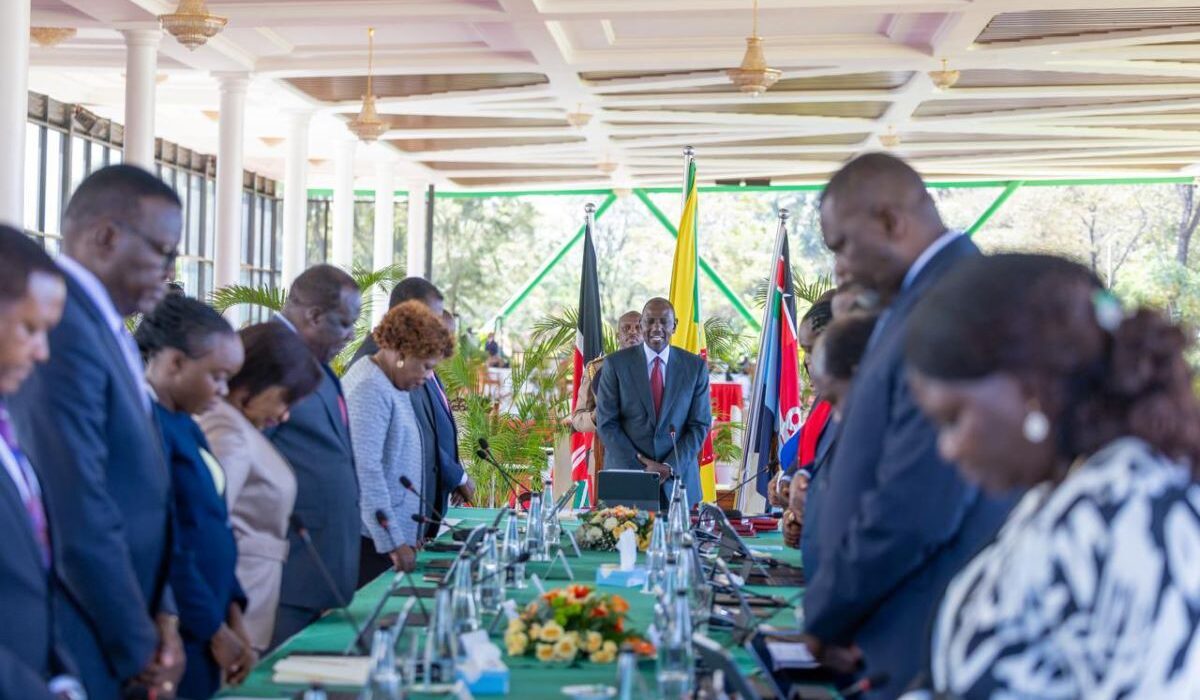
The Kenyan Cabinet has approved sweeping payroll reforms across all public entities following the exposure of long-standing governance, integrity, and cybersecurity failures in the government’s human resource and payroll systems.
The decision follows a comprehensive audit conducted during the 2024/25 financial year, which revealed systemic weaknesses in the Human Resource Information System for Government (HRIS-K), raising serious concerns over the safety of public funds and the credibility of payroll data.
Audit exposes deep system failures
According to the audit findings, HRIS-K suffers from widespread data integrity problems, weak system controls, and poor integration with other government platforms. These weaknesses have resulted in significant anomalies across employee identity records, statutory tax compliance, and bank account details.
The audit further revealed that the migration of public entities to the HRIS-K platform has been slow and inconsistent, with approximately 300 state corporations yet to complete full integration. This fragmentation has made it difficult to enforce uniform payroll controls and has allowed errors and irregularities to persist undetected.
Unauthorised payroll changes uncovered
One of the most alarming findings involved system access controls. Investigators found that 720 system editors had collectively altered more than 4.7 million payroll records without proper audit trails. In several instances, employees were found to have edited their own personal and payroll data, undermining basic principles of internal control and accountability.
The absence of effective audit logs made it difficult to trace who made specific changes, when they were made, and for what purpose, significantly increasing the risk of fraud and manipulation.
Risks to public funds flagged
Beyond data manipulation, the audit identified multiple financial and operational risks. These included unauthorised payments, unexplained salary arrears, weak disaster recovery and business continuity systems, and the use of expired ICT licences across several public institutions.
The review warned that these gaps expose government payroll systems to service disruptions, data loss, and potential financial leakages, particularly during emergencies or system failures.
Accounting officers held personally responsible
In response to the findings, the Cabinet has directed accounting officers across all public entities to urgently submit verified and reconciled payroll data. Officers have also been instructed to fully cooperate with ongoing and future audits aimed at cleaning up payroll records and strengthening system controls.
Importantly, the Cabinet has made it clear that accounting officers will bear personal responsibility for any irregularities discovered under their watch, signalling a shift toward stricter enforcement of accountability in public financial management.
Push for deductions at source and system integrity
The approved reforms are aimed at restoring integrity in government payroll systems and ensuring statutory deductions, including taxes and other mandatory contributions, are enforced at source across all public entities.
The Cabinet decision marks a critical step in addressing payroll-related leakages that have persisted for years and aligns with broader efforts to improve transparency, accountability, and fiscal discipline within the public sector.