


Gulf Energy E&P BV has pledged to invest nearly US$6 billion in the development of crude oil resources in Turkana County, positioning the South Lokichar Oil Project as the largest private sector-driven upstream petroleum investment in Kenya’s history.
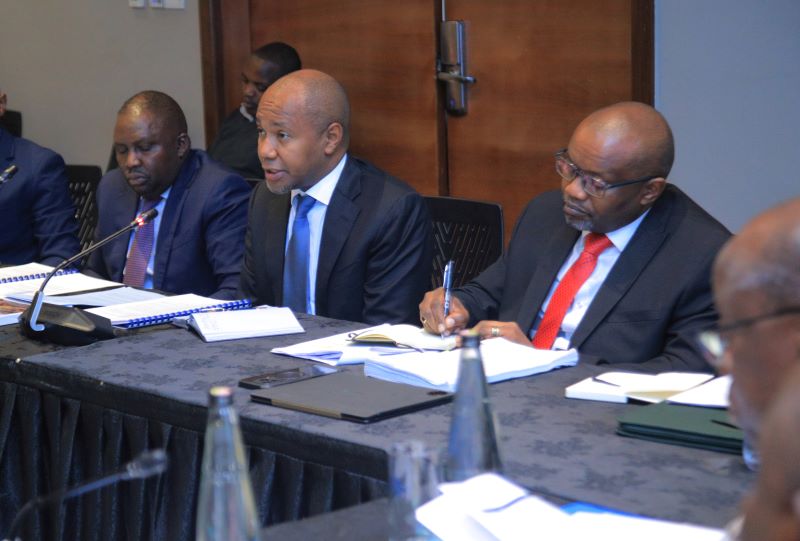
Appearing before a Joint Parliamentary Committee on Energy, the company’s chairman Francis Njogu said the firm remains committed to international best practices as it prepares for commercial oil production, targeting 1 December 2026 as the date for first output.
The session, jointly chaired by David Gikaria, Chairman of the National Assembly’s Departmental Committee on Energy, and William Kisang, Vice Chairperson of the Senate Standing Committee on Energy, forms part of the public participation exercise ahead of ratification of the project’s Field Development Plan.
Largest Upstream Investment
Describing the project as a milestone for Kenya’s extractives sector, Njogu said the scale of capital injection underscores investor confidence in the country’s oil potential.
The US$6 billion investment will fund infrastructure, drilling operations, processing facilities, and associated logistics required to bring crude oil from Turkana’s South Lokichar basin into commercial production.
“At Gulf Energy, we are approaching this FDP as Kenyans with a view to creating as many jobs and business opportunities for Kenyans, starting with our Turkana host community, as we are committed to positioning Kenya as an oil-producing country,” Njogu told lawmakers.
“We are very ready, and we have set 1st December 2026 as a target to produce oil, and we hope to expeditiously secure the FDP ratification,” he added.
Emphasis on Local Content
Njogu told Members of the National Assembly and Senate that both the Field Development Plan and the Production Sharing Agreements place strong emphasis on local content and community engagement.
The company says it has adopted a ring-fenced Local Content Strategy designed to ensure that Kenyan businesses and workers benefit from procurement, subcontracting, and employment opportunities linked to the project.
Flanked by Group Chief Executive Officer Paul Limoh and Country Manager Franklin Juma, the chairman said the firm’s commitments extend beyond regulatory compliance to long-term socio-economic impact in Turkana County.
These include social investments targeting host communities and structured stakeholder engagement to mitigate operational risks and enhance shared benefits.
The local content focus comes amid broader national debate about maximizing value from natural resources and ensuring that extractive projects deliver tangible economic transformation.
Parliamentary Oversight and FDP Ratification
The Joint Parliamentary Committee session forms part of statutory review processes before ratification of the Field Development Plan, a critical regulatory milestone in upstream petroleum projects.
Ratification would pave the way for full-scale project implementation, including final investment decisions and mobilization of capital-intensive infrastructure.
Kenya’s oil journey has experienced delays in recent years, with earlier pilot schemes testing export logistics but falling short of sustained commercial production. Lawmakers are therefore keen to scrutinize financing structures, environmental safeguards, revenue-sharing mechanisms, and community benefit frameworks.
Njogu assured legislators that Gulf Energy E&P BV has the financial capacity to undertake the project.
He disclosed that the firm is indigenously owned and has established strong financial partnerships and active lines of credit with leading local and international banking and financial institutions to support the capital-intensive development.
Strategic Importance of Turkana Oil
The South Lokichar Oil Project is widely viewed as a potential turning point for Kenya’s energy sector. Commercial oil production would diversify the country’s energy portfolio and potentially reduce reliance on imported petroleum products in the long term, depending on refining and export strategies.
Beyond direct revenues, the project is expected to stimulate auxiliary sectors including logistics, construction, engineering services, and financial services.
For Turkana County, one of Kenya’s historically marginalized regions, the project carries high expectations for employment creation, infrastructure development, and community investment.
However, extractive projects also face scrutiny over environmental impact, land rights, and equitable revenue sharing. Observers note that robust oversight and transparent governance frameworks will be critical to ensuring sustainable outcomes.
Positioning Kenya as an Oil Producer
Kenya has long been categorized as an emerging oil frontier rather than an established producer. Achieving commercial production by December 2026 would formally position the country within the ranks of oil-producing nations in East Africa.
The timeline outlined by Gulf Energy signals an accelerated push to move from regulatory approvals to operational execution, subject to parliamentary ratification and compliance with statutory requirements.
As lawmakers conclude public participation and technical review of the Field Development Plan, attention will shift to implementation timelines, capital deployment schedules, and infrastructure readiness.
If successfully executed, the US$6 billion Turkana oil investment could mark a defining chapter in Kenya’s natural resource development strategy, reshaping fiscal projections and regional economic dynamics.