


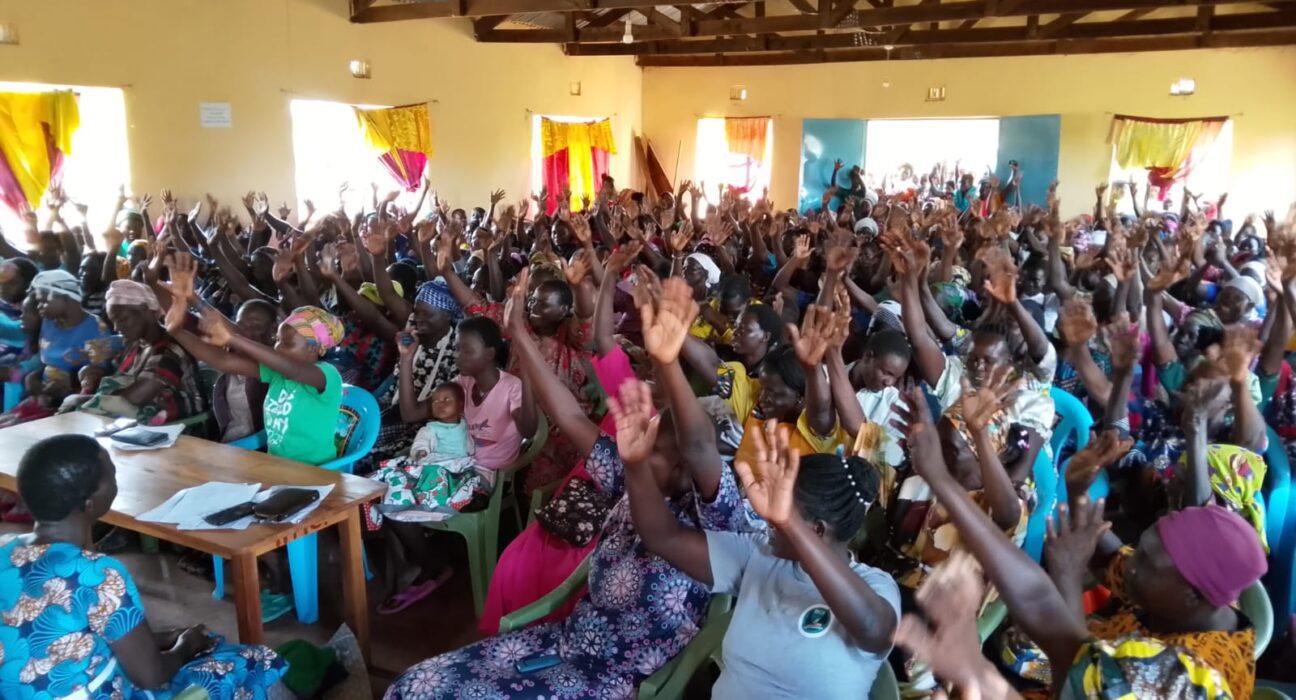
The Stanbic Foundation has partnered with the Kenya Institute of Enterprise (KIE) to roll out a nationwide programme targeting financial literacy and enterprise resilience among women entrepreneurs, reaching more than 100,000 women-led micro, small and medium enterprises (MSMEs) across multiple counties.
The initiative, implemented in collaboration with county governments, focuses on equipping women entrepreneurs with core financial management and business sustainability skills, including structured record keeping, cash flow management, budgeting, financial planning and understanding Credit Reference Bureau (CRB) processes.
The programme is currently being delivered in Homa Bay, Busia, Kakamega, Kisumu, Uasin Gishu, Kisii, Nyamira, Kericho, Nairobi and Kiambu counties, reflecting a deliberate effort to decentralise capacity building and support women-led enterprises within county economies.
Strengthening Grassroots Financial Capability
The partnership comes at a time when women entrepreneurs remain central to Kenya’s MSME ecosystem but continue to face structural barriers to scaling operations and accessing formal financial services.
Many women-led businesses operate informally, limiting their ability to build credit histories, secure financing or participate fully in supply chains and structured markets. By focusing on financial literacy at the grassroots level, the programme seeks to address these constraints while strengthening business resilience.
Training modules are designed to improve financial confidence and operational discipline among participants, enabling them to maintain accurate records, manage liquidity effectively and plan for growth.
Programme organisers say demystifying CRB processes is a particularly important component, given that misconceptions around credit reporting have historically discouraged entrepreneurs from engaging with formal lending channels.
By improving understanding of credit scoring, repayment behaviour and dispute resolution mechanisms, the initiative aims to encourage responsible borrowing and enhance trust in the financial system.
County-Level Economic Impact
The multi-county implementation model aligns with Kenya’s devolved economic structure, where counties play a significant role in enterprise development, trade facilitation and local job creation.
Women-led MSMEs contribute substantially to county economies through retail trade, agribusiness, services and light manufacturing activities. Strengthening their financial capability has implications beyond individual enterprises, influencing household income stability, employment generation and local economic dynamism.
Stakeholders involved in the programme note that collaborative models combining training, mentorship and access to structured financial pathways offer a practical mechanism for narrowing gender gaps in entrepreneurship.
Such approaches also support broader national objectives around financial inclusion and inclusive growth, particularly in regions where formal banking penetration remains uneven.
Linking Capacity Building to Financing
The Stanbic Foundation said the initiative forms part of its broader strategy to integrate capacity building with financial access, ensuring that entrepreneurs are not only trained but also positioned to utilise formal financial products.
Since its establishment, the foundation has focused on entrepreneurship development, skills training and enterprise financing as core pillars of its social investment agenda.
The organisation marked five years of operation in 2025, during which it disbursed more than KES 180 million in microloans and facilitated capacity building for over 100,000 MSMEs nationwide.
By combining training with financing opportunities, the foundation aims to create a pipeline of investment-ready enterprises capable of absorbing credit responsibly and deploying it for business expansion.
Industry observers note that such blended support models are increasingly being adopted by financial institutions seeking to strengthen SME portfolios while managing credit risk.
Financial Sector Role in SME Development
The programme underscores the expanding role of financial institutions in SME ecosystem development beyond traditional lending functions.
Banks and their affiliated foundations are increasingly investing in non-financial services such as training, mentorship and market linkage support, recognising that business capability directly influences credit performance and portfolio quality.
This approach is particularly relevant in Kenya, where MSMEs account for a significant share of employment but often face constraints related to financial management capacity, documentation and collateral requirements.
Strengthening these capabilities improves enterprise survival rates and enhances the effectiveness of credit interventions, supporting both development outcomes and financial sector sustainability.
Institutional Context
Stanbic Bank Kenya, the parent institution of the Stanbic Foundation, operates as part of the Standard Bank Group, Africa’s largest bank by assets, with operations spanning 20 African markets and several global financial centres.
The group’s largest shareholder is the Industrial and Commercial Bank of China, which holds a strategic stake and partnership facilitating trade and investment flows between Africa and China.
Within Kenya, Stanbic Bank provides a range of services across personal, business, corporate and investment banking segments, as well as wealth management, insurance and asset management offerings.
The foundation’s entrepreneurship programmes complement the bank’s broader SME banking strategy, which targets medium-sized enterprises and high-value small businesses through tailored financial solutions.
Outlook for Women Entrepreneurship Support
As Kenya continues to prioritise MSME development as a driver of employment and economic diversification, initiatives targeting women entrepreneurs are expected to play a growing role in shaping inclusive growth outcomes.
Capacity-building programmes that address both skills and access barriers are increasingly viewed as critical enablers of enterprise scaling and formalisation.
For county governments, partnerships with private sector actors such as financial institutions offer an avenue to expand enterprise support without significant fiscal outlays, leveraging institutional expertise and resources.
For financial institutions, such programmes create opportunities to cultivate future clients while strengthening community engagement and developmental impact.
With more than 100,000 women entrepreneurs already reached, the Stanbic Foundation–KIE initiative reflects a continued shift toward integrated enterprise support models aimed at enhancing resilience, improving financial inclusion and unlocking the growth potential of women-led businesses across Kenya.