


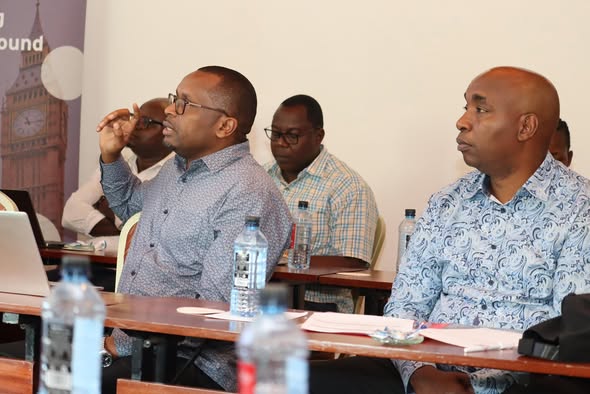
The National Assembly Committee on Public Debt and Privatization has intensified its focus on safeguarding Kenya’s fiscal stability by engaging the Office of the Auditor General and the Macroeconomic and Financial Management Institute of Eastern and Southern Africa in a technical dialogue on improving debt sustainability and oversight.
Chaired by Hon. Zachary Kwenya Thuku, the session examined ongoing reforms in public debt management and explored ways to enhance the Committee’s capacity to assess fiscal risks and borrowing practices within the broader economic context.
MEFMI Director of Debt Management Programmes Jacob Mkandawire provided an assessment of Kenya’s public debt trajectory and highlighted the need to strengthen domestic capacity in debt sustainability analysis, forecasting and cost-risk evaluation. He pointed to repeated deviations from the Annual Debt Management Strategy as a driver of rising debt and servicing costs, which continue to shrink fiscal space for development priorities.
He recommended comprehensive reforms aligned with global standards, including more predictable annual borrowing plans, improved transparency, stronger institutional governance of the Debt Management Office and a more strategic selection of financing instruments.
The Office of the Auditor General, represented by Dr. Gideon Mokaya, outlined the critical role of audit in debt governance and provided an update on the country’s current debt exposure. According to the 2025 Annual Public Debt Management Report, Kenya’s debt stock grew from KES 7.7 trillion in FY2020/21 to KES 11.18 trillion in FY2024/25. Debt servicing now consumes 36 percent of the national budget and 68.3 percent of ordinary revenue, signalling tightening fiscal space and increased vulnerability for essential development spending.
Dr. Mokaya said audits have consistently identified gaps in the debt management cycle, including weaknesses in project appraisal and loan contract terms that raise costs and delay implementation. He emphasized the need for better execution of audit recommendations to unlock real improvement in transparency and efficiency.
He acknowledged policy reforms underway at the National Treasury such as the adoption of a debt threshold aligned to macro-fiscal realities, the introduction of a predictable securities issuance calendar and steps to deepen the domestic debt market. Liability management operations have also helped smooth repayment obligations.
The Committee committed to strengthening its technical collaboration with the Auditor General and MEFMI, including more structured engagements to support evidence-based oversight. Hon. Thuku reiterated that the House remains focused on reforms that protect Kenya from unsustainable debt risks while supporting long-term economic resilience and accountability.