


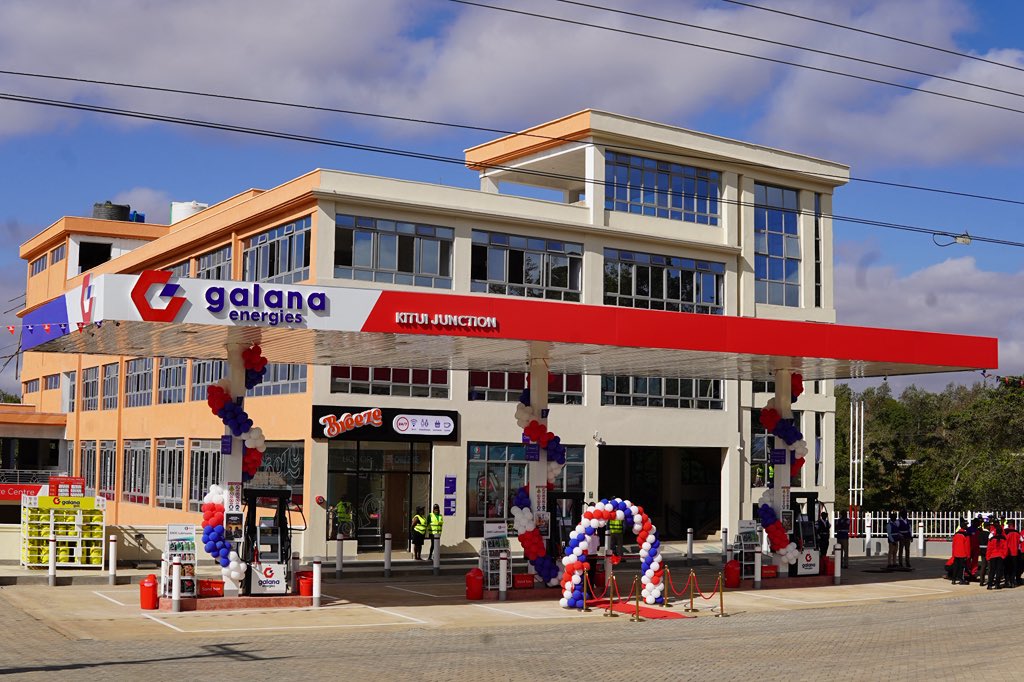
Galana Energies is a Kenyan‑owned oil marketing company formally registered on June 7, 2000. The company is not owned by a single individual but by a set of entities/shareholders. The three main shareholder companies are:
- Tapiola Limited
- Romichi Company
- Sai Ram Investment Company
These three companies jointly hold the shares of Galana Energies.
Although the ultimate beneficial owners behind those shareholder companies are somewhat opaque, publicly available filings reference those three as the legal registered shareholders.
What Is Galana Energies — Its Business & Reach
Origins & Evolution
- The firm started in 2000 under the name Galana Oil Kenya Limited. Within a few years it entered retail fuel marketing under the brand name “Delta” service stations.
- Over time, the business expanded from wholesale petroleum supply and bulk distribution into a network of retail fuel stations across Kenya.
Recent Rebrand & Market Position
- In December 2024, the company rebranded from “Galana Oil / Delta service stations” to “Galana Energies”, unifying its business under one corporate identity. This was presented as a reflection of its growth, ambition, and renewed commitment to energy solutions.
- As of 2025, Galana Energies operates over 50 service stations nationwide under this unified brand.
What They Do Today
Their business covers multiple energy and fuel‑service operations:
- Importation, distribution and retailing of petroleum products (fuel stations)
- Bulk supply to commercial customers
- Sale and distribution of lubricants
- Supply of LPG (liquefied petroleum gas) products
Through these operations, Galana Energies serves private motorists, commercial clients, transporters, and industries — making it a recognized player in Kenya’s downstream energy sector.
Leadership: Who Runs the Company
The officially named Chief Executive Officer of Galana Energies is Anthony Munyasya. Under his leadership, Galana Energies executed the 2024 rebrand and has publicly committed to expansion, customer‑service focus, and sustainable growth.
Why Ownership Structure Matters — What the Shareholders Mean for Stakeholder Transparency
Because Galana Energies is owned by three holding companies (Tapiola, Romichi, Sai Ram), tracing the actual individuals behind the firm is harder than if it were a founder‑owned firm. This kind of corporate structure is not uncommon among large private firms in Kenya. The consequences are:
- Ownership is less immediately visible to the public — beneficial owners may not be disclosed.
- The company’s decisions and liability are vested in corporate entities rather than a public individual name, which can help in risk‑management, investment structuring or regulatory compliance.
- For public scrutiny, media, or investment analysis, the shareholder‑company structure can make accountability and transparency more complex than in simple owner‑operated firms.
As a result, while we can state legally registered shareholders, we cannot always definitively name all individuals who benefit behind the scenes.
What We Know — Recent Performance & Public Footprint (2024/2025)
- Galana Energies recently celebrated 25 years in the market — marking a quarter‑century since its founding. During this milestone, the company ran various promotions and events to engage customers, reflecting its continued presence and ambition in Kenya’s energy market.
- The rebranding to Galana Energies was more than cosmetic: it signalled an ambition to expand network footprint, consolidate business operations (fuel, LPG, lubricants, bulk supply), and push a modern identity in a competitive petroleum‑retail market.
- The company’s service-station network across Kenya gives it a nationwide footprint, meaning its supply, retail, and energy distribution operations reach many urban and rural customers.
What Is Less Clear / What Remains Opaque
- Publicly available information does not clearly identify the ultimate individual beneficiaries or “owners behind the shareholders.” The registered shareholder‑companies do not translate plainly into named persons in public documents.
- Because of that, claims about single “owners” or “tycoons” behind Galana Energies are often speculative or unverified.
- As with many private firms in Kenya, corporate governance, actual control, and beneficial ownership may not always be transparent to the public or media.
Why This Information Matters
Understanding who owns and controls a major petroleum‑marketing company such as Galana Energies is important because:
- The downstream fuel sector affects many households, businesses and transport operators — knowing who controls supply gives insight into pricing, supply reliability and market influence.
- In discussions about regulation, licensing, government‑to‑government oil import agreements or public‑sector contracts, clear ownership and corporate structure helps in accountability.
- For potential investors, rival firms or stakeholders in the energy sector, clarity on ownership can influence business decisions, partnerships and competition assessments.