


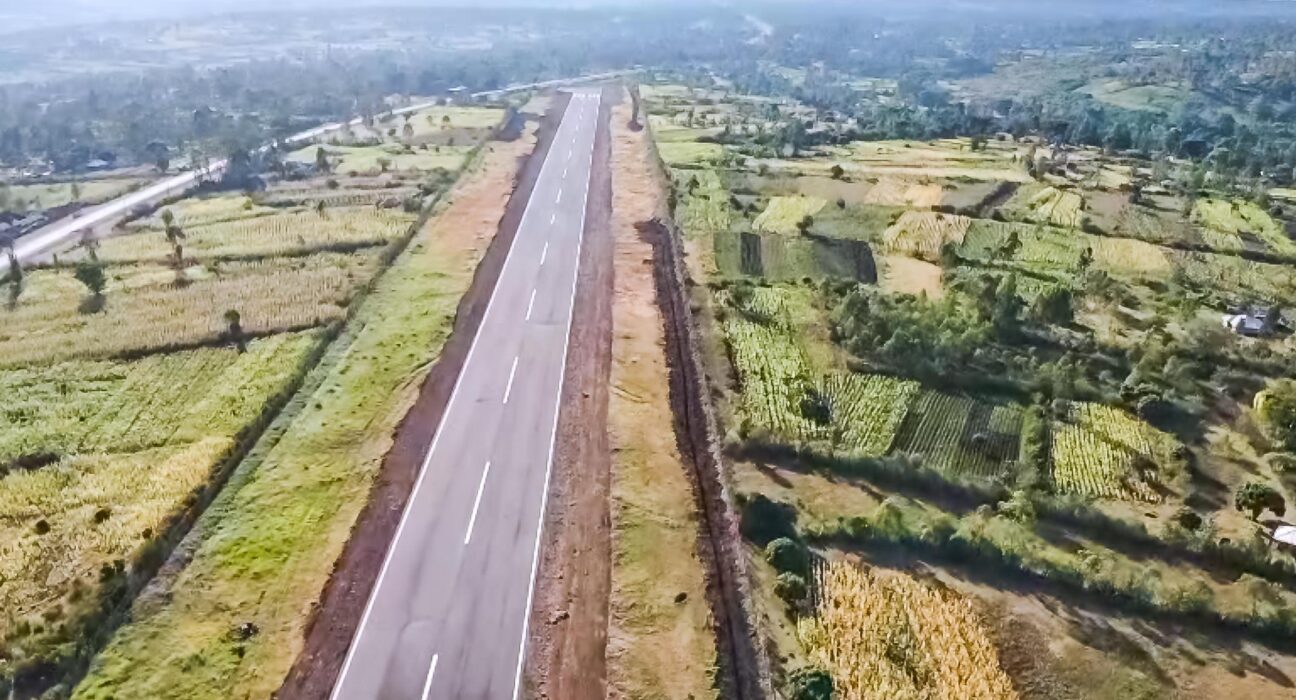
Economic prospects on Rusinga Island are shifting rapidly as the newly completed Rusinga Ring Road takes shape, with national government officials describing the project as a transformative infrastructure investment that is already changing livelihoods before its official inauguration.
Deputy Chief of Staff for Delivery and Government Efficiency Eliud Owalo said the tarmac road, a first for the island, will significantly improve access to markets, expand tourism opportunities and enhance productivity in the fisheries sector which forms the backbone of the local economy. The remarks came during his multi-day inspection tour of priority national government projects across Homa Bay County.
The Rusinga Ring Road, a 19.4-kilometre loop developed by the Kenya Urban Roads Authority (KURA) at a cost of KES 1.3 billion, traces the island’s scenic shoreline. It forms part of the government’s broader effort to develop a 480-kilometre Lake Victoria ring-road network that aims to unlock commercial linkages and open new investment corridors around the lake region.
“This is the first tarmac road ever built on this island, and it will undoubtedly be a game changer,” Owalo said after inspecting the project in Mbita Subcounty. “Rusinga has beautiful beaches, abundant fish stocks, and its proximity to Ruma National Park will now make it a top tourist destination.”
Boost for Fish Value Chain
The new road is expected to deliver immediate benefits to fisherfolk, who rely on prompt access to local and regional markets to sell fresh, highly perishable fish. Previously, muddy and rough roads increased spoilage, reduced negotiating strength and limited the distances traders could cover.
With a paved loop connecting multiple landing beaches, transporters can now move fish more quickly to processing and market centres, reducing post-harvest losses and putting more income directly into the hands of local households.
Improved connectivity could further stimulate investments in cold chain logistics, storage, processing and fisheries-based micro-enterprises, amplifying gains along the value chain.
Strengthening Homa Bay’s Investment Appeal
Owalo’s tour, carried out in collaboration with county leadership and agencies including KCAA, KeNHA, KeRRA and the Ministry of Investments, Trade and Industry (MITI), targeted key infrastructure projects supporting economic transformation across Homa Bay County.
Among the stops was the Kabunde Airstrip Runway Rehabilitation project, an upgrade valued at KES 216 million and funded through the Kenya Civil Aviation Authority. Now at 65 percent progress, the project aims to improve passenger and cargo air connectivity, making Homa Bay a more accessible destination for investors, tourists and business travellers.
Better air links are expected to complement gains from road expansion, positioning the county as a strategic gateway to the broader Lake Victoria region and encouraging diversification in economic activity.
Roads Opening Up Rural Economies
In Rachuonyo West, Owalo led a review of the Kadel–Alara–Pala–Kanyadhiang Centre–Kilusi–Opanga–Ramba road system, a 67-kilometre network under the Kenya Rural Roads Authority (KeRRA). With a total investment valued at KES 4 billion, the road package is currently at seven percent progress.
Once completed, the rural network will enhance mobility for farmers, students, traders and healthcare seekers by providing safer, faster and more reliable access to services previously constrained by rough terrain. Improved road access often correlates with higher crop value, increased rural enterprise growth and reduced poverty levels over time.
Supporting Industrial Growth and Value Addition
Further urban progress is centred around industrialisation and market access. Owalo inspected the Homa Bay County Aggregation and Industrial Park (CAIP), a flagship national government project being developed jointly with the county administration. The facility, budgeted at KES 498 million, is currently 59 percent complete.
The CAIP will serve as a value-addition hub for agricultural and blue economy products including fish, fruits, crops and livestock. With aggregation, grading and light processing facilities, farmers and traders are expected to access better prices and reduce waste.
Supporting infrastructure includes a 3-kilometre KeNHA access road under construction at a cost of KES 424 million and now 40 percent complete. The link road is crucial to integrating the industrial park into major commercial routes, enhancing efficiency for goods movement and logistics providers.
Strategic Development on Lake Victoria Corridor
Owalo emphasised that investments like the Rusinga Ring Road are part of a deliberate strategy to unlock the economic potential of Kenya’s lake corridor counties. Rusinga Island has long been recognised as a location with strong tourism potential due to its beaches, cultural heritage sites and proximity to Ruma National Park. However, limited accessibility historically hindered large-scale private investment.
The new road, which is already 99 percent complete and expected to open fully upon commissioning, establishes seamless internal mobility and connects the island more effectively to major hubs including Homa Bay Town, Mbita and beyond.
Tourism operators anticipate increased arrivals from domestic visitors seeking affordable nature-driven experiences, as well as international travellers drawn by Lake Victoria’s recreational offerings. Improved infrastructure is also expected to encourage the development of lodging facilities, restaurants, tour services and entertainment ventures.
Beyond tourism, wider lake corridor connectivity supports regional trade facilitation and could allow Rusinga to serve as an emerging logistics node in water–road transport linkages.
Government Pledges Fast-Tracked Delivery
Throughout the tour, the Deputy Chief of Staff underscored the government’s commitment to ensuring major infrastructure projects are delivered efficiently and without delay. The focus on verification and on-site supervision reflects efforts to identify implementation bottlenecks early and ensure taxpayers’ resources translate into visible, high-impact outcomes.
Owalo was joined by Homa Bay Governor Gladys Wanga, County Commissioner Ronald Mwiwawi, Presidential Advisor Sylvester Kasuku, Trade CEC Joash Aloo and teams from national delivery agencies including the Government Delivery Unit.
Their coordinated assessments seek to ensure infrastructure investments directly support priorities such as job creation, investment attraction, improved productivity and expanded access to public services.
“We are committed to ensuring Homa Bay County and the entire Nyanza region fully reap the benefits of improved infrastructure, enhanced investment and high-quality public services,” Owalo said.
As flagship road, aviation and industrial projects near completion, attention now shifts to operationalisation and ensuring communities and businesses are positioned to maximise the opportunities emerging from the region’s accelerated transformation.