


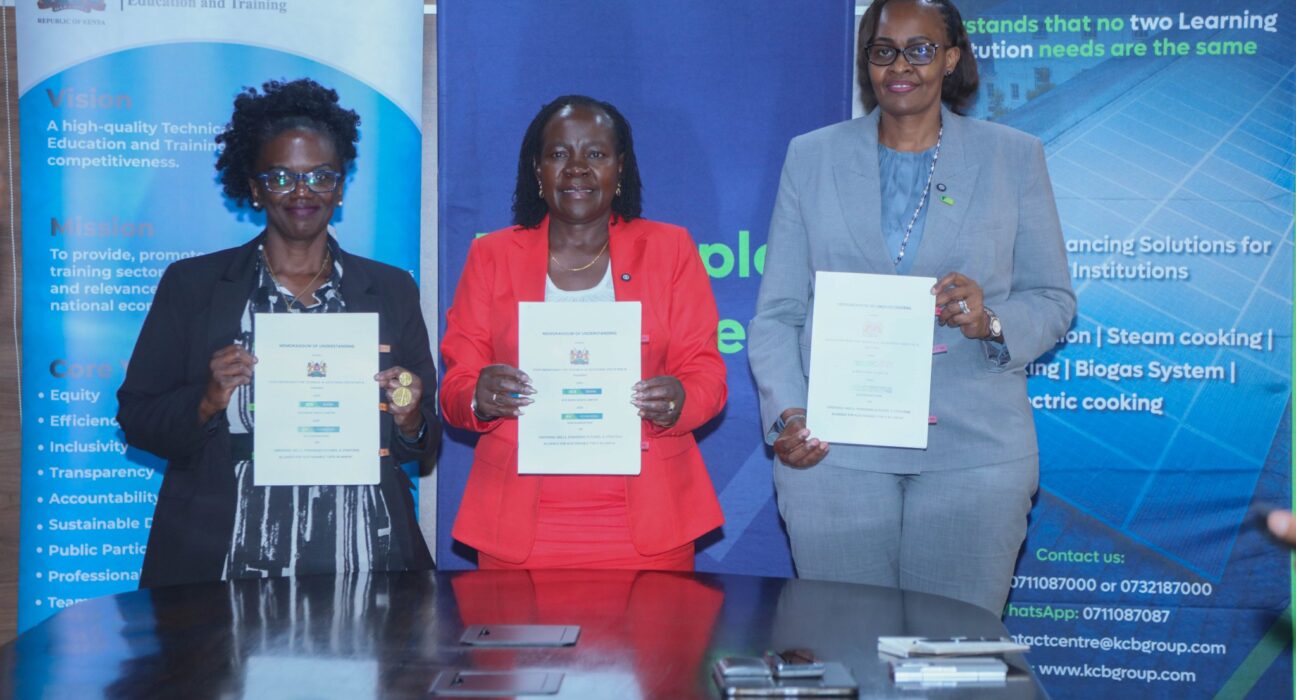
KCB Bank Kenya has entered into a new partnership with the Ministry of Education to scale up green financing for Technical and Vocational Education and Training institutions, in a deal expected to accelerate the shift toward clean and sustainable energy solutions within Kenya’s training ecosystem. The agreement, signed in Nairobi through the State Department for Technical and Vocational Training, positions the Bank as a key financier for institutions seeking environmentally friendly and reliable power systems.
The collaboration is geared toward enabling hundreds of TVETs across the country to invest in clean energy technologies, including solar power systems, energy efficiency upgrades, and other sustainable infrastructure. With thousands of students relying on these institutions for skills development in engineering, manufacturing, ICT, hospitality, construction, and other technical fields, the initiative is expected to improve training conditions by providing consistent and affordable energy.
Announcing the partnership, KCB Bank Kenya Managing Director Annastacia Kimtai said the initiative aligns with the Bank’s broader sustainability strategy and its push to accelerate climate-friendly investments within Kenya’s economic value chains. She noted that the Bank is increasingly prioritising green financing as part of its long-term growth strategy.
“KCB is keen to work with like-minded partners to deepen green agenda and financial inclusion. This collaboration underscores our continued commitment to empowering the next generation with the skills and sustainable infrastructure they need to thrive in a rapidly evolving economy,” Kimtai said.
Kenya’s TVET sector has undergone rapid expansion over the past decade, driven by growing demand for technical skills that match the needs of an evolving labour market. However, many institutions continue to grapple with unreliable electricity supply, high energy costs, and ageing infrastructure, all of which affect the quality of training. Energy-intensive courses such as automotive engineering, welding, electrical installation, and digital technology require stable power to support practical sessions, workshops, and labs. The new financing arrangement is therefore expected to offer a timely solution for institutions looking to modernise their facilities.
Under the partnership, KCB Bank will leverage its sustainable finance framework to develop customised financing instruments for TVETs, helping institutions adopt clean energy systems that lower operational costs and support uninterrupted learning. As part of ecosystem banking, the agreement enables KCB to expand its green energy lending portfolio within the education sector while encouraging institutions to transition toward renewable technologies.
The Permanent Secretary for the State Department of Technical and Vocational Training, Dr. Esther Muoria, welcomed the initiative as a significant step in advancing the government’s efforts to strengthen TVET capacity nationwide. She noted that improving the energy resilience of institutions is central to the government’s broader agenda of raising training standards and equipping young people with skills that match the needs of industry.
“The government remains committed to enhancing the capacity of TVETs. This collaboration represents an important step toward expanding green infrastructure in our learning institutions. Access to reliable and sustainable energy directly supports our goal of offering high-quality, industry-aligned training,” Dr. Muoria said.
Kenya has set ambitious targets for expanding renewable energy adoption as part of its climate commitments, with the government emphasising the role of public institutions in demonstrating leadership in sustainable energy use. TVETs, which prepare young people for technical careers, are seen as critical drivers of this transition. By exposing trainees to modern, energy-efficient technologies and clean energy systems, the initiative is expected to reinforce national efforts to build a skilled workforce that supports Kenya’s green economy ambitions.
KCB Foundation Director Mendi Njonjo said the agreement strengthens the Bank’s role in supporting green innovation in the education sector. She noted that access to clean, affordable energy is essential for institutions seeking to modernise their training equipment and integrate sustainability into their operations.
“This agreement will see the Bank grow its support for green innovation within the education sector, ensuring that institutions are better equipped to adopt clean energy and contribute to national sustainability goals,” Njonjo said.
The partnership also reflects KCB Bank’s growing involvement in financing sustainability-linked projects across different economic sectors. Over the past few years, the Bank has increased allocations toward renewable energy, energy efficiency, and climate-resilient infrastructure. With education emerging as a critical part of Kenya’s transition to a cleaner economy, the Bank has positioned itself as a key private sector player in enabling public institutions to access affordable green financing.
The agreement comes at a time when Kenya’s energy sector continues to grapple with rising electricity costs and intermittent supply challenges. Many learning institutions rely on outdated electrical systems that limit their ability to support expanded programmes or integrate modern equipment. Green energy systems, such as solar installations and hybrid power solutions, offer a sustainable alternative that can help institutions lower costs while ensuring stable power for training activities.
Analysts argue that improving energy reliability within TVETs will have a ripple effect on Kenya’s broader economic competitiveness. Well-equipped institutions produce graduates who are better prepared for industry demands, particularly in manufacturing, engineering, and emerging sectors such as renewable energy technologies. Industry leaders have also emphasised the importance of aligning skills training with the country’s long-term industrialisation agenda.
Present during the signing ceremony were the Head of SME Banking and Agribusiness at KCB, Naomi Ndele, and the Head of Sustainable Finance, Eric Naivasha, along with representatives from the State Department and other sector stakeholders. Their presence underscored the cross-sector collaboration required to advance sustainable financing and expand the adoption of green technologies within the public education system.
The initiative is expected to pave the way for additional partnerships targeting green infrastructure in schools, colleges, and universities as Kenya continues to prioritise climate resilience and sustainability in public investment. For TVETs in particular, enhanced energy reliability is likely to translate into better learning outcomes, more efficient operations, and a greater ability to embrace modern technologies.
As the financing framework rolls out, both the Ministry and KCB Bank are expected to work closely with individual institutions to identify their specific energy needs and recommend suitable clean energy solutions. The Bank will also provide advisory support to ensure that projects meet sustainability and technical standards.
With thousands of young people enrolled in TVET programmes each year, the partnership marks a notable investment in the country’s human capital development. It signifies a move toward integrating sustainability into the foundations of technical training, ensuring that Kenya’s future workforce is prepared for the demands and opportunities of a green economy.