


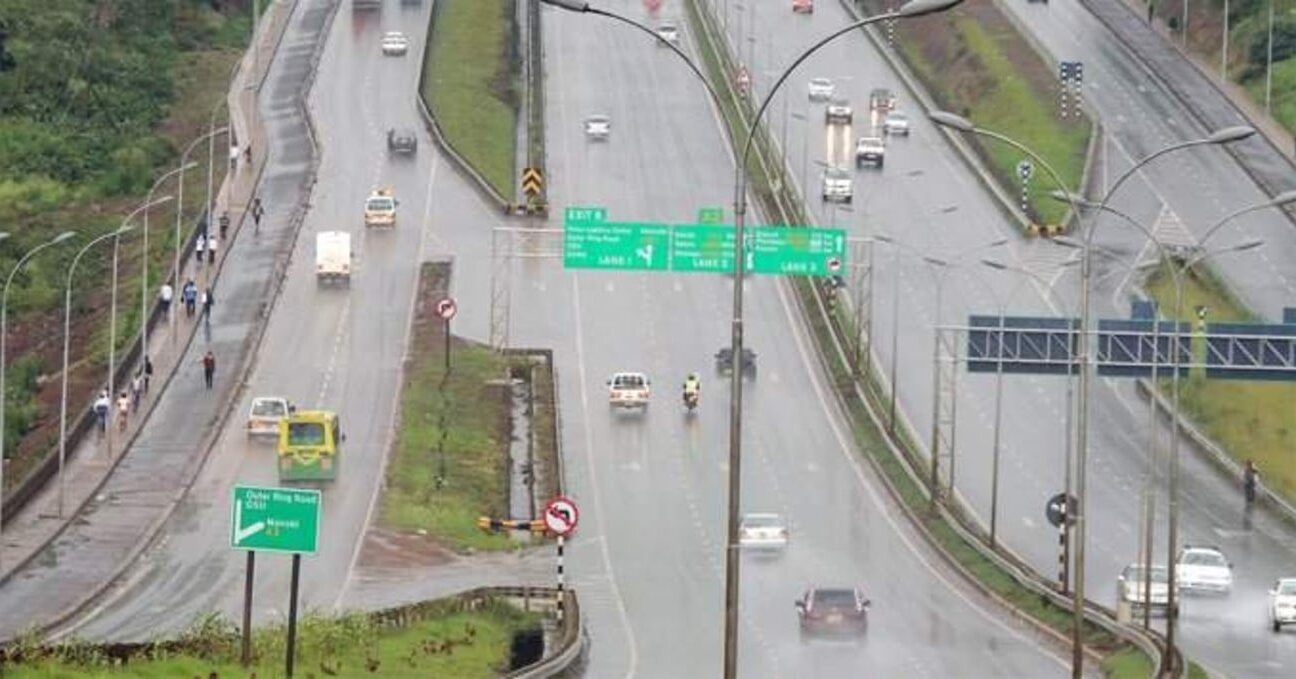
The Motorist Association of Kenya has questioned the need for the proposed construction of a Thika Road Expressway, arguing that the existing Thika Superhighway already meets global expressway standards and that scarce public resources should be directed toward more urgent transport priorities.
In a detailed policy statement, the association said it had initially refrained from reacting to the announcement by national leadership regarding plans to dual the highway and develop an expressway facility along the corridor. According to MAK, the decision to remain silent was deliberate and rooted in respect for the Executive, which it believes acts in good faith and with responsibility when making infrastructure decisions.
However, the lobby group said that its long-standing engagement in transport policy advocacy compelled it to publicly articulate concerns once the expressway proposal took clearer shape.
“For over two decades, MAK has consistently lobbied for sound transport policies that serve not only motorists but all citizens who depend on road infrastructure for social and economic activity,” the association said. “It is from this policy perspective that we now find it necessary to speak.”
MAK argues that by all accepted technical and functional definitions, the Thika Superhighway already qualifies as an expressway. Internationally, expressways are described as multi-lane road facilities designed for uninterrupted, high-speed traffic flow, with no traffic lights, roundabouts, pedestrian crossings, or intersecting cross traffic. Access to such roads is typically controlled through slip roads, acceleration lanes, and designated merging points.
According to the association, Thika Road meets these criteria. It has no traffic lights or roundabouts along its main carriageways, no direct cross traffic, and access is strictly controlled. Pedestrians, cyclists, animal-drawn carts, and other slow-moving road users are excluded from the main express lanes, aligning the highway with international expressway design principles.
Traffic data cited by MAK indicates that Thika Road carries an exceptionally high volume of vehicles. On busy days, the corridor is estimated to handle close to one million vehicle movements in both directions, or roughly 500,000 vehicles one way. Despite this heavy usage, traffic flows smoothly on most ordinary days, reinforcing the view that the road’s core design remains sound.
On this basis, MAK contends that constructing another expressway parallel to an already functioning one is neither urgent nor economically justified.
“What Thika Road urgently requires is not another car-only facility but targeted interventions that address specific bottlenecks and improve overall transport efficiency,” the association said.
Chief among these is the Pangani junction, which MAK identified as a persistent congestion point. The group proposed the construction of a viaduct to allow traffic from Kiambu Road to pass seamlessly over the junction toward Wangari Maathai Road, Murang’a Road, and Kariokor. According to the association, such an intervention would significantly reduce delays without the need for a wholesale reconfiguration of the corridor.
Beyond junction improvements, MAK emphasised the need for mass transit solutions along the Thika Road corridor. The association said that Bus Rapid Transit and Light Rail Transit systems should take priority over additional road infrastructure designed primarily for private vehicles.
“Car-only roads disproportionately serve a small, privileged segment of society,” the statement said, noting that the majority of Kenyans who use the corridor rely on public transport for daily commuting. Mass transit systems, the association argued, would move more people more efficiently while reducing congestion, emissions, and overall transport costs.
MAK also raised concerns about the broader policy context surrounding the expressway proposal. The association suggested that the renewed focus on a Thika Road Expressway may be linked to anticipated tolling of the western section of the A8 corridor. According to MAK, the framing of the project risks creating the impression that all major highways must be tolled for the sake of perceived equity, regardless of actual infrastructure needs.
“The implicit message appears to be that if other roads are tolled, then Thika Road should also be charged,” MAK said, warning that such logic should not replace objective, evidence-based planning.
The association stressed that Kenyan motorists are increasingly aware of the political and financial considerations that shape infrastructure policy and that public acceptance depends on clear justification and demonstrable public value.
Kenya’s transport sector faces numerous competing demands, including dangerous highways in need of redesign, stalled mass transit projects, and road safety interventions that could significantly reduce fatalities and injuries. According to MAK, diverting resources to re-engineer an already functional highway undermines the ability to address these more pressing needs.
The group argued that transport investment should be guided by measurable outcomes, including safety improvements, travel time reductions, and equitable access, rather than symbolic projects that deliver limited incremental benefit.
MAK urged the government to recommit to evidence-based transport planning that prioritises the movement of people rather than vehicles alone. Such an approach, the association said, would align better with national development objectives, urban mobility needs, and long-term sustainability goals.
As Kenya continues to expand and modernise its transport infrastructure, debates around funding models, tolling, and project prioritisation are expected to intensify. The Thika Road Expressway proposal now joins a growing list of infrastructure initiatives facing scrutiny from stakeholders seeking greater transparency, efficiency, and public value.