


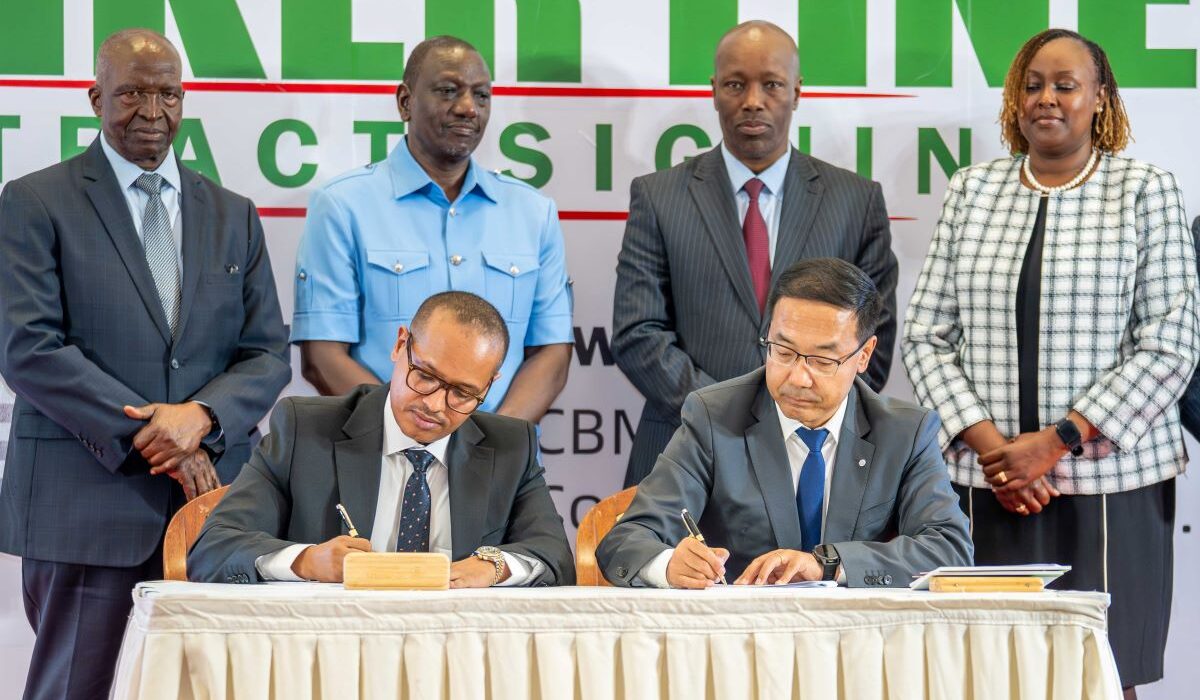
Bamburi Cement Plc has signed a US$250 million (approximately KSh32 billion) Engineering, Procurement, and Construction (EPC) contract with Sinoma CBMI Construction Co., Ltd for the development of a new turnkey clinkerisation factory in Matuga, Kwale County, marking one of the company’s largest industrial investments in recent years.
The project will see the construction of a state-of-the-art clinker plant with an annual production capacity of 1.6 million tonnes, incorporating advanced, energy-efficient and carbon-mitigation technologies. Once operational, the facility is expected to more than double Bamburi’s clinker and cement production capacity, significantly reducing reliance on imported clinker and strengthening Kenya’s domestic cement supply.
The investment forms a core pillar of Bamburi Cement’s long-term corporate strategy to expand capacity, enhance operational efficiency, and support Kenya’s growing infrastructure and construction sector. Bamburi aims to increase clinker production from one million tonnes to 2.6 million tonnes annually, while cement production capacity will rise from 1.8 million tonnes to four million tonnes per year.
The EPC contract was signed during a ceremony attended by President William Ruto, Amsons Group Managing Director Edha Nahdi, Bamburi Cement Chairman John Simba, and other senior government and industry leaders, underscoring the project’s national economic significance.
Speaking at the signing ceremony, Bamburi Cement Chief Executive Officer Mohit Kapoor said the Matuga clinker plant represents a transformative investment that will position the company as a more competitive and resilient cement manufacturer.
“The construction of the new Matuga clinker plant with best-in-class features, including a six-stage precalciner system, represents one of the most significant industrial investments by Bamburi Cement in recent years,” Kapoor said. “This project will greatly reduce our reliance on imported clinker, improve production consistency, and secure long-term supply for the domestic market.”
Kapoor added that the investment will support rising demand for cement driven by national infrastructure programmes and private sector construction, while also stabilising prices and conserving foreign exchange by lowering clinker imports.
Bamburi Cement is a member of the Amsons Group, a pan-African industrial conglomerate with operations across East Africa. Since its acquisition by Amsons, Bamburi has accelerated its expansion strategy, with the Matuga project forming a cornerstone of its integration into the Group’s regional operations.
Amsons Group Managing Director Edha Nahdi said the investment reflects the Group’s commitment to supporting Kenya’s long-term development agenda, particularly President Ruto’s recently unveiled 10-year national infrastructure roadmap.
“Amsons Group stands ready to make its contribution to support President Ruto’s ambitious Sh5 trillion roadmap on road, rail, ports, airports, and oil pipeline infrastructure development,” Nahdi said. “By signing this clinkerisation plant EPC contract, we are putting our money where our mouth is to power Kenya’s national development and economic transformation.”
President Ruto’s development plan, to be financed through the proposed National Infrastructure Fund, aims to transform Kenya into a high-income economy through large-scale investment in transport, housing, energy, and industrial infrastructure. Cement and concrete products are expected to play a central role in delivering the programme.
The new Matuga clinker plant is strategically located in Kwale County, a region increasingly emerging as an industrial and logistics hub along Kenya’s Coast. The project is expected to generate employment opportunities during construction and operations, stimulate local enterprise participation, and boost economic activity in the wider Coastal region.
Bamburi said the project aligns with the government’s Bottom-Up Economic Transformation Agenda (BETA), which prioritises local manufacturing, value addition, job creation, and reduced reliance on imports.
Beyond capacity expansion, the Matuga plant is designed with a strong sustainability focus. The facility will incorporate modern, energy-efficient technologies to significantly reduce emissions and environmental impact, in line with global climate standards and Bamburi’s sustainability commitments.
The clinker plant will utilise Alternative Fuels and Raw Materials (AFR), including coconut husks, cashew nut shells, and municipal solid waste sourced from the Coastal region. The use of AFR is expected to lower fossil fuel consumption, reduce carbon emissions, and support circular economy practices by converting waste into productive industrial inputs.
According to Bamburi, the project supports the company’s long-term environmental stewardship strategy while maintaining compliance with increasingly stringent environmental, social, and governance (ESG) standards.
Sinoma CBMI Construction Co., Ltd, the EPC contractor for the project, is a subsidiary of the China National Building Material Group (CNBM), the world’s largest manufacturer of building materials. The firm is globally recognised for delivering large-scale cement and industrial plants and brings extensive expertise in engineering design, procurement, and construction.
Bamburi said Sinoma’s involvement guarantees world-class technology, execution capability, and operational reliability for the Matuga clinker line, reducing project risk and ensuring timely delivery.
As part of the Amsons Group’s broader regional footprint, the Matuga plant is expected to strengthen supply-chain efficiencies and enhance Bamburi’s competitiveness across East Africa. The additional capacity will allow the company to better serve both domestic and regional markets while mitigating exposure to external supply disruptions.
Industry analysts say the investment comes at a critical time for Kenya’s cement sector, which has faced fluctuating demand, rising energy costs, and increased competition. By securing clinker self-sufficiency and improving cost efficiency, Bamburi is positioning itself to better withstand market volatility while capitalising on long-term infrastructure growth.
The EPC contract signing marks a significant milestone in Bamburi Cement’s transformation under Amsons Group ownership, signalling renewed capital investment, a stronger production base, and a forward-looking strategy anchored on sustainability, efficiency, and scale.
Once completed, the Matuga clinker project is expected to reinforce Bamburi Cement’s role as a key supplier to Kenya’s construction sector and a critical contributor to the country’s industrial and economic development ambitions.