


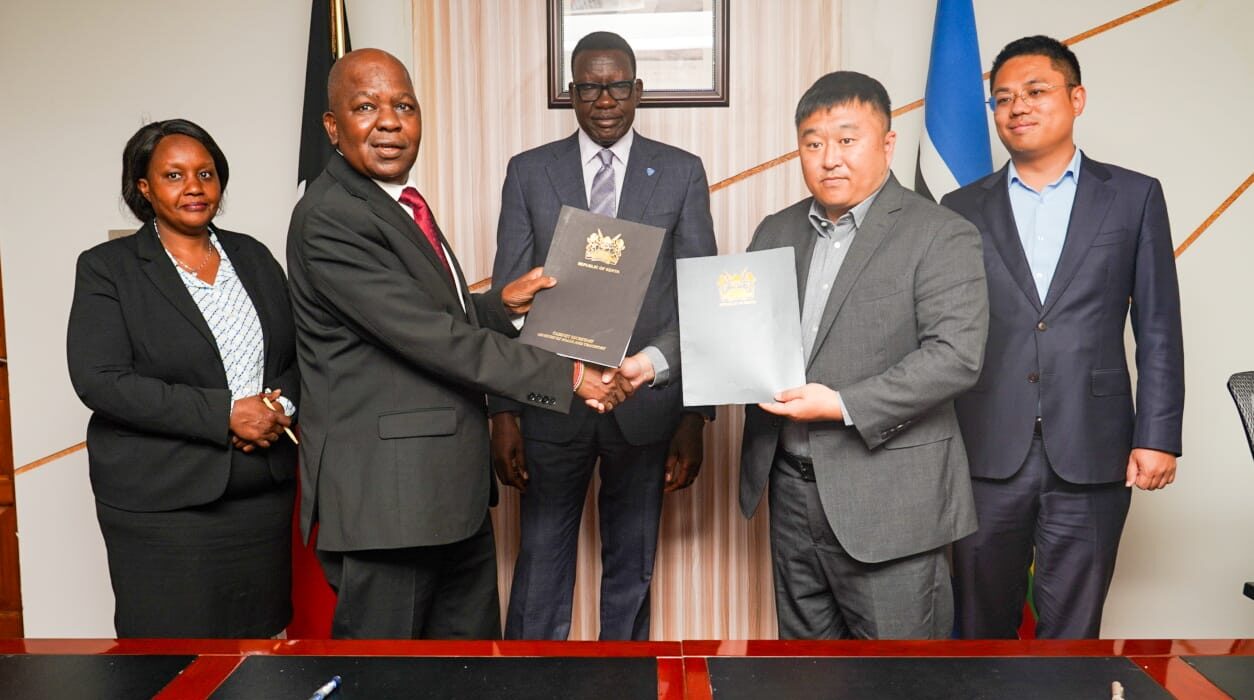
The government will finance the construction of the Naivasha–Kisumu Standard Gauge Railway (SGR) Phase 2B by securitising part of the Railway Development Fund (RDF), following Cabinet approval and the signing of a contract addendum between Kenya Railways and China Communications Construction Company (CCCC).
The decision marks a shift in Kenya’s infrastructure financing strategy, as the government seeks alternative funding mechanisms to advance large-scale transport projects amid constrained public borrowing space and rising debt servicing costs.
According to Cabinet, the securitisation arrangement will allow the government to unlock capital from future RDF revenues, providing upfront financing required to resume construction of the long-delayed Naivasha–Kisumu SGR extension without relying on new external sovereign loans.
The addendum signed by Kenya Railways and CCCC updates the existing engineering, procurement, and construction framework, paving the way for phased implementation once the financing structure is finalised.
SGR Phase 2B will extend the railway line from Naivasha to Kisumu, a critical link intended to connect the port of Mombasa to western Kenya and the Lake Victoria region. The project is also expected to strengthen regional trade corridors linking Kenya to Uganda, Rwanda, South Sudan, and eastern Democratic Republic of Congo.
The Railway Development Fund is primarily financed through a levy on imported goods and is dedicated to the development, maintenance, and expansion of railway infrastructure in the country. By securitising part of the fund, the government plans to convert predictable future cash flows into immediate capital to support construction works.
Officials say the approach is designed to accelerate project delivery while easing pressure on the national budget and avoiding additional external debt accumulation.
Once completed, the Naivasha–Kisumu SGR is expected to significantly lower cargo transport costs, reduce travel time, and decongest major highways currently handling freight traffic between the Rift Valley and western Kenya.
The extension will also enhance the operational viability of the existing Mombasa–Naivasha SGR line by increasing cargo volumes and improving connectivity to key agricultural and industrial zones.
The Naivasha–Kisumu section has previously stalled due to financing constraints, despite being a central component of Kenya’s long-term transport and logistics strategy. Its revival aligns with the government’s broader infrastructure agenda, which prioritises rail, road, port, and logistics investments to support economic growth and regional competitiveness.
China Communications Construction Company, the original contractor for earlier SGR phases, remains the project’s engineering and construction partner under the revised contract framework. The firm has extensive experience in large-scale railway projects across Africa and Asia.
The government says further details on project timelines, cost structure, and implementation phases will be provided once the securitisation transaction is completed and financial close is achieved.
If successfully executed, the financing model could set a precedent for funding other major infrastructure projects through domestic resource mobilisation and structured finance instruments, reducing reliance on traditional external borrowing.