

Safaricom PLC on Tuesday marked the formal listing of its Green Bond at the Nairobi Securities Exchange, capping a landmark capital markets transaction that attracted strong retail participation and underscored growing appetite for sustainable investment products in Kenya.
The listing followed an oversubscribed bond offer that drew applications worth KES41.4 billion, representing a subscription rate of 175 percent. Safaricom will take up KES20 billion in the first tranche of its Domestic Medium-Term Note programme, making the transaction the largest green bond issuance in Kenya’s capital markets to date.
According to the company, 2,453 individual investors accounted for 96 percent of all applications, highlighting a broad retail uptake that distinguished the bond from traditional corporate debt offerings, which are often dominated by institutional investors.
A significant share of the applications were made through digital channels, with Safaricom noting that USSD-based applications and payments via M-PESA accounted for 59 percent of total submissions. The structure and distribution model introduced new market standards by prioritising accessibility and ease of participation, particularly for retail investors.
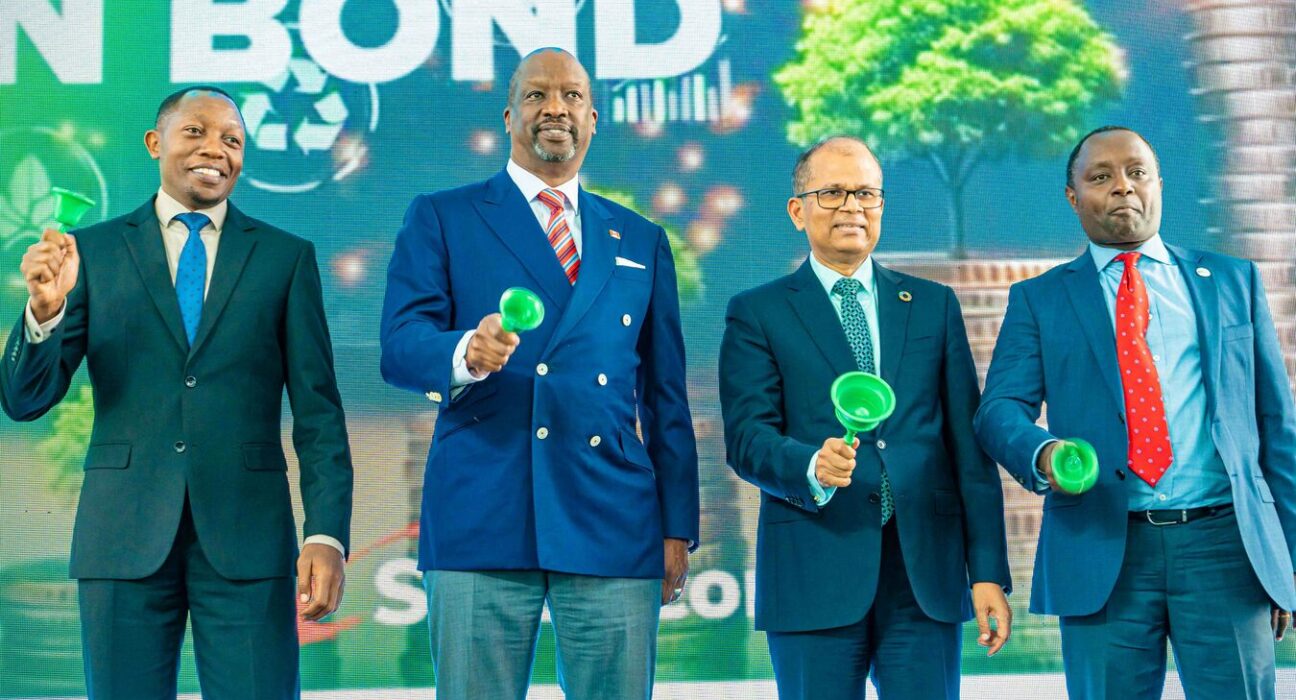
The listing was officially commemorated through the traditional bell-ringing ceremony at the Nairobi Securities Exchange, signalling Safaricom’s deliberate return to the capital markets and the first issuance under its Medium-Term Note programme. The programme is anchored in the company’s Sustainable Finance Framework, which aligns funding activities with environmental and long-term development objectives.
“This transaction demonstrates what is possible when local capital markets are deliberately and thoughtfully engaged,” said Safaricom PLC Group Chief Finance Officer Dilip Pal. “It is a clear vote of confidence in our fundamentals, strategy, and long-term outlook, and a strong signal of confidence in the depth and resilience of Kenya’s capital markets.”
The green bond represents a strategic shift in Safaricom’s approach to funding, positioning the capital markets as a scalable and sustainable source of long-term financing alongside traditional bank funding and internal cash generation. It also signals the company’s intention to establish itself as a disciplined and innovative issuer aligned with the long-term development of Kenya’s debt capital markets.
Safaricom said the proceeds from the bond will be deployed toward investments that support an energy-efficient digital future. Key areas include the rollout of 5G infrastructure, the solarisation of network sites, and the gradual transition away from legacy technologies toward cleaner and more efficient systems.
The company’s expanding network footprint and rising data demand have increased capital expenditure requirements, particularly as it upgrades infrastructure to support next-generation connectivity. Management said the green bond provides long-tenor funding that better matches the life cycle of such assets while also reducing the environmental footprint of network operations.
Beyond Safaricom’s balance sheet, the transaction has been viewed as a significant milestone for Kenya’s capital markets and the broader sustainable finance agenda. Market participants say the successful issuance demonstrates the ability of local markets to mobilise long-term capital for productive investment, even in a challenging global financial environment.
Green bonds are designed to finance projects with clear environmental benefits, and their uptake globally has been driven by growing investor focus on climate resilience, energy efficiency, and sustainability. In Kenya, the market remains relatively nascent, making Safaricom’s issuance a benchmark for other corporates and issuers considering similar instruments.
The strong retail participation also reflects the increasing democratisation of capital markets access, driven by digital platforms and mobile-based investment channels. Safaricom’s use of USSD and M-PESA significantly lowered barriers to entry, allowing smaller investors to participate in a product traditionally seen as complex or inaccessible.
The company said the transaction aligns with its broader commitment to deepening participation in capital markets through continued innovation. Initiatives such as Ziidi, Safaricom’s mobile money market fund, have already introduced millions of Kenyans to saving and investing through familiar mobile platforms.
Safaricom indicated that it will continue exploring new ways to expand access to capital markets products, with a focus on financial inclusion and long-term wealth creation. Management said this approach not only benefits individual investors but also strengthens domestic capital markets by broadening the investor base.
The green bond listing also comes at a time when policymakers and regulators are encouraging greater use of local capital markets to fund infrastructure, corporate expansion, and climate-related investments. By issuing locally denominated debt, Safaricom reduces exposure to foreign exchange risk while supporting the development of domestic debt markets.
Analysts say the success of the bond may encourage other large corporates to return to the market, particularly as interest rate conditions stabilise and investor confidence improves. It also reinforces Nairobi’s position as a regional hub for sustainable finance and innovative capital markets solutions.
Safaricom reaffirmed its commitment to transparency and ongoing engagement with investors, noting that reporting on the use of proceeds and environmental impact will form part of its obligations under the Sustainable Finance Framework.
The green bond is now fully listed and available for trading on the Nairobi Securities Exchange, offering investors liquidity and price discovery while cementing Safaricom’s position as a leading issuer in Kenya’s evolving sustainable finance landscape.