


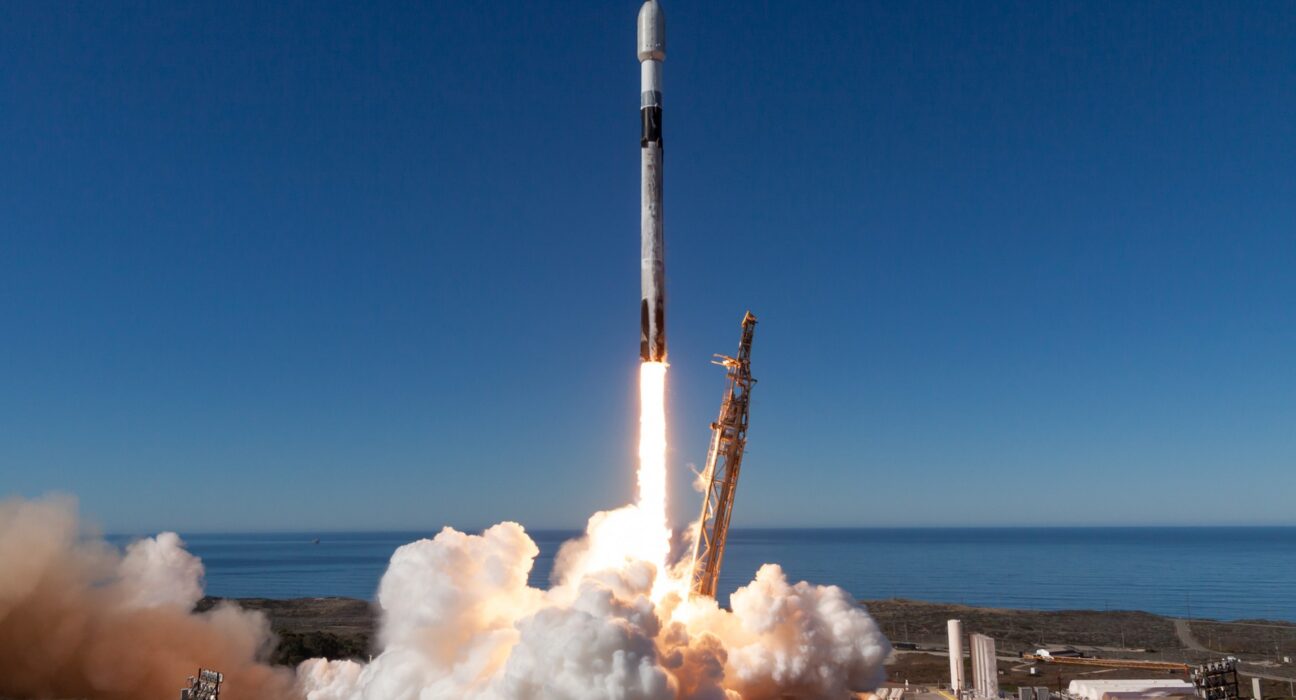
Kenya has launched formal preparations to develop a satellite launch facility along its Indian Ocean coastline, positioning the country to re-enter the global space launch industry and potentially become Africa’s leading equatorial spaceport hub.
The Kenya Space Agency (KSA) has announced plans to procure a transaction advisor to support the development of a satellite launch facility, or spaceport, in the general area of Kipini, between Malindi and Lamu. The project is to be implemented through a Public-Private Partnership (PPP) model in line with the PPP Act, 2021.
If realised, the facility would mark Kenya’s return to satellite launch capability more than three decades after the last launches from the historic San Marco Equatorial Range near Malindi.
Global Context and Strategic Rationale
Globally, there are 35 known spaceports and launch facilities capable of launching satellites or spacecraft into sub-orbit, orbit, and beyond. Of these, only 22 are currently active, underscoring both the exclusivity and strategic value of launch infrastructure.
Satellite launches from locations near the equator offer substantial technical and economic advantages. Because the Earth rotates fastest at the equator, rockets launched from low-latitude sites require less fuel to reach orbit, significantly lowering launch costs. Equatorial launch sites also enable easier placement of satellites into equatorial and low-inclination orbits, which provide shorter revisit times and higher temporal resolution for regions near the equator.
“These advantages translate into cost savings and improved satellite performance, particularly for Earth observation, communications, and climate monitoring applications relevant to Africa,” a KSA briefing note states.
Kenya’s geography places it squarely within this strategic zone. Straddling the equator and facing east toward the Indian Ocean, the country offers ideal launch trajectories over open water, reducing risks to populated areas and allowing safe recovery of rocket components downrange.
Africa’s Dormant Launch Heritage
Africa has a limited but notable history in space launch activity. Two launch facilities on the continent previously supported satellite and sounding rocket missions.
The Diamant launch pad near Hammaguir, Algeria, was used by France between 1947 and 1967, including the 1965 launch of Astérix, France’s first satellite. The site was also used for testing missile systems before being decommissioned.
Kenya hosted the continent’s most equatorial launch facility through the San Marco Project, located offshore near Malindi. Between 1964 and 1988, the San Marco Equatorial Range conducted 18 sounding rocket launches and successfully placed nine satellites into orbit.
However, both African facilities are no longer operational. As a result, satellites manufactured on the continent must currently be transported overseas for launch, significantly increasing costs and limiting Africa’s participation in the space economy.
Proposed Spaceport and Project Scope
The Kenya Space Agency’s ambition is to develop a modern satellite launch capability as a core pillar of Kenya’s national space programme. The proposed spaceport would support commercial satellite launches and related services, potentially serving regional and international customers.
To advance the project, KSA is seeking a transaction advisor to prepare comprehensive feasibility studies and structure the project for private sector participation.
Under the terms outlined by the agency, the advisor will be required to assess the technical, economic, financial, environmental, and social feasibility of developing a spaceport in Kenya. This includes preparing preliminary designs and drawings, developing a phased implementation plan, and proposing launch vehicle development or acquisition options.
The feasibility work will also include a value-for-money analysis and affordability assessment, ensuring the project aligns with public interest objectives under Kenya’s PPP framework.
PPP Structuring and Market Engagement
A central mandate of the transaction advisor will be to recommend the most suitable PPP model for the project, based on an assessment of alternative technical solutions and contractual structures.
The advisor will also conduct market sounding to gauge investor appetite and interest from global space companies, launch service providers, infrastructure developers, and financial institutions.
In addition, the advisor will be responsible for developing tender documentation for the procurement process, including Requests for Qualification (RfQ), Requests for Proposals (RfP), and a draft Project Agreement, while supporting KSA through required regulatory and PPP approvals.
Once a preferred bidder is identified, the advisor will provide guidance on negotiations, risk allocation, and contract structuring, and continue to support the project through to financial close.
Building Institutional Capacity
Beyond transaction execution, the advisory mandate includes capacity building for KSA and the national PPP Directorate. The advisor will be expected to strengthen institutional capability in PPP transaction implementation and long-term contract management, ensuring the agency can effectively oversee the project over its full lifecycle.
This focus reflects lessons from previous large-scale infrastructure projects, where inadequate public-sector capacity has sometimes undermined value delivery.
Economic and Strategic Implications
The development of a spaceport could have far-reaching economic and strategic implications for Kenya. Beyond direct revenues from launch services, the facility could catalyse growth in satellite manufacturing, data services, aerospace engineering, and advanced research.
Kenya already hosts regional hubs for Earth observation, climate monitoring, and telecommunications, and a domestic launch capability would strengthen the country’s position in the global space value chain.
The proposed site between Malindi and Lamu also aligns with broader government efforts to stimulate economic activity along the Coast, complementing investments in ports, transport corridors, and special economic zones.
A Competitive Global Market
While the global launch market is increasingly competitive, with new private spaceports emerging in the United States, Europe, and Asia, Kenya’s equatorial location remains a rare and valuable asset.
Industry analysts note that few countries combine equatorial positioning, year-round favourable weather, open ocean launch corridors, and established maritime and logistics infrastructure.
If successfully implemented, Kenya’s spaceport could become the only active equatorial launch facility on the African continent, offering a strategic alternative to overseas launch sites for African and international satellite operators.
Next Steps
The procurement of a transaction advisor marks the first formal step toward realising the project. Subject to feasibility outcomes, regulatory approvals, and investor interest, the spaceport would represent one of Kenya’s most ambitious high-technology infrastructure initiatives to date.
For Kenya Space Agency, the project signals a long-term vision to anchor the country firmly within the global space economy, leveraging geography, history, and partnerships to unlock new frontiers of growth.