


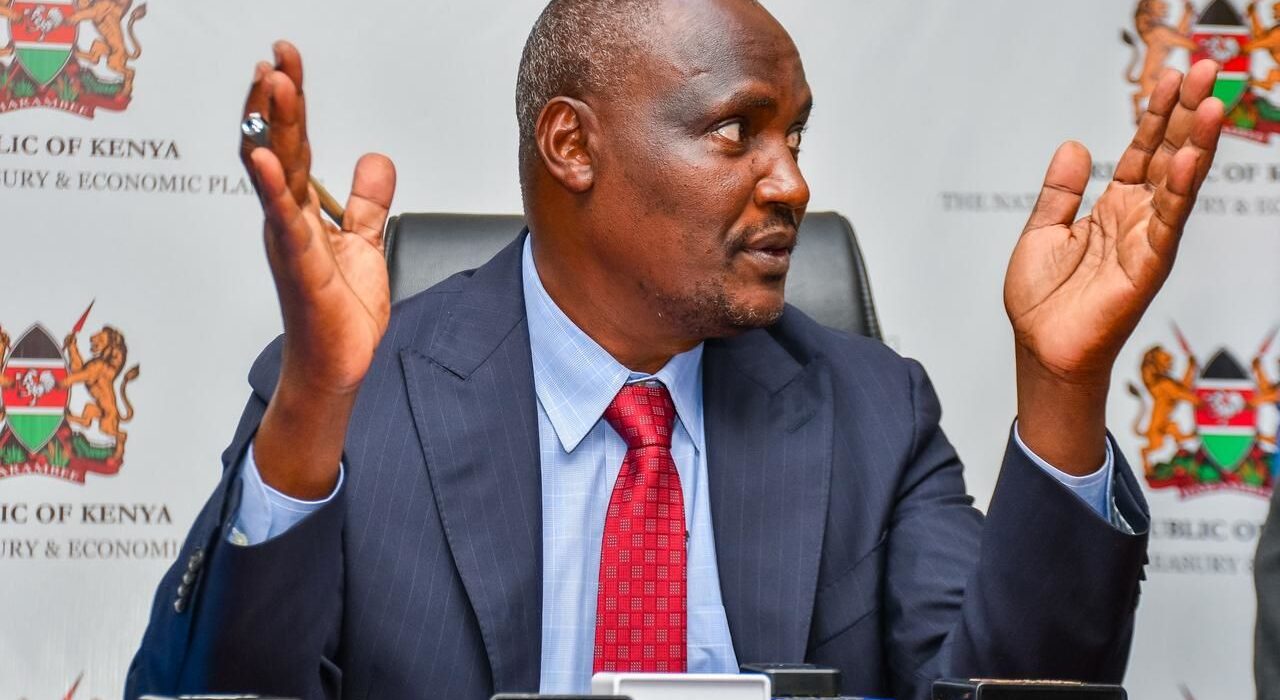
The National Treasury has taken a significant step toward embedding student and youth voices in Kenya’s fiscal decision-making framework, with Cabinet Secretary John Mbadi reaffirming the government’s commitment to making young people central stakeholders in the country’s economic future.
Speaking during a press briefing at the National Treasury Building on Friday afternoon, the Cabinet Secretary said the recent launch of the National Students Budget Forum marked a decisive shift toward a more inclusive and participatory budget-making process, particularly at a time when fiscal choices increasingly affect the country’s youthful population.
“The future of our economy belongs to the young people of this country. Their voices must therefore be heard not as an afterthought, but as an integral part of our fiscal planning and policy choices,” Mr Mbadi said.
The National Students Budget Forum was launched last week at the Kenya School of Monetary Studies as part of consultations for the 2026/27 financial year budget cycle. The initiative provides a structured platform through which students can engage directly with policymakers on budget priorities, public finance management and broader economic policy issues.
According to the Treasury, the forum is designed to move youth engagement beyond ad hoc consultations by anchoring student participation within the formal budget calendar. This approach is intended to ensure that student input is captured early in the budget formulation process, rather than at the tail end when key decisions have already been made.
Nationwide youth engagement planned for 2026
As part of efforts to deepen this engagement, Mr Mbadi announced that beginning in early 2026, he will undertake a nationwide outreach programme targeting students and youth across eight regions. The engagements will involve direct discussions on budget priorities, fiscal trade-offs and the broader national economic outlook.
He said the regional forums are aimed at ensuring that the perspectives of young people are systematically incorporated into national budgeting, particularly on issues that have long-term implications such as education financing, employment creation, debt sustainability and economic growth.
The move comes amid growing calls for greater transparency and public participation in fiscal policy, especially among younger Kenyans who have become increasingly vocal about public finance decisions and their impact on livelihoods.
Treasury officials said the nationwide engagements will also serve as a feedback mechanism, allowing policymakers to explain budget constraints and policy choices while gathering views from students on how limited public resources can be allocated more effectively.
Student leaders present policy concerns to Treasury
During the briefing, the Cabinet Secretary received a report presented by student leaders drawn from universities across the country. The document outlined key concerns, proposals and expectations from students regarding public finance management and economic policy direction.
Among the issues raised were matters directly affecting university students, including capitation to public universities and the timely disbursement of funds by the Higher Education Loans Board (HELB). Delays in HELB disbursements have in recent years triggered protests and disruptions in several institutions, highlighting the sensitivity of student financing within the broader education budget.
Student leaders also raised concerns around the sustainability of higher education funding, affordability of university education and the need for predictable financing models that align with the government’s fiscal consolidation agenda.
Mr Mbadi said the Treasury had taken note of the concerns and emphasised that education financing remains a key priority within the national budget, even as the government seeks to balance competing demands amid constrained fiscal space.
Balancing inclusion with fiscal discipline
Beyond student-focused issues, the Cabinet Secretary used the briefing to outline the government’s broader economic priorities, including efforts to strengthen fiscal discipline, support economic recovery and ensure sustainable public finances.
He reiterated the government’s commitment to prudent economic management, transparency and reforms aimed at stabilising the economy while safeguarding long-term development goals. These include measures to enhance revenue mobilisation, control public spending and manage public debt.
Mr Mbadi said inclusive governance, particularly in economic policy, is critical to building public trust and ensuring that fiscal reforms gain broad-based support.
“As we undertake difficult but necessary fiscal adjustments, it is important that citizens, especially young people, understand the rationale behind these decisions and have a platform to contribute their ideas,” he said.
Anchoring youth voice in economic governance
The National Students Budget Forum forms part of the government’s broader agenda to institutionalise public participation in governance, as provided for under the Constitution. By focusing specifically on students, the Treasury aims to embed a youth lens in economic decision-making at a time when Kenya’s population remains predominantly young.
Treasury officials said the forum will be held regularly and aligned with key milestones in the budget cycle, including sector hearings and pre-budget consultations. Outcomes from the engagements are expected to inform policy proposals and spending priorities presented to Parliament.
Analysts say the initiative could help bridge the gap between policymakers and younger citizens, while also improving fiscal literacy among students and fostering a deeper understanding of how budget decisions are made.
If successfully implemented, the forum could become a model for structured youth engagement in economic policy, ensuring that student voices are not only heard but also reflected in Kenya’s fiscal planning and development agenda.