


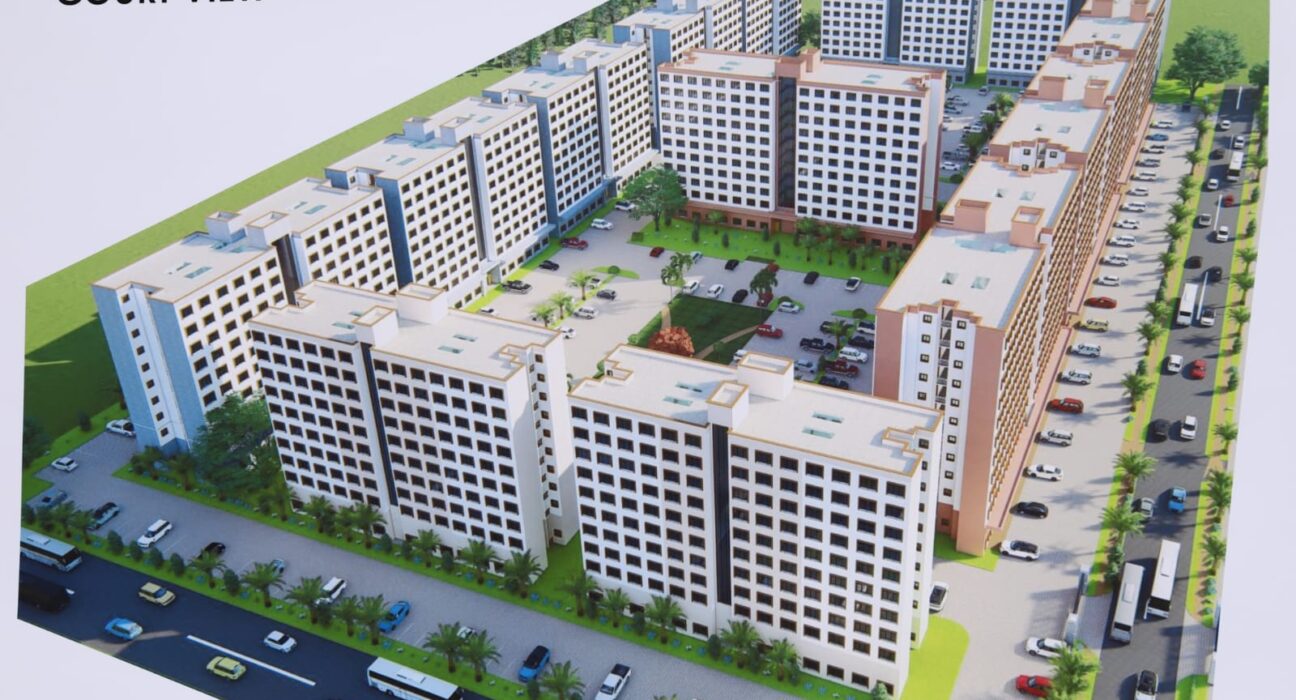
The government has issued a fresh round of international competitive tenders for the supply, installation and maintenance of critical infrastructure components under Kenya’s Affordable Housing Programme, marking a major procurement push as the initiative moves into an expanded implementation phase.
In a tender notice published by the Ministry of Lands, Public Works, Housing and Urban Development through the State Department for Housing and Urban Development, the government invited eligible local and international firms to bid for framework agreements covering a wide range of housing-related systems, including passenger lifts, solar street lighting, water and wastewater infrastructure, power systems and building technologies.
The tenders will be conducted through open international competitive bidding and are aimed at establishing framework agreements that will support the rollout of affordable housing projects across the country over the 2025/26 financial year and beyond.
According to the notice, all interested bidders must be registered on the Electronic Government Procurement System (e-GPs), which will be used exclusively for accessing tender documents, submitting bids and handling clarifications.
Wide scope of infrastructure procurement
The tender list reflects the growing scale and technical complexity of the Affordable Housing Programme, which has evolved from basic housing construction into a multi-sector infrastructure initiative requiring integrated energy, water, sanitation, security and building systems.
Among the projects open for bidding is the proposed manufacture, assembly, delivery, installation and maintenance of passenger lifts for affordable housing developments under a framework agreement. This tender, listed under reference SDHUD/784/0076/2025-26, is expected to attract global elevator manufacturers and local engineering firms as the government pushes for higher-density, multi-storey housing in urban centres.
The State Department is also seeking suppliers for solar street lighting systems under tender SDHUD/784/0063/2025-26. The move aligns with the government’s emphasis on renewable energy and cost-efficient public lighting, particularly in housing estates where grid power costs and reliability remain a concern.
Other tenders include the manufacture, assembly, delivery, installation and maintenance of smart television and CCTV systems for affordable housing projects, aimed at enhancing security, connectivity and modern living standards within housing estates.
Power, water and sanitation systems targeted
Power reliability and water management form a central part of the procurement drive. The government has invited bids for the manufacture and delivery of medium- and low-voltage switchboards and distribution boards, as well as the supply and installation of standby diesel generators to support housing estates during power outages.
Water and sanitation infrastructure also features prominently. Tenders have been floated for wastewater treatment plants, water tanks and pump sets, reflecting the need for decentralised water and sanitation solutions in large housing developments, particularly in areas where municipal infrastructure is overstretched.
In addition, the State Department is seeking suppliers for sanitary ware under a separate framework agreement, a move that signals bulk procurement of fittings to standardise quality while controlling costs across multiple housing sites.
All the tenders are classified as “open” and will be conducted through international competitive bidding, making them accessible to qualified firms from both local and global markets.
Framework agreements to support scale and speed
The use of framework agreements suggests the government is seeking to streamline procurement and reduce delays by pre-qualifying suppliers who can deliver goods and services across multiple projects over a defined period.
Under this model, successful bidders will be contracted to supply specified items or services as and when required, rather than through repeated project-specific tenders. This approach is increasingly being used in large public infrastructure programmes to improve efficiency, cost predictability and delivery timelines.
Analysts say the framework agreements could also help standardise components across affordable housing projects, making maintenance and long-term management more efficient.
For suppliers, the arrangements offer the potential for sustained volumes of work over several years, though competition is expected to be intense given the international scope of the tenders.
Fully digital procurement process
The State Department has emphasised that the entire tendering process will be conducted electronically through the e-GPs platform. Prospective bidders can access tender documents free of charge via the system and are required to submit completed bids electronically by the deadlines specified in each tender notice.
“All enquiries and clarifications should be sent via the Electronic Government Procurement System,” the notice states, underscoring the government’s shift toward fully digital procurement processes.
Tenders will be opened immediately after the submission deadline in a public electronic opening, which bidders’ designated representatives may attend. The opening will take place at the State Department for Housing and Urban Development boardroom at Ardhi House in Nairobi.
Late submissions will not be accepted, and the department has clarified that no physical bids will be received through tender boxes, reinforcing the move away from manual procurement methods.
Implications for industry and investors
The tender announcements are likely to draw interest from manufacturers, engineering firms, energy companies and technology providers seeking to participate in one of the government’s flagship development programmes.
The Affordable Housing Programme is a central pillar of Kenya’s economic and social agenda, with the government targeting the delivery of hundreds of thousands of housing units while stimulating employment, local manufacturing and supply chains.
By opening the tenders to international competition, the government aims to attract advanced technologies, competitive pricing and global best practices. However, the move also raises questions about balancing local content requirements with the need for cost efficiency and quality.
Industry players say local firms are likely to participate through joint ventures or partnerships with international manufacturers, particularly in specialised areas such as lifts, power systems and wastewater treatment.
Part of broader housing push
The procurement drive comes as the government continues to mobilise financing and institutional support for the Affordable Housing Programme, which is being implemented through a mix of public funding, private sector participation and off-balance-sheet financing structures.
Beyond housing construction, the programme has increasingly been positioned as an industrial and infrastructure initiative, with opportunities for manufacturers of building materials, energy systems, water infrastructure and digital solutions.
As the tendering process unfolds, the scale and scope of the framework agreements will offer a clearer picture of how the government plans to standardise and roll out housing infrastructure across counties.
The tenders are being issued by the Head of Supply Chain Management Services on behalf of the Principal Secretary, State Department for Housing and Urban Development, signalling top-level administrative backing for the procurement process.
For the private sector, the announcements represent one of the most significant near-term opportunities linked to Kenya’s housing agenda, with the outcome expected to shape supply chains and project delivery over the coming years.