


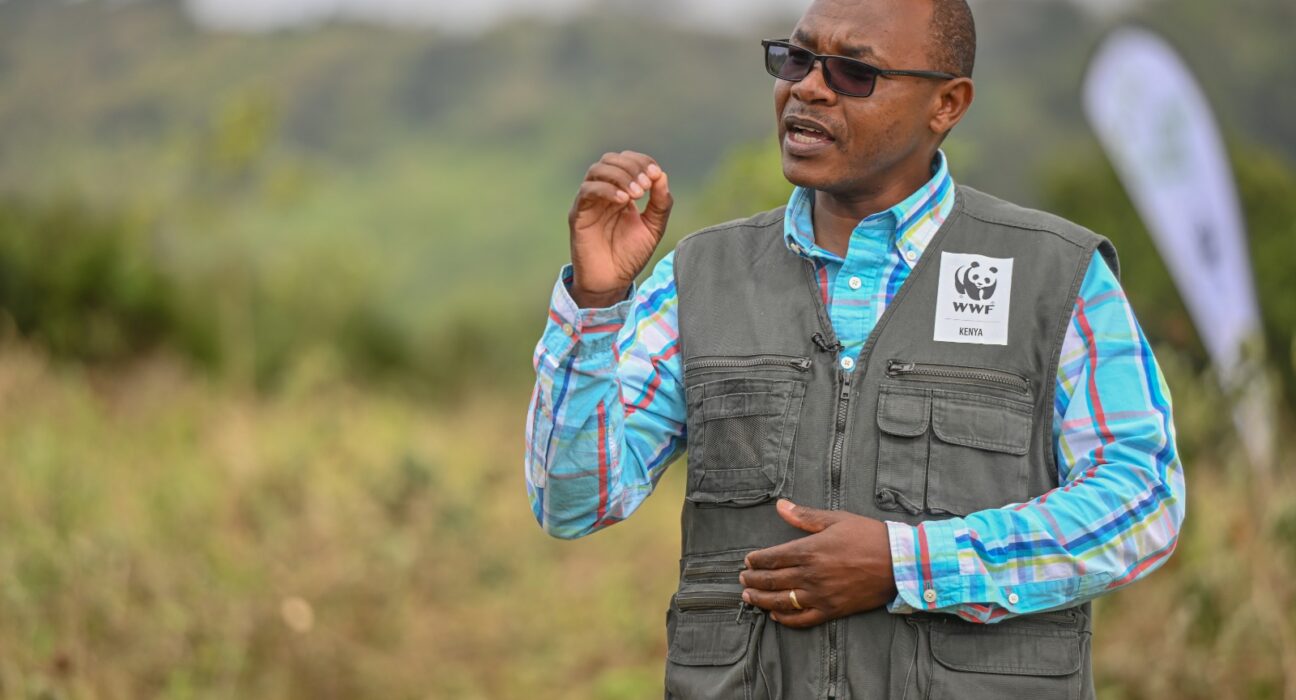
World Wide Fund for Nature Kenya has appointed Jackson Kiplagat as its new Chief Executive Officer, marking a leadership transition at one of the country’s most influential conservation organisations at a time of heightened climate, biodiversity and development pressures.
Mr. Kiplagat formally assumed office following his appointment by the WWF-Kenya Board in 2025, succeeding to the top role after more than two decades of service across conservation practice, policy influence and sustainable finance at national, regional and global levels.
The appointment places an experienced internal leader at the helm as WWF-Kenya seeks to align biodiversity protection with economic development, climate resilience and nature-positive investment in Kenya.
In a statement, the WWF-Kenya Board said it had full confidence in Mr. Kiplagat’s leadership, vision and experience, noting that he is well positioned to guide the organisation through an increasingly complex conservation and development landscape.
Deep institutional experience
Mr. Kiplagat brings more than 24 years of experience in conservation, governance, sustainable finance and capacity building. Before his appointment as CEO, he served as Head of Conservation Programmes at WWF-Kenya, where he led a major strategic realignment and programme transformation aimed at improving impact, effectiveness and long-term sustainability.
During his tenure in that role, WWF-Kenya reviewed its conservation portfolio to better respond to emerging threats such as climate change, land degradation, water stress and biodiversity loss, while strengthening links between conservation outcomes and livelihoods.
His leadership helped reposition the organisation to engage more directly with government institutions, private sector actors and development partners on integrated solutions that balance environmental protection with economic growth.
Regional and global roles
Beyond Kenya, Mr. Kiplagat has played an influential role within the wider WWF global network. He has served as a member of WWF’s Global Conservation Committee, where he contributed to shaping international conservation priorities and accountability frameworks.
He also previously held the role of Regional Sustainable Investments Manager, championing green finance, sustainable infrastructure and nature-positive investment across Africa. In this capacity, he worked with governments, financial institutions and development agencies to integrate environmental considerations into investment decisions and public policy.
WWF-Kenya said this experience will be critical as Kenya continues to position itself as a regional hub for climate finance, renewable energy and sustainable development initiatives.
Contribution to Kenya’s policy landscape
Earlier in his career, Mr. Kiplagat played a key role in mobilising civil society contributions to the development of Kenya’s 2010 Constitution, particularly in strengthening provisions related to natural resource governance.
He has also represented WWF-Africa in global policy processes, including international climate negotiations that culminated in the Paris Agreement, as well as discussions that informed the United Nations Sustainable Development Goals.
These experiences have placed him at the intersection of conservation science, public policy and international diplomacy, an increasingly important skill set as environmental considerations shape trade, investment and development financing.
Training and grassroots engagement
Mr. Kiplagat’s career has also included extensive work in training and institutional capacity building. He previously worked at the Wildlife Clubs of Kenya as Head of Training, where he was involved in training mid-level managers within the tourism and wildlife sectors.
He later served as Programme Coordinator at the Forest Action Network, where he actively engaged in forest sector reforms and community-based natural resource management initiatives.
WWF-Kenya said this background has given him a strong understanding of grassroots conservation challenges, as well as the institutional reforms required to deliver sustainable outcomes.
Strategic priorities ahead
As CEO, Mr. Kiplagat is expected to lead WWF-Kenya’s next phase of strategy, with a focus on conservation models that deliver measurable benefits for people, nature and the economy.
Key priorities are expected to include climate adaptation and mitigation, freshwater and landscape conservation, sustainable food systems, wildlife protection, and the mobilisation of sustainable finance to support conservation at scale.
Kenya faces mounting environmental pressures, including climate-driven droughts and floods, deforestation, biodiversity loss and increasing competition over land and water resources. Conservation organisations are increasingly required to demonstrate economic relevance and align with national development priorities.
WWF-Kenya said Mr. Kiplagat’s blend of technical expertise, policy engagement and financial acumen positions him to lead the organisation in responding to these challenges.
Board endorsement
In endorsing the appointment, WWF-Kenya Board Chairman Isaac Awuondo said the Board had strong confidence in Mr. Kiplagat’s ability to guide the organisation to greater impact.
The Board noted that his long institutional memory, combined with regional and global experience, will be instrumental in delivering innovative conservation solutions that support sustainable economic development.
WWF-Kenya works with government agencies, communities, the private sector and international partners to protect Kenya’s ecosystems while supporting livelihoods and economic resilience.