

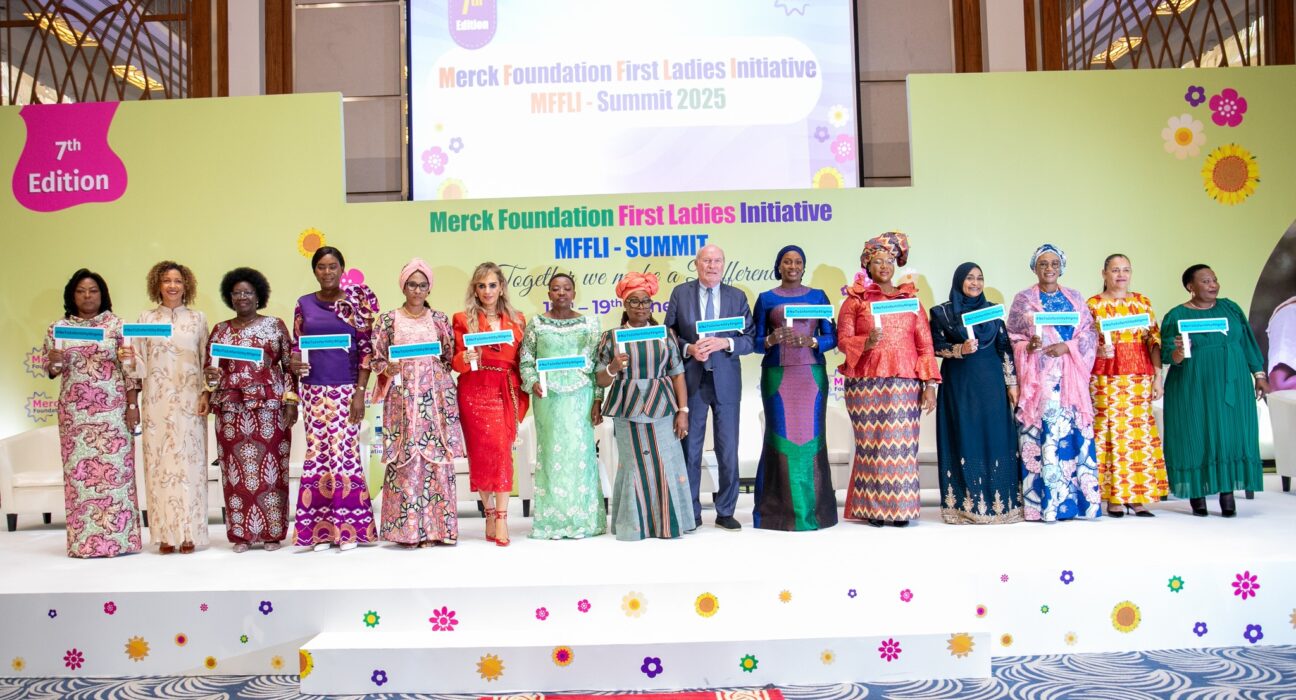
Kenya was among the countries represented at the 7th Edition of the Merck Foundation First Ladies Initiative Summit held on June 19 and 20 in Dubai, as First Lady Rachel Ruto joined fellow First Ladies from Africa and Asia to advance discussions on healthcare capacity building, women’s health and social development.
The summit, convened by the Merck Foundation, the philanthropic arm of Germany-based science and technology company Merck KGaA, brought together First Ladies from 14 countries as Guests of Honour and keynote speakers. The meeting focused on strengthening health systems, addressing infertility stigma, and expanding access to specialist medical training in underserved regions.
For Kenya, the participation underscored the country’s ongoing focus on health sector reform, women’s empowerment and improved access to specialised medical care, particularly in areas such as reproductive health, oncology and mental health.
The summit was inaugurated by Professor Dr Frank Stangenberg-Haverkamp, Chairman of the Merck Foundation Board of Trustees, alongside Senator Dr Rasha Kelej, Chief Executive Officer of the Merck Foundation and President of the Merck Foundation First Ladies Initiative.
Speaking during the opening session, Dr Kelej said the initiative had become a critical platform for sharing experiences and coordinating action among First Ladies and policymakers from Africa and Asia.
“It is my great honour to welcome our esteemed Guests of Honour and keynote speakers, the First Ladies of Africa and Asia, and ambassadors of our ‘More Than a Mother’ campaign,” Dr Kelej said. “Through this important platform, we have collectively exchanged valuable experiences and engaged in meaningful discussions on the impact of our programmes aimed at transforming patient care and raising awareness on critical social and health issues.”
First Lady Rachel Ruto joined counterparts from Angola, Cabo Verde, Central African Republic, Gabon, The Gambia, Ghana, Liberia, Maldives, Mozambique, Nigeria, São Tomé and Príncipe, Senegal and Zimbabwe. All participating First Ladies serve as ambassadors of the Merck Foundation’s “More Than a Mother” campaign, which focuses on infertility awareness, women’s empowerment and social inclusion.
The campaign has particular relevance for Kenya, where infertility remains a sensitive issue often accompanied by stigma and limited access to specialised care, especially in rural and low-income communities.
Professor Stangenberg-Haverkamp said the foundation’s long-term objective was to improve health outcomes by investing in human capital and expanding equitable access to healthcare services.
“At Merck Foundation, our goal is improving overall health and well-being by building healthcare capacity and providing access to quality and equitable healthcare solutions in Africa, Asia and beyond,” he said. “Together with our ambassadors and partners, we will continue working towards a world where everyone can lead a healthy and happy life.”
A major focus of the summit was the foundation’s medical scholarship programme, which has supported the training of doctors from developing countries in specialised and underserved medical fields. According to Dr Kelej, the foundation has awarded more than 2,500 scholarships to young doctors from 52 countries across 44 medical specialties.
Many of the beneficiaries, she noted, have gone on to become the first specialists in their countries, addressing long-standing gaps in healthcare provision.
“I am proud to share that many of our alumni are making history by becoming the first specialists in their countries,” Dr Kelej said. “Together with our ambassadors and partners, we are transforming patient care landscapes across Africa and beyond.”
Of the total scholarships awarded, more than 700 have been directed towards fertility-related and women’s health disciplines, including fertility medicine, embryology, sexual and reproductive health, clinical psychiatry, urology, laparoscopic surgical skills and family medicine. These areas align closely with Kenya’s national health priorities, particularly in maternal health and non-communicable diseases.
The summit also coincided with World Infertility Awareness Month, marked annually in June. Through its “More Than a Mother” campaign, the Merck Foundation seeks to challenge social stigma associated with infertility while promoting education, early diagnosis and access to treatment.
Beyond medical training, discussions at the summit addressed broader social challenges, including girls’ education, gender-based violence, child marriage and female genital mutilation. These issues remain a concern in parts of Kenya and the wider region, with policymakers increasingly recognising the link between social norms, health outcomes and economic development.
The first day of the summit featured a high-level plenary session with First Ladies, alongside a ministerial panel bringing together African ministers and global healthcare experts. Discussions focused on policy coordination, financing healthcare systems and scaling community-based interventions.
The second day included parallel medical and scientific sessions on oncology and fertility, as well as a community awareness session on health media training. The media-focused session highlighted the role of journalism and public communication in influencing behaviour change and shaping public understanding of health and social issues.
This year’s summit also marked two milestones for the Merck Foundation: its eighth anniversary and 13 years since the launch of its development programmes in 2012.
The conference was conducted in a hybrid format, enabling participation from more than 6,000 delegates across over 70 countries, including Kenya. Participants exchanged strategies and experiences on addressing health system gaps while adapting to local social and economic realities.
Countries represented at the summit included Kenya, Uganda, Tanzania, Rwanda, Nigeria, South Africa, Ethiopia, Ghana, Senegal, Zimbabwe, as well as nations from Asia, Europe and the Americas.
For Kenya, the summit provided an international platform to align its health and social development agenda with regional and global partners, reinforcing the country’s commitment to improving healthcare access, supporting women and strengthening human capital as part of long-term economic growth.