


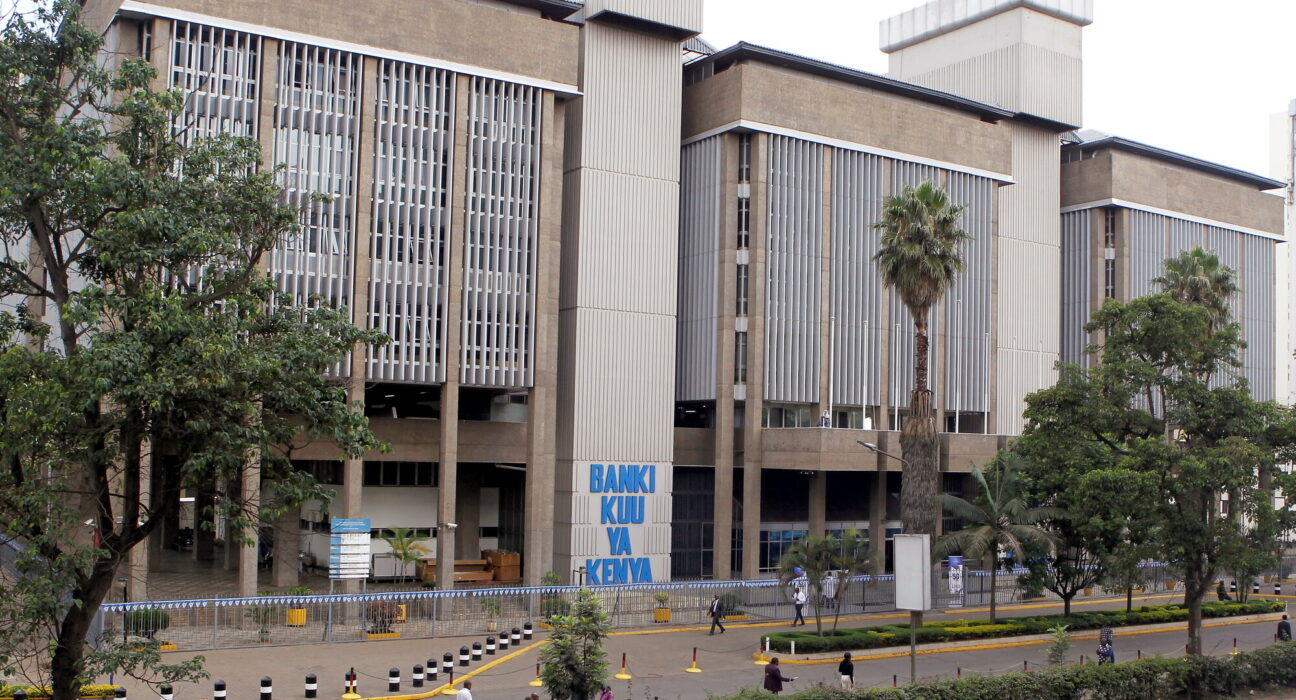
Kenya’s long-term government securities continued to draw strong investor appetite after the Central Bank of Kenya released results of the latest auction for the reopened Treasury bonds FXD1/2019/020 and FXD1/2022/025.
The two fixed-rate bonds, with remaining tenors to maturity of 13.2 years and 21.8 years respectively, recorded an overall subscription rate of 119.2 percent, underscoring sustained demand for longer-dated government paper amid a high-yield environment.
According to the auction results, investors submitted bids worth KSh 71.5 billion against the KSh 60.0 billion on offer. The government accepted bids worth KSh 60.6 billion, translating to an acceptance rate of 84.7 percent.
The FXD1/2019/020 bond carries a fixed coupon rate of 12.9 percent, while the FXD1/2022/025 bond offers a higher fixed coupon of 14.2 percent, reflecting its longer tenor and risk profile.
Auction performance and yields
The weighted average yield for accepted bids on the FXD1/2019/020 bond came in at 13.3 percent, marginally lower than the 13.4 percent recorded during its previous reopening in November 2021. This slight decline suggests growing investor confidence in the medium-to-long-term outlook for Kenya’s interest rate environment.
In contrast, the FXD1/2022/025 bond recorded a weighted average yield of 13.8 percent, slightly higher than the 13.7 percent achieved when the bond was last reopened in November 2025. The increase reflects investor preference for higher compensation on ultra-long-dated securities amid ongoing fiscal and refinancing risks.
Market analysts said the mixed yield movement across the two bonds indicates selective pricing by investors, with stronger demand for the shorter of the two long-term tenors.
Inflation-adjusted returns remain attractive
With Kenya’s inflation rate standing at 4.5 percent as of December 2025, the real returns on the two bonds remain significantly positive.
The FXD1/2019/020 bond offers a real return of approximately 8.8 percent, while the FXD1/2022/025 delivers a higher real return of about 9.3 percent. These levels are well above historical averages and continue to attract pension funds, insurance firms, banks and high-net-worth investors seeking to preserve purchasing power.
The sustained gap between nominal yields and inflation has been one of the key drivers of strong demand for government securities over the past year, particularly as inflation pressures eased faster than interest rates adjusted downward.
Tax-adjusted yield comparison
Treasury bonds in Kenya are subject to a 10 percent withholding tax, which remains more favourable compared with the 15 percent withholding tax applied to shorter-term Treasury bills and bonds with maturities below five years.
On a tax-equivalent basis, the yields on the FXD1/2019/020 and FXD1/2022/025 translate to approximately 14.1 percent and 14.6 percent respectively when compared to shorter-term instruments taxed at 15 percent.
This tax advantage continues to tilt investor preference toward longer-dated bonds, particularly for institutional investors with long-term liabilities such as pension schemes and insurance companies.
Implications for government borrowing
The strong performance of the auction provides near-term relief for the government’s domestic borrowing programme, which remains a critical pillar of fiscal financing amid constrained access to external markets.
Kenya has increasingly relied on the domestic debt market to refinance maturing obligations and fund budgetary requirements, with a clear preference for lengthening the maturity profile to reduce rollover risk.
By accepting KSh 60.6 billion against an offer of KSh 60.0 billion, the Treasury demonstrated flexibility in accommodating strong demand while maintaining pricing discipline.
However, analysts caution that sustained reliance on domestic borrowing at elevated yields continues to exert pressure on debt servicing costs, even as inflation moderates.
Market sentiment and outlook
The oversubscription of the reopened bonds reflects improving sentiment in the fixed-income market, supported by stable inflation, a pause in monetary tightening, and expectations that interest rates may gradually ease over the medium term.
Investors remain closely focused on fiscal consolidation efforts, revenue performance, and external financing developments, which will influence future yield expectations.
While demand for long-term bonds remains robust, analysts note that appetite could soften if yields begin to decline sharply or if alternative investment opportunities emerge.
For now, the combination of high nominal yields, strong real returns and favourable tax treatment continues to make long-dated Treasury bonds an attractive proposition for Kenyan investors.