

Kenya is intensifying efforts to unlock the economic potential of its livestock sector through the De-risking, Inclusion and Value Enhancement (DRIVE) Project, a flagship national initiative designed to crowd in private capital, expand market access and strengthen the resilience of pastoral and agropastoral production systems.
The programme comes at a critical moment for a sector that underpins livelihoods across arid and semi-arid lands (ASALs) while contributing significantly to national output. Livestock accounts for an estimated 12 per cent of Kenya’s gross domestic product and about 40–42 per cent of agricultural GDP, making it one of the country’s most strategically important economic pillars.
According to the 2025 Economic Survey, livestock earnings rose to KSh 235 billion in 2024, supported by strong growth in meat and dairy production. Sales of cattle, sheep, goats and camels all recorded gains, reflecting sustained domestic demand and rising interest in regional export markets. Yet despite this performance, the sector continues to be held back by structural bottlenecks that limit scale, profitability and investor confidence.
Fragmented markets, weak aggregation systems, limited cold-chain and quality infrastructure, and exposure to climate shocks have long constrained the commercialization of livestock production. For many pastoral households, access to affordable finance remains limited, while private investors face elevated risks linked to drought, disease outbreaks and market volatility.
The DRIVE Project seeks to address these challenges head-on by integrating finance, insurance, market development and policy reform into a single, coordinated framework. Its objective is to transform livestock from a largely subsistence-based activity into a resilient, market-oriented sector capable of attracting sustained private investment.
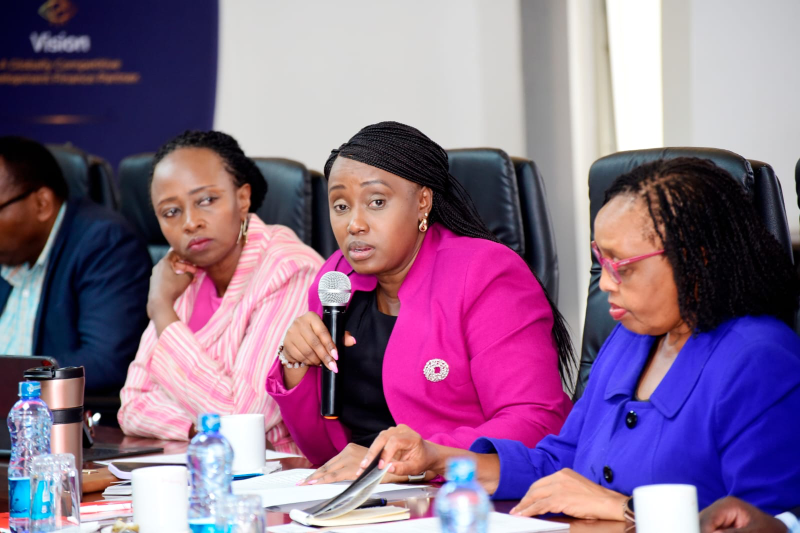
These themes took centre stage at the DRIVE Breakfast Meeting hosted by the Kenya Development Corporation (KDC) at Uchumi House, where government agencies, financiers and development partners convened to discuss practical pathways for expanding livestock and livestock product markets.
Discussions focused on strengthening structured market systems, improving aggregation and cold-chain infrastructure, and aligning drought resilience mechanisms with commercial market development. Participants underscored the need to move beyond fragmented trading channels towards organised value chains that can meet quality standards required for regional and international markets.
Government officials reiterated their commitment to creating an enabling policy and regulatory environment to support livestock exports. Phyllis Kandie, Advisor on Market Linkages for Trade, said coordinated trade facilitation was essential if Kenya was to unlock new markets and compete effectively.
“Expanding livestock markets requires deliberate coordination across production, trade, and quality systems,” Ms. Kandie said. “Government is committed to strengthening structured market access, improving aggregation, and aligning trade facilitation frameworks to enable Kenyan livestock and livestock products to compete effectively in regional and international markets.”
At the financing level, KDC has emerged as a central player in deploying capital into the livestock value chain. KDC Director General Norah Ratemo noted that lending into the sector has accelerated sharply over the past three years, signalling growing confidence among financiers.
“Over the last three years, disbursements have grown from KSh 185 million to KSh 852 million, signalling confidence in the livestock value chain across 15 ASAL counties,” Ms. Ratemo said.
She added that KDC is going beyond traditional lending by rolling out innovative financial products tailored to pastoral realities. One such initiative is KDC Mifugo Cash, a digital livestock input credit product developed in partnership with Safaricom and other stakeholders.
The pilot targets 5,000 pastoralists, providing unsecured credit for essential inputs through a closed-loop M-PESA ecosystem. The model is designed to address liquidity gaps, improve input access and strengthen household resilience in drought-prone areas where conventional collateral-based lending has struggled to gain traction.
Development partners say DRIVE represents a shift in how resilience and market development are being linked across the Horn of Africa. James Sinah, the World Bank’s Kenya DRIVE Task Team Leader, said the project demonstrates how de-risking can unlock inclusive growth.
“DRIVE demonstrates how resilience, finance, and markets can be integrated to unlock inclusive growth,” Mr. Sinah said. “By de-risking pastoral production and connecting households to finance and markets, the project is enabling pastoral communities to transition into sustainable economic opportunity.”
Risk management has emerged as a cornerstone of the programme, particularly in light of increasing climate variability. Insurance solutions are being positioned not only as safety nets but as enablers of investment by stabilising incomes and protecting productive assets.
Hope Murera, Chief Executive Officer and Managing Director of ZEP-RE (PTA Reinsurance Company), said insurance is fundamental to sustaining livestock systems in the face of climate shocks.
“Insurance is the foundation of resilience in livestock systems,” Ms. Murera said. “Through DRIVE, we are protecting herds, stabilising incomes, and enabling pastoralists and value-chain actors to invest with confidence. These risk solutions are critical to sustaining production, strengthening markets, and safeguarding national livestock assets.”
Agricultural finance institutions are also reporting rising demand for livestock-focused funding. Agricultural Finance Corporation (AFC) Managing Director George Kubai said uptake of DRIVE-linked financing highlights the sector’s latent potential.
“The uptake of DRIVE financing has demonstrated strong demand across the livestock sector,” Mr. Kubai said. “Through our partnership with KDC, we were able to deploy funding efficiently, reach over 130 clients, and support job creation. The demand for livestock financing continues to grow.”
Beyond financing, stakeholders at the meeting called for deeper collaboration with cooperatives and organised producer groups. Equity participation models were highlighted as a way to unlock capital, strengthen governance and promote shared ownership across the value chain.
Participants also stressed the need to invest in export-ready infrastructure, including modern abattoirs, cold-chain logistics and quality assurance systems. Addressing animal health, disease surveillance and compliance with international standards was identified as critical to accessing higher-value markets.
As Kenya seeks to diversify exports and strengthen climate resilience, policymakers see livestock as a sector capable of delivering both economic growth and social stability in ASAL regions. Through coordinated public–private action, the DRIVE Project aims to reposition livestock as a competitive, resilient and investment-ready sector that can deliver sustainable growth in domestic, regional and global markets.