


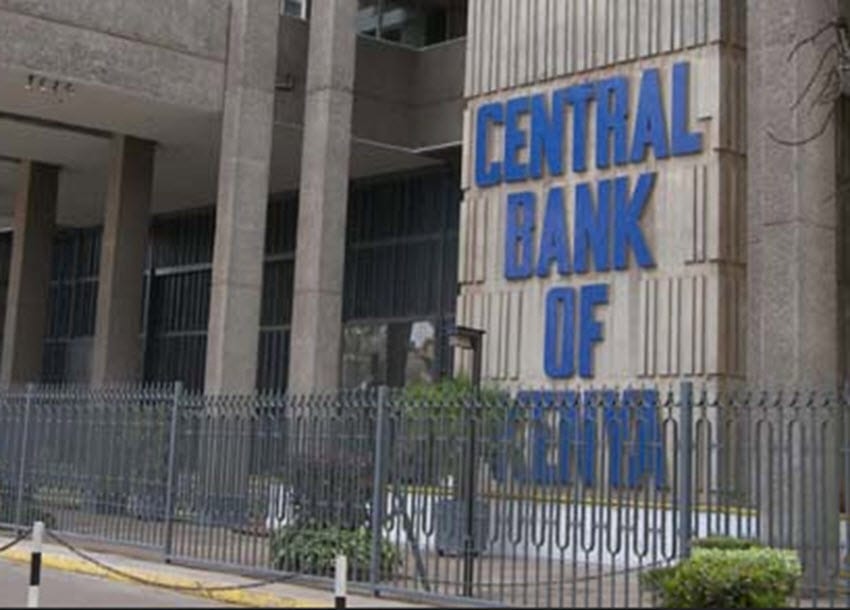
The Central Bank of Kenya (CBK) has lowered the Central Bank Rate (CBR) by 25 basis points to 8.75 percent from 9.00 percent, following a meeting of the Monetary Policy Committee (MPC) held on February 10, 2026.
The decision marks a continued easing of monetary policy as inflation remains within target, credit growth strengthens, and the Kenyan economy shows resilience amid global and domestic uncertainties.
According to the MPC, the rate cut is intended to support lending to the private sector and sustain economic activity, while keeping inflation expectations firmly anchored and maintaining exchange rate stability.
Global Growth Outlook Improves Despite Persistent Risks
During its deliberations, the Committee noted that global economic growth remained resilient in 2025, estimated at 3.3 percent. This performance was attributed to lower-than-expected import tariffs into the United States, improved financial conditions, strong consumer spending, and a surge in investment in Artificial Intelligence-led technologies, particularly in the US.
The outlook for global growth in 2026 has been revised upwards and is expected to remain steady at 3.3 percent, supported by improved growth prospects in the United States, the Euro area, and China.
However, the MPC cautioned that weak global demand, elevated trade policy uncertainty, and heightened geopolitical tensions, particularly in the Middle East and the ongoing Russia-Ukraine conflict, continue to pose downside risks to the global economy.
Global Inflation Eases as Central Banks Cut Rates Cautiously
Global inflation declined in 2025 and is projected to ease further in 2026 and 2027, largely driven by lower energy prices and subdued global demand. Inflation in major economies has moderated in recent months, although it remains above target in some countries due to persistent core inflation.
Central banks in advanced economies have continued to ease monetary policy, albeit at a cautious and uneven pace, reflecting differing inflation and growth dynamics. International oil prices have moderated due to increased production and weaker demand but remain volatile amid global uncertainties.
Food inflation has also declined globally, supported by lower prices of cereals and sugar.
Kenya’s Inflation Remains Below Target Midpoint
Domestically, Kenya’s overall inflation declined to 4.4 percent in January 2026 from 4.5 percent in December 2025, remaining below the midpoint of the target range of 5±2.5 percent.
Non-core inflation fell to 10.3 percent in January from 11.2 percent in December, mainly due to lower prices of vegetables such as tomatoes and onions. Core inflation rose marginally to 2.2 percent from 2.0 percent, driven by higher prices of processed food items, particularly maize flour.
The MPC expects overall inflation to remain below the target midpoint in the near term, supported by stable prices of processed foods and energy, as well as continued exchange rate stability.
Kenyan Economy Shows Resilience, Growth to Pick Up in 2026
The Committee observed that the Kenyan economy remained resilient in the third quarter of 2025, with real GDP growth of 4.9 percent. This performance was supported by a rebound in the industrial sector and continued resilience in the services sector.
Leading indicators suggest improved economic activity in the fourth quarter of 2025. Overall economic growth for 2025 is now estimated at 5.0 percent, slightly lower than the earlier projection of 5.2 percent, mainly due to a slowdown in agricultural performance during the third quarter.
Looking ahead, real GDP growth is projected to rise to 5.5 percent in 2026 and 5.6 percent in 2027, supported by strong services sector performance, continued recovery in industry, and stable agricultural growth. The outlook remains subject to risks from adverse weather conditions, global trade uncertainties, and geopolitical tensions.
Credit Growth Improves as Lending Rates Decline
The banking sector remains stable and resilient, with strong liquidity and capital adequacy levels. Gross non-performing loans declined to 15.5 percent in January 2026 from 16.7 percent in October 2025 and 17.6 percent in August 2025.
Improvements were recorded in real estate, manufacturing, trade, building and construction, and personal and household lending segments, with banks continuing to make adequate provisions.
Private sector credit growth improved to 6.4 percent in January 2026, up from 5.9 percent in December 2025 and a contraction of 2.9 percent in January 2025. Lending to key sectors such as construction, trade, and consumer durables remained strong, reflecting improved credit demand amid falling interest rates.
Average commercial bank lending rates declined to 14.8 percent in January 2026, from 15.0 percent in October 2025 and 17.2 percent in November 2024.
Current Account Deficit Remains Manageable
The current account deficit widened to an estimated 2.4 percent of GDP in 2025, up from 1.3 percent in 2024, mainly due to lower service receipts and secondary income transfers.
Goods exports grew by 6.1 percent, supported by horticulture, coffee, tea, manufactured goods, and apparel. Goods imports increased by 9.1 percent, driven by higher imports of intermediate and capital goods.
Services receipts rose by 1.1 percent, largely on the back of improved travel services, while diaspora remittances increased by 1.9 percent. The current account deficit is projected to remain stable at 2.2 percent of GDP in 2026 and 2027 and is expected to be fully financed by financial account inflows.
CBK foreign exchange reserves currently stand at USD 12.46 billion, equivalent to 5.37 months of import cover, providing an adequate buffer against external shocks.
MPC Narrows Interest Rate Corridor
To strengthen monetary policy transmission, the MPC approved a narrowing of the interest rate corridor around the CBR from ±75 basis points to ±50 basis points. This move is intended to better align the Kenya Shilling Overnight Interbank Average (KESONIA) with the policy rate.
In line with this adjustment, the applicable interest rate on the Discount Window was reduced to 50 basis points above the CBR, matching the upper bound of the new corridor.
The Committee also noted that the revised Risk-Based Credit Pricing Model, expected to be fully operational by March 2026, will enhance transparency in loan pricing and improve the pass-through of monetary policy decisions to lending rates.
Outlook and Next MPC Meeting
Having assessed both global and domestic developments, the MPC concluded that there was room for further easing of monetary policy through the 25 basis point cut in the CBR.
The Committee said it will continue to closely monitor inflation, credit growth, exchange rate developments, and global economic conditions, and stands ready to take further action if necessary in line with its mandate.
The next MPC meeting is scheduled for April 2026.