


A local petroleum exploration and production firm, Gulf Energy E&P BV, has pledged to uphold international best practice standards as it advances plans to produce crude oil in Turkana County by 1 December 2026.
Appearing before a Joint Parliamentary Committee on Energy, the company’s Chairman, Francis Njogu, described the South Lokichar Oil Project as the most significant private-sector-driven upstream petroleum investment in Kenya’s history.
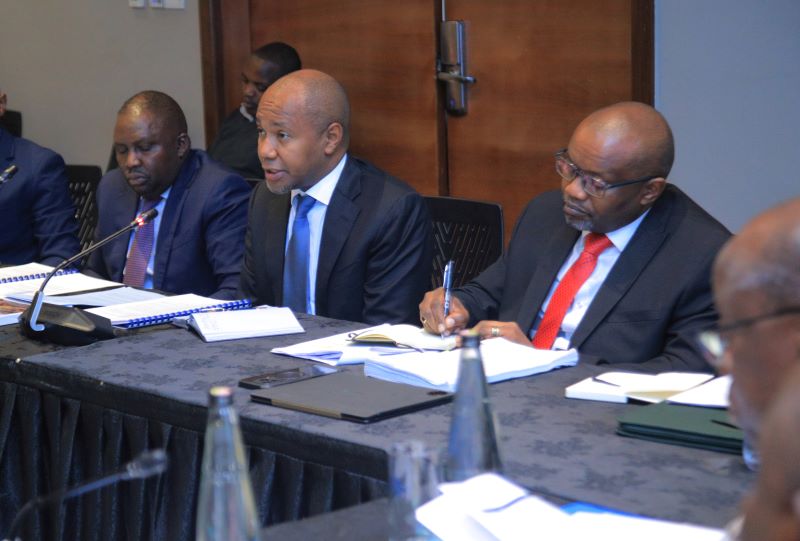
The session was jointly chaired by National Assembly Departmental Committee on Energy Chairperson David Gikaria and Senate Standing Committee on Energy Vice Chairperson William Kisang, as part of public participation ahead of the project’s Field Development Plan ratification.
USD 6 Billion Investment Plan
Njogu told Members of the National Assembly and Senate that the company is prepared to invest nearly USD 6 billion in developing the South Lokichar oil fields in Turkana.
He said both the Field Development Plan and the Production Sharing Agreements place strong emphasis on local content, community engagement, and shared economic benefits.
“At Gulf Energy, we are approaching this FDP as Kenyans with a view to creating as many jobs and business opportunities for Kenyans, starting with our Turkana host community, as we are committed to positioning Kenya as an oil-producing country,” Njogu said.
He added that the company is ready to move forward and is targeting 1 December 2026 as the date to begin oil production, subject to parliamentary ratification.
Local Content and Community Benefits
Flanked by Group CEO Paul Limoh and Country Manager Franklin Juma, Njogu emphasized that the company has ring-fenced a Local Content Strategy designed to ensure long-term socio-economic gains for Turkana County and Kenya at large.
He said the company is indigenously owned and financially positioned to undertake capital-intensive projects such as the South Lokichar development, supported by established partnerships with local and international financial institutions.
The company maintains that the project represents a technically mature pathway to unlock what it describes as Kenya’s largest onshore petroleum resource under a shared prosperity framework.
Government Revenue Projections
According to projections cited during the parliamentary session, Kenya stands to earn between USD 1.05 billion at an oil price of USD 60 per barrel and USD 2.9 billion at USD 70 per barrel over the life of the project. This translates to approximately KES 136 billion to KES 371 billion in potential revenue.
Under the Petroleum Sharing Contract framework, the State retains ownership of the resource while the contractor provides technical expertise and capital investment required to bring the oil to production.
Njogu explained that the project-specific fiscal measures outlined in the FDP, which was approved last November by Cabinet Secretary Opiyo Wandayi, are necessary to meet investment and bankability thresholds required to reach a Final Investment Decision.
Global Energy Financing Window Narrowing
The Gulf Energy Chairman also warned that the global energy financing environment is evolving rapidly, with international lenders tightening funding criteria for new upstream hydrocarbon projects in line with climate commitments.
He noted that capital is increasingly shifting toward lower-carbon energy systems, meaning frontier oil projects must demonstrate strong economics, fiscal stability, and timely regulatory approvals to remain competitive.
“Any prolonged uncertainty risks placing Kenya at a disadvantage relative to other emerging oil provinces that are actively adjusting their fiscal terms to secure investment before this window closes,” Njogu told the committee.
Parliament to Decide on Ratification
Parliament is expected to deliberate on the Field Development Plan and Production Sharing Contracts in the coming weeks before deciding on ratification.
If approved, the South Lokichar Development would mark Kenya’s transition into a full oil-producing country, with significant implications for public revenue, employment creation, and regional economic transformation in Turkana County.