


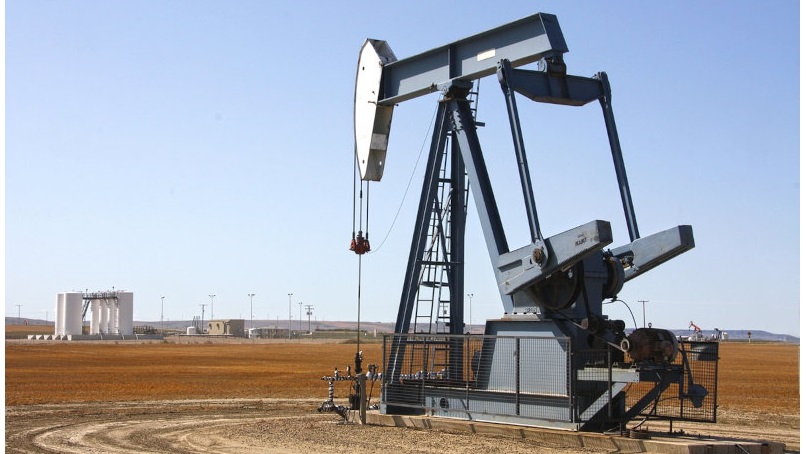
Oil remains a cornerstone of the global energy landscape in 2026, powering transportation, industry, and economies worldwide despite the rise of renewables. Global crude oil and petroleum liquids production continues to grow, driven largely by non-OPEC+ nations like the United States, Canada, Brazil, and Guyana, while OPEC+ (including Saudi Arabia, Russia, and others) manages output through quotas amid geopolitical factors, demand shifts, and energy transitions.
In this guide, we rank the top 10 oil producing countries in 2026 based on the latest available data and forecasts (primarily from sources like EIA Short-Term Energy Outlook, World Population Review, Global Firepower, and OPEC/IEA reports up to early 2026). Production figures are in barrels per day (bpd) and include crude oil, condensates, and other liquids where specified—note that exact numbers fluctuate monthly due to quotas, weather, and market dynamics.
Top 10 Oil Producing Countries in 2026 (Estimated Daily Production)
| Rank | Country | Estimated Production (million bpd) | Key Notes & Share of Global Output (Approx.) |
|---|---|---|---|
| 1 | United States | 20.1 – 21.0+ | World’s largest producer; shale boom in Permian Basin drives growth. ~20–22% of global total. |
| 2 | Saudi Arabia | 10.9 – 11.2 | OPEC leader; adjusts output via quotas. Major exporter with vast reserves. ~11%. |
| 3 | Russia | 10.8 – 10.9 | Resilient despite sanctions; key non-OPEC+ in OPEC+ alliance. ~11%. |
| 4 | Canada | 5.7 – 6.0 | Oil sands in Alberta; Trans Mountain expansion boosts exports. ~6%. |
| 5 | China | 5.3 – 5.5 | Domestic focus; steady but limited growth. ~5%. |
| 6 | Iran | 5.0 – 5.1 | Sanctions impact exports, but production rebounds. ~5%. |
| 7 | Iraq | 4.4 – 4.6 | OPEC member; infrastructure improvements aid output. ~4–5%. |
| 8 | United Arab Emirates | 4.0 – 4.2 | Diversifying economy; strong OPEC player. ~4%. |
| 9 | Brazil | 4.0 – 4.3 | Pre-salt offshore fields; rapid growth expected. ~4%. |
| 10 | Kuwait | 2.9 – 3.0 | OPEC core; stable but quota-constrained. ~3%. |
Sources & Trends (2026 Insights):
- The United States solidified its position as the undisputed leader through shale efficiency and Permian output, with forecasts showing continued gains into 2026–2027 (EIA STEO).
- OPEC+ (Saudi Arabia, Russia, UAE, Iraq, Kuwait, Iran, etc.) holds ~46–50% of global supply but restrains production to support prices.
- Non-OPEC+ growth (led by US, Canada, Brazil, Guyana) outpaces OPEC+ in 2025–2026, per EIA and IEA reports.
- Global production hovers around 100–105 million bpd (including liquids), with top 10 accounting for ~70–75%.
Why These Countries Dominate Oil Production in 2026
- United States — Fracking technology, vast shale reserves (Permian, Bakken), and private-sector innovation keep output high despite fewer rigs.
- Saudi Arabia — Low-cost producer with massive reserves (~267 billion barrels); uses swing capacity to stabilize markets.
- Russia — Extensive Siberian fields and Arctic potential; geopolitics influence but production remains robust.
- Canada — Oil sands recovery and pipeline access (e.g., Trans Mountain) enable steady increases.
- China — Focus on domestic security; limited reserves but consistent onshore/offshore efforts.
6–10 — Middle East heavyweights (Iran, Iraq, UAE, Kuwait) benefit from low extraction costs and large reserves, while Brazil surges via offshore discoveries.
Factors Shaping 2026 Oil Production
- OPEC+ Quotas — Extended cuts into 2026 support prices amid EV growth and economic slowdowns.
- Geopolitical Risks — Sanctions, conflicts, and trade tensions (e.g., Russia, Iran) add volatility.
- Energy Transition — Renewables and efficiency curb long-term demand, but oil demand still rises modestly in emerging markets.
- New Players — Guyana and Brazil show rapid gains; could enter top 10 soon.
Oil production remains vital for energy security and economies, but the shift toward cleaner sources accelerates. The top 10 oil producing countries highlight a mix of innovation (US), reserves (Middle East), and emerging frontiers (Brazil).
Stay updated via EIA, OPEC, or IEA for monthly revisions. Which country’s oil strategy fascinates you most? Share in the comments!