


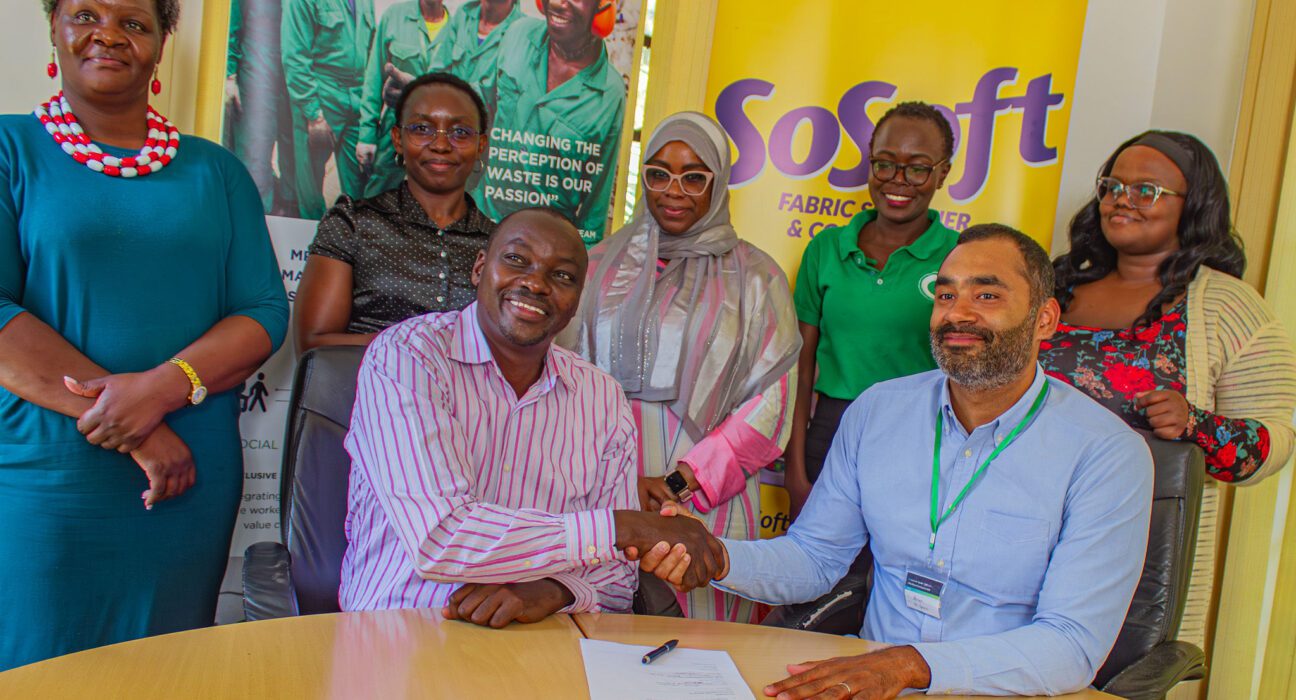
HACO Industries has entered into a strategic partnership with Mr. Green Africa aimed at strengthening post-consumer recyclate collection and implementing a take-back scheme aligned with Extended Producer Responsibility principles, in a move that signals deeper sustainability commitments within Kenya’s fast-moving consumer goods sector.
The collaboration will support the structured recovery of plastic packaging waste from the market, facilitating responsible recycling while reducing environmental leakage. Under the agreement, Mr. Green Africa will leverage its established collection and recycling network to aggregate post-consumer plastics and channel them back into the manufacturing value chain.
The initiative comes amid tightening regulatory expectations and increased scrutiny on plastic waste management in Kenya, where manufacturers are under growing pressure to account for the lifecycle impact of their packaging materials.
Embedding EPR into Manufacturing
Extended Producer Responsibility frameworks require producers to take responsibility for the post-consumer stage of their products, including waste collection, recycling and safe disposal. Kenya has progressively strengthened its EPR framework through regulations aimed at reducing plastic pollution and encouraging private sector participation in waste recovery.
HACO Managing Director Mary-Ann Musangi said the partnership reflects a shift from compliance-driven sustainability to operational integration.
“Sustainability is increasingly becoming a core business imperative, requiring practical partnerships that translate environmental responsibility into measurable outcomes. By embedding EPR principles into our operations, we are reinforcing our commitment to responsible production, waste accountability and long-term environmental resilience,” Ms Musangi said.
Industry analysts note that EPR implementation in Kenya’s FMCG sector is moving from policy formulation to execution, with companies investing in traceable recovery systems and partnerships that can demonstrate measurable material recirculation.
For HACO, which manufactures a range of household and personal care brands, integrating recycled plastics into packaging could also mitigate exposure to volatile virgin polymer prices while improving ESG performance metrics increasingly scrutinised by investors and multinational partners.
Strengthening Recycling Infrastructure
Mr. Green Africa operates a structured plastic collection model that aggregates materials from both informal and formal waste collection ecosystems. The company works with waste collectors, sorters and processors to improve traceability and quality of recycled plastics.
The partnership is expected to expand material flows into Mr. Green Africa’s network, increasing volumes of post-consumer recyclate available for reintegration into manufacturing supply chains.
In a statement, Mr. Green Africa said collaborations with manufacturers are essential to scaling recycling infrastructure and driving systemic change within Kenya’s waste management ecosystem.
The agreement is also expected to support livelihoods within the waste collection value chain by formalising demand for recovered plastics and creating more predictable income streams for collectors and aggregators.
Waste sector stakeholders have long argued that sustainable recycling systems depend on stable offtake agreements with manufacturers willing to incorporate recycled content into their packaging.
Circular Economy Momentum
The initiative reflects a broader transition in Kenya’s manufacturing sector from linear production models toward circular systems that prioritise resource efficiency and environmental stewardship.
Closing the loop on plastic waste has become central to national environmental policy objectives, particularly as urbanisation, rising consumption and limited landfill capacity intensify pressure on waste management systems.
According to environmental authorities, plastic waste constitutes a significant proportion of urban solid waste streams, much of which is not adequately collected or processed. Partnerships between producers and recyclers are increasingly viewed as necessary to bridge infrastructure gaps.
Beyond material recovery, the HACO–Mr. Green Africa collaboration is expected to advance traceability across the plastics value chain, a key requirement for credible sustainability reporting. Transparent tracking of recovered materials allows companies to quantify recycled content usage and demonstrate alignment with environmental, social and governance benchmarks.
ESG and Market Implications
Environmental performance is becoming a competitive differentiator in the FMCG sector, with retailers, consumers and institutional investors placing greater emphasis on sustainable sourcing and packaging.
Companies that proactively integrate recycled content and structured take-back systems may gain advantage in procurement processes, export markets and capital access, particularly as global supply chains tighten sustainability standards.
The partnership also aligns with Kenya’s broader ambition to position itself as a regional leader in sustainable manufacturing and green industrialisation. Policymakers have increasingly encouraged private sector-led solutions that reduce plastic pollution while stimulating green jobs.
By combining HACO’s manufacturing footprint with Mr. Green Africa’s collection infrastructure, the initiative aims to demonstrate how producer responsibility can translate into practical waste recovery mechanisms rather than remaining a compliance obligation.
Shared Responsibility Model
The collaboration underscores a growing recognition within the manufacturing sector that waste management cannot be addressed in isolation. Producers, recyclers and communities must work collectively to build circular systems that balance commercial viability with environmental outcomes.
Industry observers say similar partnerships are likely to accelerate as EPR enforcement matures and as companies seek to future-proof operations against regulatory and reputational risks.
For Kenya’s FMCG sector, the HACO–Mr. Green Africa partnership represents a tangible example of how sustainability commitments are being operationalised through structured take-back schemes and recycled material integration.
As implementation progresses, attention will focus on recovery volumes, recycled content uptake and the scalability of the model across other product categories within the market.