


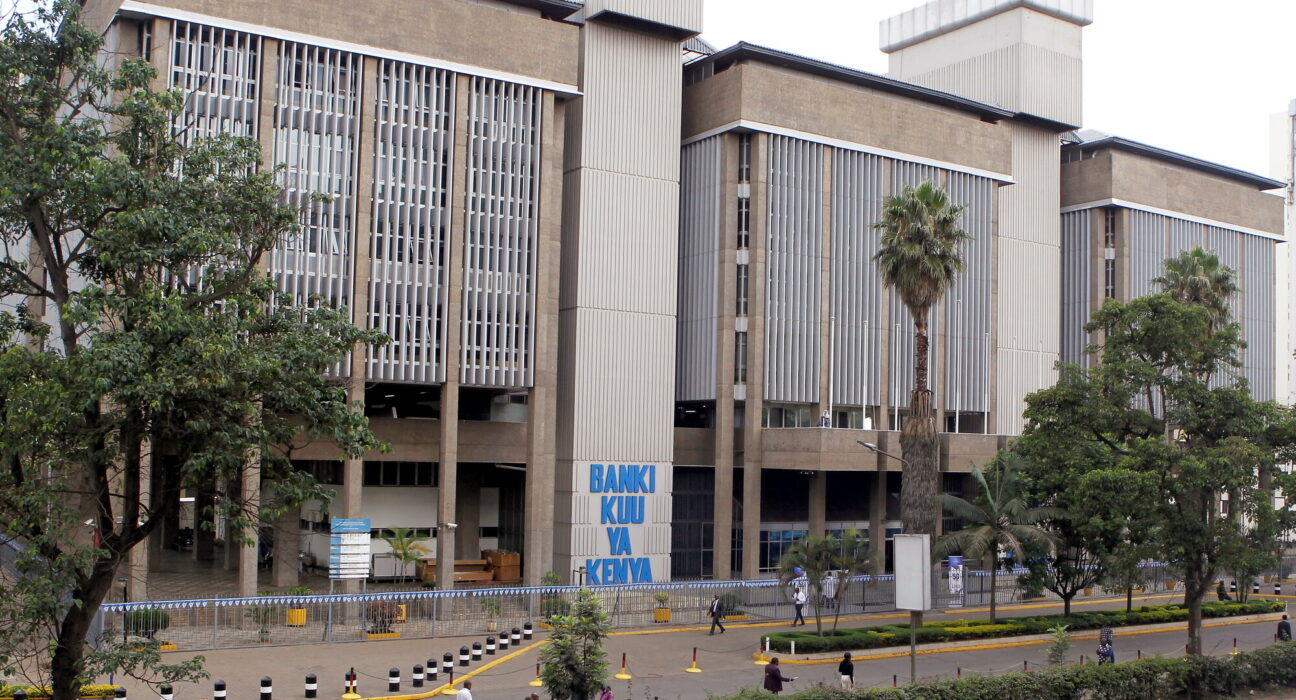
Kenya’s latest interest rate cut to 8.75% is less about the magnitude of easing and more about how policymakers manage inflation risks, foreign exchange confidence, and refinancing pressures, according to market analysis by EBC Financial Group.
Kenya’s monetary easing cycle has entered a new phase after the Central Bank of Kenya (CBK) reduced its benchmark policy rate to 8.75% from 9.00%, a move that analysts say will test the country’s ability to lower borrowing costs while maintaining macroeconomic stability.
Market commentary from EBC Financial Group argues that the significance of the decision lies not solely in the 25 basis-point cut, but in the broader policy framework accompanying it, including reserve diversification initiatives, tighter money market control mechanisms, and proactive debt liability management.
According to EBC Chief Executive Officer David Barrett, Kenya’s easing trajectory must be assessed within a context shaped by food-driven inflation volatility, global liquidity conditions, and investor perceptions of sovereign risk.
“With inflation still shaped by food and energy dynamics, and financing conditions influenced by global liquidity, the credibility of easing improves when it is accompanied by clear buffers such as reserves strategy and proactive maturity management,” Barrett said.

Policy adjustments extend beyond the rate cut
Alongside the rate reduction, CBK narrowed the policy corridor to ±50 basis points from ±75 basis points, a technical adjustment aimed at anchoring short-term market rates closer to the policy stance and reducing day-to-day volatility in interbank funding conditions.
Market pricing suggests early alignment with this objective. The Kenya Shilling Overnight Interbank Average (KESONIA) has traded close to the policy rate, while short-term Treasury bill yields remain below the benchmark, indicating improved transmission at the short end of the yield curve.
However, analysts say the broader challenge lies in translating policy easing into lower lending rates for households and businesses.
Commercial lending rates averaged about 14.82% in December 2025, highlighting the persistent influence of risk premiums in credit pricing. This dynamic underscores that monetary easing alone may be insufficient to drive meaningful borrowing cost reductions without improvements in risk perception and macro stability.
Buffers strategy targets multiple macro frictions
EBC’s assessment frames Kenya’s policy direction as an attempt to address three interconnected macroeconomic constraints simultaneously.
First, policymakers are seeking to improve monetary transmission by reducing uncertainty around funding conditions and compressing risk premiums. Evidence of progress is emerging in private sector credit data, with growth accelerating to 6.4% in January 2026 from 5.9% in December 2025, reversing contraction recorded a year earlier.
Second, the buffers narrative aims to support foreign exchange market confidence. Kenya’s foreign reserves, estimated at approximately $12.46 billion and covering about 5.4 months of imports, are being positioned as a shock absorber during the easing cycle.
Plans to gradually diversify reserves through gold accumulation have also been interpreted as a signalling mechanism that authorities are strengthening balance sheet resilience. While gold does not provide liquidity comparable to foreign currency reserves, its inclusion in reserve portfolios can reinforce perceptions of prudence in reserve management.
Third, policy messaging around liability management and potential Eurobond market engagement reflects an effort to smooth sovereign maturity profiles ahead of fiscal deadlines. Kenya’s public debt metrics continue to influence market risk pricing, with the present value of public debt estimated at 65.3% of GDP at end-2025, above the government’s benchmark threshold.
Analysts note that credible refinancing strategies can mitigate volatility in domestic yields by preventing concentrated redemption pressures.
Inflation dynamics remain uneven
Kenya’s inflation environment provides space for easing but also highlights vulnerabilities.
Headline inflation remained within the CBK target range, registering 4.4% in January 2026 compared with 4.5% in December 2025. However, the composition of inflation indicates uneven price pressures.
Core inflation stood at approximately 2.2%, while non-core inflation reached 10.3%, reflecting strong contributions from food and energy prices. This divergence suggests that climate conditions and global commodity trends remain decisive variables in determining the durability of Kenya’s disinflation path.
The drought outlook has emerged as a key risk factor. Weather projections from the Kenya Meteorological Department point to predominantly sunny and dry conditions across many regions, raising concerns that agricultural supply disruptions could trigger renewed food price volatility.
For policymakers, such developments could compress monetary policy flexibility if food inflation accelerates rapidly.
Refinancing and policy credibility in focus
Beyond inflation, investors continue to monitor Kenya’s refinancing trajectory and fiscal calendar.
Market expectations of possible Eurobond activity and broader liability management initiatives ahead of the end-June fiscal window signal a proactive approach to managing debt service obligations. Successfully navigating this period could reinforce policy credibility and support domestic yield stability.
Conversely, execution risks remain. Analysts emphasize that reserve diversification and liability management initiatives must be implemented transparently and consistently to sustain investor confidence during the easing cycle.
Barrett noted that periods in which monetary policy adjustments, buffer-building strategies, and climate risks intersect tend to shorten market reaction windows.
“In that environment, robust market education helps traders interpret the drivers behind price moves and risk, rather than reacting to headlines alone,” he said.
Implications for Kenya’s economic outlook
The CBK’s latest move illustrates a balancing act between supporting economic activity and safeguarding macro stability.
If risk premiums decline and credit transmission improves, lower policy rates could gradually stimulate private sector borrowing and investment, reinforcing growth momentum. At the same time, maintaining stable inflation expectations, currency confidence, and manageable refinancing conditions will remain essential to sustaining the easing trajectory.
For Kenya, the policy experiment now underway is less about the scale of rate adjustments and more about whether complementary buffers can anchor expectations sufficiently to allow easing benefits to reach the real economy.
The coming months, particularly ahead of the next policy review and fiscal cycle milestones, are therefore expected to provide critical evidence on the effectiveness of this coordinated policy approach.