

Parliament’s Tourism and Wildlife Committee has raised concerns over funding shortfalls, modest visitor growth targets and institutional overlaps as it reviewed the Ministry’s 2026/27 Budget Policy Statement.
Kenya’s tourism and wildlife sectors are facing renewed scrutiny from lawmakers following concerns over budget deficits, modest growth ambitions and structural inefficiencies flagged during parliamentary deliberations on the 2026/27 Budget Policy Statement (BPS).
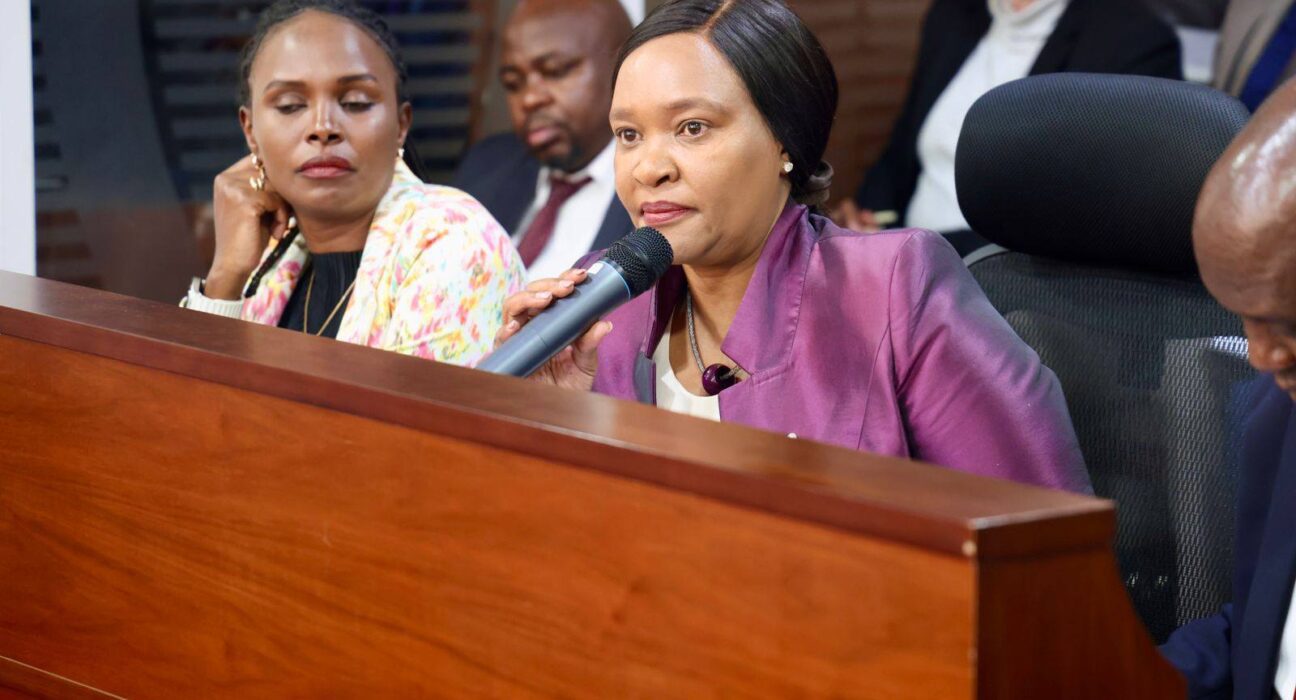
The National Assembly Departmental Committee on Tourism and Wildlife, chaired by Hon. Kareke Mbiuki, held consultations with senior officials from the Ministry of Tourism and Wildlife at Parliament Buildings, focusing on resource allocation, sector performance targets and policy reforms needed to sustain industry growth.
The ministry delegation was led by Tourism and Wildlife Cabinet Secretary Rebecca Miano alongside Tourism Principal Secretary John Ololtua, Wildlife Principal Secretary Sylvia Museiya and Kenya Wildlife Service Director General Erastus Kanga.
Ministry outlines strategic priorities
Opening the session, CS Miano presented six flagship interventions designed to support sector recovery and growth.
These include a refresh of the Magical Kenya brand, expansion of Meetings, Incentives, Conferences and Exhibitions (MICE) tourism, implementation of county-based signature tourism projects, adoption of AI-enabled digital marketing strategies, and efforts to scale wildlife revenue collections to KSh 13 billion.
The proposals reflect the government’s broader strategy to diversify tourism offerings beyond traditional leisure travel and position Kenya as a competitive destination for business events and niche tourism segments.
Industry stakeholders have increasingly identified MICE tourism and digital marketing as key drivers of visitor growth and revenue diversification, particularly as global travel patterns continue to evolve.
Lawmakers question growth ambition
However, committee members expressed concern that the ministry’s visitor targets may not match its funding requests.
Likuyani MP Innocent Mugabe questioned the decision to maintain international tourist arrivals at 3.25 million for the 2026/27 financial year, arguing that static targets could signal limited ambition despite calls for increased budget support.
“Why are we maintaining international arrivals at 3.25 million for 2026/27 while at the same time seeking increased funding? The targets must reflect ambition,” he told the committee.
The concern reflects broader debates within Kenya’s tourism policy space regarding growth benchmarks and the need for measurable performance indicators aligned with public investment levels.
Institutional overlap under review
Committee members also raised questions about potential duplication of roles between the Tourism Promotion Directorate and Kenya Tourism Board.
The issue of institutional overlap has long been cited as a constraint to efficiency in tourism marketing and promotion, with calls for clearer delineation of mandates to optimize resource utilization.
Responding to the concerns, CS Miano acknowledged the need for review and pledged to examine potential overlaps.
“We take the Committee’s concerns seriously and will undertake a review to eliminate duplication if any and enhance institutional efficiency,” she said.
Tourism funding gap highlighted
The ministry reported that the tourism sector is operating with a KSh 4.1 billion recurrent expenditure shortfall and a KSh 1.3 billion development deficit against total projected needs of KSh 17.5 billion.
To mitigate the funding gap, the Tourism Fund plans to increase levy collections from KSh 6.9 billion to KSh 10.04 billion, signalling greater reliance on sector-generated revenue streams.
The approach mirrors a broader public finance trend where agencies are increasingly expected to strengthen internal revenue mobilization to complement exchequer funding.
Nevertheless, lawmakers cautioned that reliance on levy growth must be supported by robust sector expansion and compliance mechanisms.
Wildlife sector deficit raises operational concerns
Budget constraints appear more pronounced in the wildlife segment, where the State Department for Wildlife reported resource requirements of KSh 20.6 billion against an allocation of KSh 13.25 billion, leaving a deficit of KSh 7.4 billion.
Committee members warned that the funding gap could hinder key operational priorities including mitigation of human-wildlife conflict, maintenance of park infrastructure and modernization of anti-poaching operations.
Human-wildlife conflict compensation emerged as a particularly sensitive issue given its socio-economic impact on communities living adjacent to conservation areas.
Ranger welfare comes into focus
Beyond operational funding, lawmakers highlighted welfare concerns affecting wildlife personnel.
Reports that some Kenya Wildlife Service rangers are housed in temporary tents prone to damage during rainy seasons drew criticism from committee members, who described the conditions as inconsistent with the critical role played by conservation officers.
Chairperson Mbiuki called for urgent intervention, stating that frontline personnel protecting national heritage should be provided with adequate housing.
A proposal was discussed to utilize proceeds from the National Housing Levy to construct and rehabilitate housing for approximately 5,000 staff. Currently, only KSh 150 million has been allocated for rehabilitation works, raising questions about implementation timelines.
Revenue outlook shows improvement
Despite funding challenges, KWS leadership reported improved revenue performance.
Director General Kanga told the committee that the agency had surpassed half-year revenue targets and expects collections to increase from KSh 8.8 billion to KSh 10 billion, with projections to reach KSh 12 billion in the medium term.
The performance reflects continued recovery in park visitation and diversification of conservation-related revenue streams, although sustainability will depend on broader tourism sector growth and infrastructure investment.
Policy reforms and regional equity
The session also addressed planned policy adjustments aimed at improving service delivery.
A notable shift will see the human-wildlife conflict compensation function transferred directly to Kenya Wildlife Service, creating a centralized payment mechanism intended to accelerate support to affected communities.
Additionally, the Northern Conservation Area is set for reorganization to align administrative structures with county boundaries across Mandera, Garissa and Wajir counties.
While supporting the reorganization, committee members cautioned against potential marginalization of northern regions and emphasized the importance of equitable resource distribution.
Institutional development agenda
The committee further sought updates on the operationalization of Ronald Ngala Utalii College, a key hospitality training institution expected to strengthen skills development within the tourism value chain.
CS Miano indicated that a comprehensive status update would be provided during a consultative meeting scheduled for late March.
Budget scrutiny to continue
The committee’s review forms part of Parliament’s broader examination of the Budget Policy Statement ahead of the annual budget cycle, with findings expected to inform recommendations to the House.
For Kenya’s tourism and wildlife sectors, the deliberations highlight a balancing act between ambitious growth strategies, fiscal constraints and institutional reforms necessary to sustain competitiveness.
As policymakers refine the budget framework, industry stakeholders will be watching whether resource allocations align with sector priorities and whether proposed reforms translate into measurable performance improvements.