

The National Assembly Departmental Committee on Education has flagged major funding and operational gaps in the Teachers Service Commission’s (TSC) 2026/2027 Budget Policy Statement, citing a KSh10 billion shortfall in teacher medical cover and slow integration into the new Social Health Authority (SHA) insurance framework.
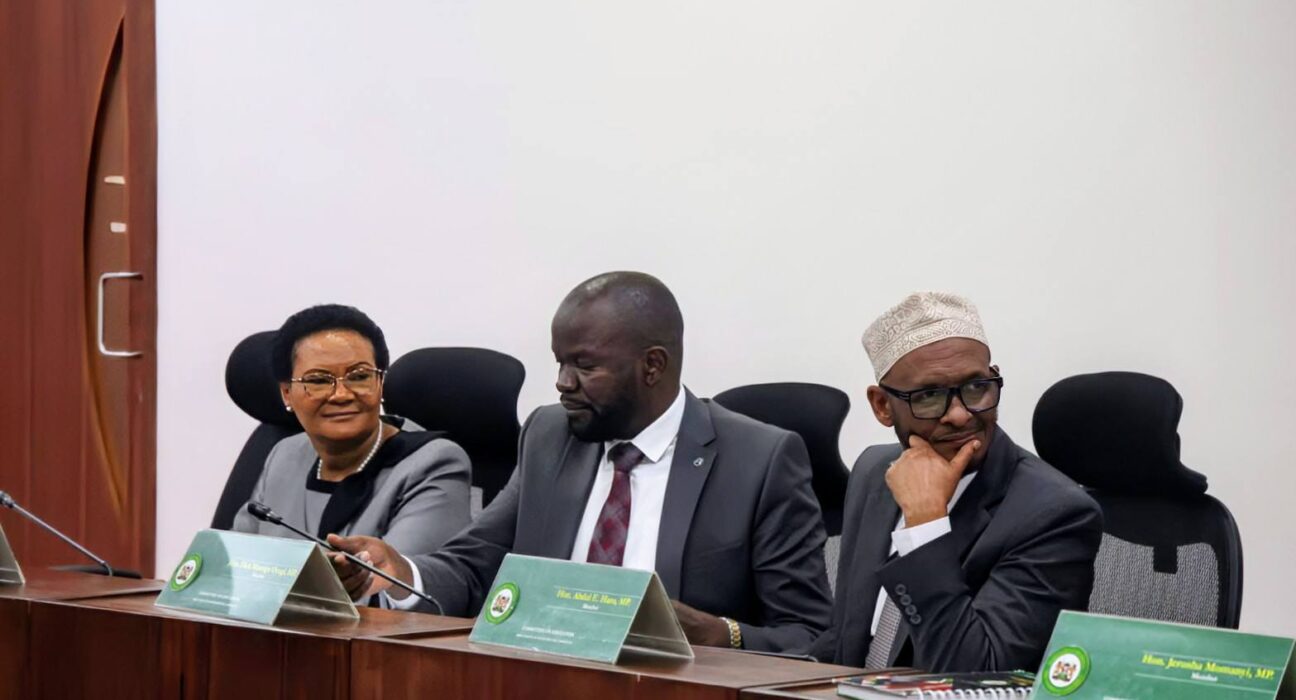
During a session on Tuesday, Members of Parliament scrutinized TSC’s allocation and spending plans for the upcoming financial year, highlighting delays in onboarding teachers into the SHA scheme, inequitable distribution of education projects across counties, and persistent challenges with promotions and acting appointments.
Appearing before the Committee, Acting TSC CEO Evelyn Mitei disclosed that the Commission had received KSh16.5 billion for the teachers’ medical cover, falling short of the projected requirement of KSh26.5 billion. The funding gap, she said, limits the Commission’s ability to provide adequate services to the 400,000 teachers and one million dependants already onboarded.
“We have onboarded more than 400,000 teachers and one million dependants into the SHA scheme. However, the cost of providing adequate health services to all members continues to rise as we employ more teachers,” Ms. Mitei said. “We are working closely with SHA to resolve onboarding challenges and to ensure teachers across the country can access quality medical services.”
Slow Rollout and MP Concerns
Committee members pressed the Commission on delays in operational rollout, noting that many teachers remain uncertain about where and how to access medical services. Hon. Eve Obara questioned the implementation process, saying, “How have teachers been integrated into SHA? Teachers are struggling to access treatment. What services are they actually getting?”
Committee Chair Hon. Julius Melly described the slow rollout as unacceptable and urged TSC to fast-track integration. “What are you doing to ensure teachers are fully incorporated? The rollout is too slow. We need to see teachers benefiting immediately,” he said.
Ms. Mitei acknowledged that onboarding and sensitization processes had faced teething problems but assured MPs that SHA is committed to streamlining the system and expanding access for all teachers.
Recruitment Plans and Staffing Challenges
The TSC plans to recruit 16,000 additional teachers for Junior and Senior Schools in the 2026/27 financial year at a cost of KSh1.9 billion. The move is intended to reduce the current nationwide teacher shortage of approximately 116,000, exacerbated by the transition to the Competency-Based Curriculum (CBC).
“In the past three years, we have recruited 100,000 teachers. The 2026/27 plan continues this trajectory as we address shortages created by the Competency-Based Curriculum,” Ms. Mitei said.
However, MPs questioned the absence of recruitment plans for primary school teachers. TSC explained that the phase-out of the 8-4-4 system resulted in a surplus of primary school teachers even as shortages persist in Junior and Senior Schools. “With the transition of learners to Junior Secondary, there is reduced demand at primary level, but new pathways in upper levels require additional teachers,” Ms. Mitei said.
Equity Concerns and Project Distribution
The Committee also scrutinized the distribution of education projects, highlighting that certain regions continue to be underfunded. Hon. Dick Maungu questioned why Western, North Eastern, and Rift Valley counties had no new projects in the 2026/27 ceilings. The Commission confirmed that no new capital projects were introduced for these regions, with only ongoing projects in Kwale, Kitui, and Murang’a counties allocated KSh61 million.
Delays in promotions and long-serving acting appointments also drew criticism. Hon. Joseph Makilap noted that teachers with advanced qualifications had not received timely promotions, while Hon. Jerusha Momanyi emphasized that prolonged acting appointments contravene labor laws and reduce morale.
Budgetary Allocations and Constraints
The TSC proposed a total budget of KSh422.9 billion for 2026/27, including:
- KSh2 billion for teacher promotions
- KSh1.5 billion for retraining and retooling teachers for new learning areas
- KSh7.2 billion to convert 20,000 interns to permanent and pensionable positions
Despite these allocations, Ms. Mitei warned that the absence of funds for acting allowances could slow the rollout of key reforms, such as the new administrative structure for Junior Schools and payment of allowances to teachers temporarily serving in higher positions.
“We have no allocation for acting allowances, yet teachers continue to shoulder administrative responsibilities. We appeal for Parliament’s support to bridge these gaps,” she said.
Implications for Policy and Education Funding
The Committee’s engagement underscores the challenges of implementing the new needs-based funding model, which aims to align allocations with students’ financial backgrounds and programme costs. MPs stressed that adequate and predictable funding is critical to stabilizing universities and schools, ensuring teacher welfare, and sustaining education reforms.
The Education Committee is expected to table its report on the sector’s budget before the House in the coming weeks, with recommendations likely to focus on bridging funding gaps, accelerating teacher integration into SHA, ensuring equitable distribution of projects, and addressing structural issues in teacher recruitment and promotions.