


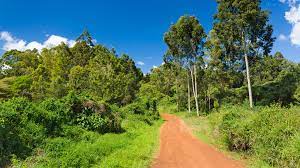
Friends of Karura Forest has called for an immediate stop to tree felling near Rangers Village inside Karura Forest, citing lack of consultation and raising concerns over possible National Youth Service accommodation plans within the protected urban forest.
A dispute has emerged over activities inside Karura Forest after the Friends of Karura Forest (FKF) raised concerns about ongoing tree clearance near Rangers Village and called for greater transparency from the Kenya Forest Service (KFS) regarding proposed developments within the protected area.
The community forest association said numerous indigenous trees were cut down over the weekend by individuals using chainsaws, while heavy machinery reportedly uprooted tree stumps near the residential area for forest rangers. FKF indicated that the group responsible for the activity gained entry into the forest with authorization from the local KFS station manager, while another team conducted a site assessment in the same location.
Concerns Over Lack of Consultation
FKF, which co-manages Karura Forest alongside KFS under a joint management agreement, said it was not notified of the tree clearance or potential development plans, despite recent deliberations through the Joint Management Committee that oversees forest governance.
The association said it had formally written to KFS seeking clarification but had not received a response by midweek, intensifying concerns about decision-making processes within the co-management framework.
The developments follow a previous controversy involving the overnight tarmacking of a road leading to Rangers Village last year, which FKF opposed in court, arguing that the project proceeded without stakeholder consultation.
Questions Over Proposed NYS Accommodation
According to FKF, preliminary indications suggest the cleared area may be intended for barrack-style accommodation for teams from the National Youth Service Kenya (NYS) expected to support an expanded tree nursery programme within the forest.
KFS has maintained on social media that the affected site falls within its headquarters area. However, FKF disputes this characterization, stating the location lies approximately one kilometre from the agency’s main headquarters and deeper within forested land.
FKF further argued that KFS headquarters, situated along Kiambu Road and spanning about 55 hectares, already possesses sufficient space and infrastructure to accommodate such facilities without requiring new development within forested sections.
Management Plan Provisions
The association noted that the current Karura Forest Management Plan, as well as previous iterations, had proposed relocating Rangers Village to the KFS headquarters zone, with the vacated land earmarked for restoration of indigenous forest cover.
Prof Njoroge Karanja of the FKF Board said the activities risk undermining years of conservation progress achieved through joint management arrangements.
“As co-managers of Karura, we demand an immediate end to this work. Any proposals for development or building work inside the forest on this land must be brought out in the open for discussion,” Karanja said.
“It is 15 years today since Karura was officially opened and it has been an extraordinary achievement to jointly protect and conserve the forest. All this progress is now under threat from this proposal for barracks for a large number of people which will cause huge disruption inside the forest,” he added.
Environmental and Urban Economy Implications
Karura Forest is one of Nairobi’s largest urban forests and serves ecological, recreational, and economic functions, including biodiversity conservation, tourism, and climate regulation within the capital.
Environmental stakeholders note that land-use changes in protected urban forests often trigger public scrutiny due to potential implications for ecosystem services, urban planning, and conservation commitments.
For Nairobi’s urban economy, green spaces such as Karura Forest contribute to real estate value stabilization, eco-tourism activity, and climate resilience, making governance decisions affecting such assets relevant beyond environmental circles.
Governance Framework and Community Role
Friends of Karura Forest operates as a Community Forest Association under the Forest Conservation and Management Act framework, which enables local communities to participate in forest management through legally recognized agreements with the state.
The co-management model has been widely viewed as a case study in collaborative conservation, combining government oversight with community participation to enhance protection and public engagement.
The current dispute therefore raises broader governance questions around stakeholder consultation, adherence to management plans, and balancing operational requirements with conservation objectives in jointly managed public assets.
Awaiting Official Clarification
As of the time of publication, Kenya Forest Service had not publicly provided detailed clarification on the scope of the works, intended development plans, or consultation processes undertaken prior to the tree clearance activities.
FKF has reiterated calls for an immediate halt to ongoing works and for public disclosure of any development proposals affecting the forest, signaling the likelihood of continued stakeholder engagement and possible regulatory or legal scrutiny in the coming weeks.
The outcome of the dispute may shape future implementation of co-management frameworks and development protocols within protected urban forests, particularly as government agencies balance operational infrastructure needs with conservation commitments and community partnerships.