


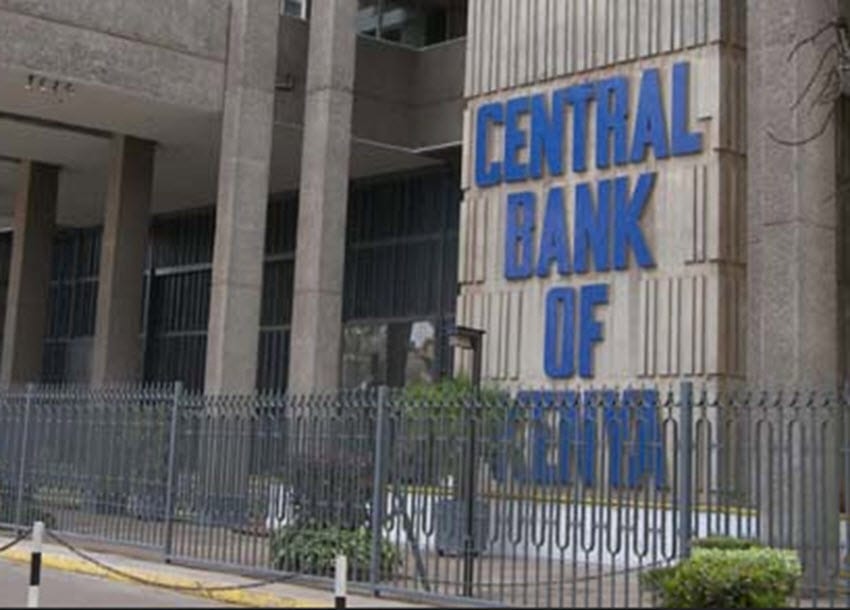
The Central Bank of Kenya (CBK) has invited investors to participate in a KSh15 billion Treasury bond switch auction that will enable holders of a near-maturity government security to exchange their positions into a longer-term instrument, in a move aimed at smoothing redemption pressures and extending the public debt maturity profile.
The prospectus outlines a voluntary switch from Treasury bond issue FXD1/2021/005, which has approximately 0.6 years remaining to maturity, into FXD3/2019/015, a 15-year instrument with about 8.3 years left to maturity.
The transaction is scheduled for sale between February 26 and March 16, 2026, with bids due by 10:00 am on March 16. The auction will take place the same day, while settlement is set for March 18, 2026.
Managing Near-Term Redemptions
Switch auctions are a debt management tool used by sovereign issuers to refinance upcoming maturities and manage liquidity requirements without relying solely on new borrowing.
Under the CBK offer, investors holding the FXD1/2021/005 bond maturing on November 9, 2026, may exchange part or all of their holdings for allocations in FXD3/2019/015, which matures on July 10, 2034.
The source bond carries a coupon rate of 11.277 percent and a withholding tax rate of 15 percent, while the destination bond offers a 12.34 percent coupon with a lower 10 percent withholding tax rate, potentially improving post-tax returns for participating investors.
Market participants note that the extended tenor and tax differential could make the switch attractive to institutional investors seeking duration exposure and improved yield profiles.
The CBK said eligibility is limited to investors with unencumbered holdings in FXD1/2021/005 as at March 16, 2026, and participation remains voluntary, allowing investors flexibility to switch partial or full face-value amounts.
Auction Structure and Pricing
The switch will be conducted through a multi-price auction mechanism, meaning successful bidders may receive allocations at different yields based on their submitted bids.
For the source bond, the CBK indicated a reference yield of 8.0935 percent and a dirty price of 105.9143, reflecting accrued interest. By contrast, the destination bond will be priced based on quoted yield levels submitted by investors.
The pricing table released alongside the prospectus provides indicative clean prices across yield ranges from 12.0 percent to 16.0 percent for the FXD3/2019/015 bond, offering investors guidance on valuation dynamics.
Accrued interest of KSh1.9663 per KSh100 will be applied to the destination bond, with withholding tax calculated on clean price values.
CBK noted that minimum non-competitive bids are set at KSh50,000 with a maximum of KSh50 million, while competitive bids require a minimum of KSh2 million per Central Securities Depository (CSD) account.
Liquidity and Portfolio Implications
The destination bond qualifies for statutory liquidity ratio (SLR) requirements for commercial banks and non-bank financial institutions under the Banking Act, preserving its attractiveness as a liquidity management instrument within regulated portfolios.
Analysts say this eligibility is particularly important for banks, which remain among the largest holders of domestic government securities and frequently adjust duration positioning to meet both regulatory and balance sheet objectives.
By offering a longer tenor security with SLR eligibility, the CBK is effectively providing investors with a rollover pathway that maintains liquidity compliance while extending exposure along the yield curve.
The switch also allows the government to reduce concentration of repayments in 2026, a year expected to see multiple domestic debt redemptions, thereby smoothing cash flow requirements.
Operational and Settlement Framework
Successful bidders will be able to access allocation details through the DhowCSD Investor Portal or mobile application under the bids tab on March 16.
Upon settlement, investor portfolios will be updated with allocated amounts in the destination bond, while any residual cash below the minimum investment threshold of KSh50,000 will be refunded.
CBK advised investors with outstanding pledges on the source bond to cancel them at least five days before settlement to qualify for participation.
The regulator also retained discretion to accept bids in full or in part, or to reject applications without providing reasons, consistent with standard sovereign auction procedures.
Rediscount and Market Liquidity Provisions
As part of liquidity support mechanisms, CBK indicated that rediscounting of bonds will be available as a last resort facility at three percentage points above the prevailing market yield or coupon rate, whichever is higher.
Rediscount instructions must be submitted through the DhowCSD platform, providing investors with a contingency option for accessing liquidity against bond holdings.
The CBK further noted that the destination bond may be reopened in future issuances, a common practice aimed at enhancing secondary market liquidity and benchmark building.
Broader Debt Management Context
Kenya has increasingly utilised liability management operations such as switches and buybacks to manage refinancing risks and improve debt sustainability metrics.
Such operations help lengthen average time to maturity, reduce rollover risk and support development of benchmark securities that enhance domestic bond market depth.
For investors, switch auctions offer an opportunity to rebalance portfolios without incurring transaction costs associated with secondary market trades, while potentially capturing favourable yield dynamics.
The current offer comes amid continued government reliance on the domestic market to finance budget deficits and refinance maturing obligations, underscoring the importance of maintaining investor confidence and market liquidity.
Market observers say the success of the switch will provide insight into investor appetite for longer-dated government paper and expectations around interest rate trajectories.
With the auction window now open, investors holding the 2026 maturity bond will weigh yield, tax, duration and liquidity considerations as they decide whether to roll positions into the 2034 benchmark.