


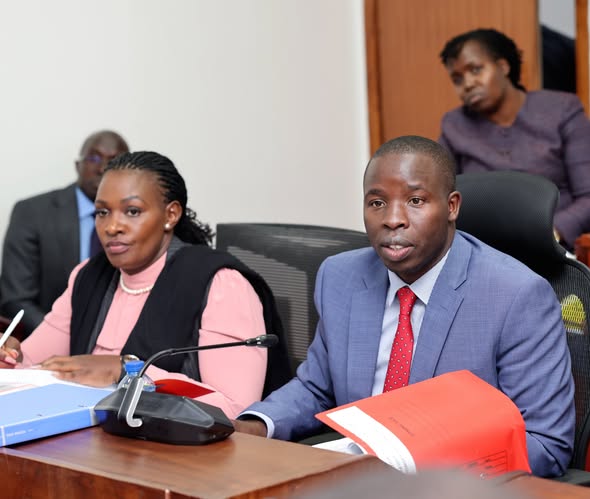
Nandi County Governor Stephen Sang came under rigorous questioning on Wednesday as the Senate County Public Investments and Special Funds Committee examined a pattern of unaccounted expenditures and systemic financial management weaknesses in the county’s 2024/2025 audit reports.
The hearing, chaired by Senator Godfrey Osotsi, highlighted accountability gaps in the management of critical county resources, including the Facilities Improvement Fund (FIF), the Climate Change Fund, and the Nandi Education Scheme.
Facilities Improvement Fund Under Scrutiny
The committee’s most pointed inquiries focused on the Facilities Improvement Fund, where auditors identified a dramatic surge in staff-related costs—from KSh 540,000 in the previous cycle to KSh 24.8 million. Governor Sang attributed this spike to the temporary engagement of medical personnel following the suspension of 1,899 health workers across the county.
However, the committee raised questions over KSh 15.4 million transferred to Kaptumo, Chepterwai, and Kabiyet hospitals, funds for which no financial statements had been submitted by the facilities. Senator Osotsi described the situation as a “fundamental breakdown in accountability.”
“When KSh 15 million vanishes into a ‘no-statement’ void, it is the citizens of Nandi who suffer,” Osotsi said, adding that the committee would not accept bookkeeping convenience in place of transparency. He demanded that the county submit all supporting statements within seven days.
Senator George Mbugua echoed these concerns, warning that the surge to KSh 24.8 million in employee costs is a significant red flag. He stressed the need for verifiable proof that each temporary worker was properly procured and rendered services to the county’s residents.
In his response, Governor Sang defended the temporary hires, stating that the measures were necessary to prevent a collapse in health service delivery after nearly 1,900 letters of engagement were revoked. He pledged to provide the committee with supporting documentation to justify that the expenditure was lawful and necessary, and confirmed that the temporary staff arrangements had since been discontinued.
Climate Change Fund and Private Land Risks
The committee also examined the Climate Change Fund, where audits revealed a KSh 7.23 million omission from the trial balance linked to a building asset, which county officials described as a bookkeeping error. Senators also raised concerns about water projects in Kiropket, Kiptenden, and Kapkawa that were constructed on private land without formal titles or legal agreements, potentially jeopardizing public investments.
“These projects, while well-intentioned, expose county resources to unnecessary legal and financial risks,” Senator Osotsi noted.
Education Bursary Irregularities
The Nandi Education Scheme similarly drew scrutiny, with auditors reporting KSh 50.2 million in bursary disbursements lacking acknowledgement receipts from the receiving learning institutions. Nandi Senator Samson Cherargei sharply criticized the oversight, emphasizing the impact on students.
“To have over KSh 50 million in bursaries floating without receipts while students struggle to pay fees is a betrayal of public trust,” Cherargei said, warning that the county executive cannot evade responsibility for funds intended for education.
Committee Directives and Implications
Senator Osotsi concluded the session by directing Nandi County to submit all outstanding financial documents to the Auditor-General before the committee’s report tabling deadline on March 31. He warned that persistent failure to provide source documents could result in legislative sanctions.
The hearing underscores broader concerns about financial governance in Kenya’s counties, particularly regarding the management of special funds earmarked for infrastructure, climate adaptation, and education. Delays or gaps in accountability threaten public service delivery and could undermine citizen confidence in devolved governance systems.
County governments are required under the Public Finance Management Act to maintain accurate financial records, ensure transparency in fund allocation, and submit timely reports to oversight institutions, including the Auditor-General and parliamentary committees.
Looking Ahead
The committee’s follow-up actions, including potential sanctions, are likely to set a precedent for enforcing accountability in county fund management nationwide. Observers note that robust oversight is crucial for safeguarding public resources, especially in sectors directly affecting citizens’ welfare, such as health and education.
Governor Sang’s compliance with the committee’s directives and timely submission of supporting documentation will be closely monitored as part of efforts to restore confidence in Nandi County’s financial management systems.