


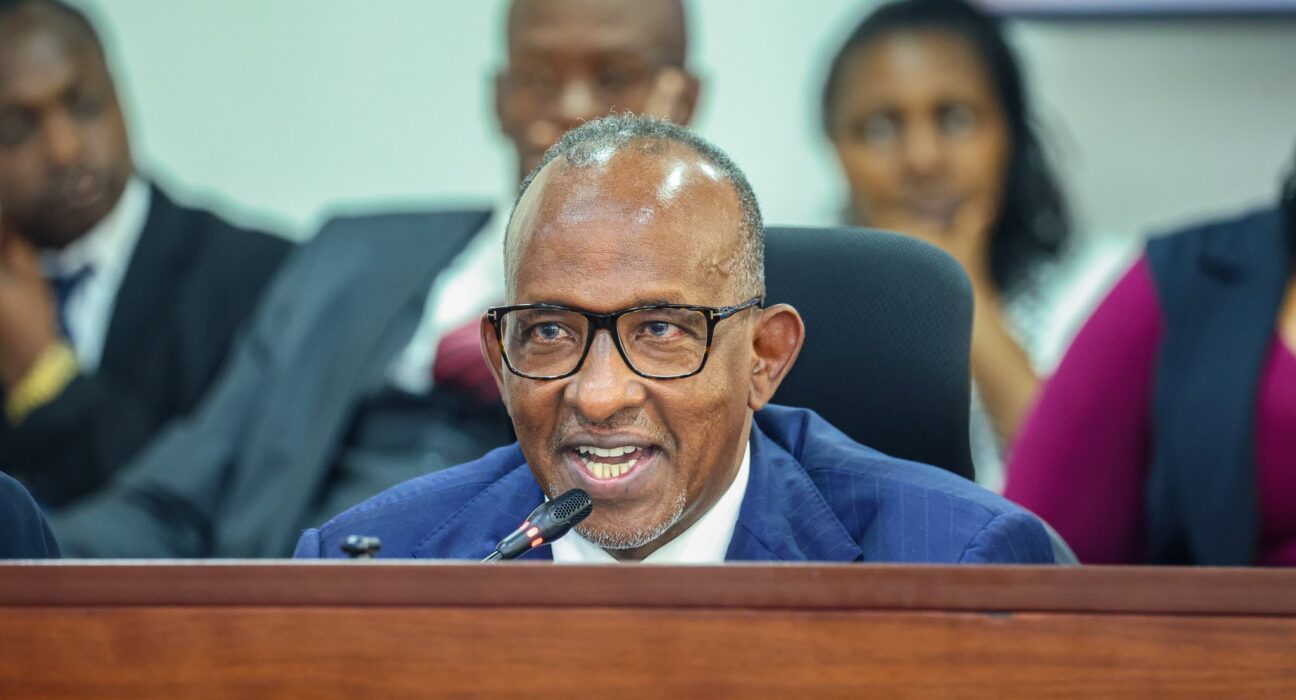
The Ministry of Health has moved to counter escalating concerns from teachers and their unions regarding the performance of the Public Officers Medical Scheme Fund (POMSF) under the Social Health Authority (SHA), stressing that access to healthcare for educators remains intact even as union leaders warn of industrial action.
In a press statement, Cabinet Secretary Aden Duale sought to “categorically assure” teachers and the public that the scheme is fully operational and delivering services, highlighting tens of thousands of treated patients and billions in claims processed to date. However, the reassurances come amid growing reports from the Kenya Union of Post‑Primary Education Teachers (KUPPET) that many educators are struggling to access care because of system failures, payment delays and hospital withdrawals.
Reports from the union allege that persistent technical problems and slow reimbursements have left teachers facing barriers to care, with some medical facilities suspending services due to outstanding debts owed by the SHA. KUPPET has issued a seven‑day ultimatum to government authorities to resolve the crisis, warning that a failure to act could lead to nationwide strike action that would disrupt teaching schedules and public education delivery.
Government Data On Scheme Performance
According to officials, the POMSF has recorded claims amounting to over KES 3.5 billion and more than 249,000 teachers and dependents treated since the transition from the previous private insurer. Teachers are reported to have accessed care at 2,823 public and private facilities nationwide.
Detailed figures cited by the Ministry show that Nairobi County has seen the highest volume of usage, with 30,766 claims worth KES 527.7 million. Uasin Gishu follows with 29,212 claims valued at KES 463.2 million. Meru and Bungoma counties recorded substantial utilization as well, with thousands of claims processed in each. These statistics, the Ministry said, demonstrate the breadth of service uptake under the government‑managed fund.
“Unlike the restrictive, tiered networks of the past, teachers now enjoy unparalleled choice and accessibility,” the Ministry said in its statement, pointing to the broader network of contracted facilities.
Rising Discontent Among Teachers And Unions
Despite government assurances, the POMSF rollout has faced significant pushback from parts of the teaching fraternity and union leaders.
KUPPET officials say technical failures in the SHA claims system have caused frequent system breakdowns, delayed reimbursements to hospitals, and limited participation by private hospitals. In Nairobi, several facilities reportedly began withdrawing from the scheme, citing fatigue with pre‑authorization requirements and unpaid claims, according to recent union statements.
“The system of pre‑authorisation is fatigued,” KUPPET Secretary‑General Akello Misori said, adding that teachers are suffering because of delays and limited facility access. He warned that if the situation does not improve within the next seven days, the union may pull educators out of the scheme altogether.
Union leaders have also raised concerns about the adequacy of allocations for accident and emergency services, as well as the challenges faced by teachers in accessing inpatient care without unexpected out‑of‑pocket costs. With private hospitals under pressure and public facilities reportedly overstretched, the union argues that some educators are being forced to seek alternative funding — including community fundraising — to cover urgent medical bills.
Background: Transition From Previous Insurance Scheme
The POMSF transition represents a major overhaul of teachers’ medical cover. Until December 1, 2025, more than 400,000 educators and dependents were insured under the private Minet Kenya‑administered medical scheme, arranged through the Teachers Service Commission in consultation with teacher unions.
The Minet scheme — established under a collective bargaining agreement — had been criticized in the past for administrative bottlenecks and coverage limitations, but it was broadly accepted and widely used by teachers for years. The shift to the SHA‑managed scheme, part of a broader government push to streamline public service health benefits under a national fund, has introduced new processes and systems that teacher representatives say have not yet been fully tested or stabilised.
Operational And Financial Challenges
Industry analysts and policy observers note that migrating a large workforce from a long‑standing private insurance model to a government‑run fund is complex, particularly in its early stages.
The SHA is required to manage claims data, pre‑authorization systems, facility accreditation, provider reimbursements and complex health financing logistics — functions that were previously handled by private administrators with established systems. Any delay in payments to hospitals or systemic inefficiencies can quickly lead to provider withdrawal and disruptions in service. The recent decision by members of the Rural Private Hospitals Association to temporarily suspend services to teachers and police officers due to claim arrears illustrates these risks.
Government data published in explanatory memoranda for the POMSF show that the fund was expanded to include teachers and other civil servants under regulations amended in 2025, as part of efforts to unify public officers’ medical coverage within a single framework.
Implications For Education And Public Services
The unfolding dispute has wider implications beyond healthcare delivery. Teachers form one of the largest public sector workforces in Kenya, and disruptions in key benefits such as medical cover can affect morale, retention and industrial relations. If unresolved, the threat of strike action could impact classroom learning and add pressure on county governments responsible for basic education services.
Further, ongoing system issues and provider withdrawals could strain public hospitals, which unions say are now being relied upon more heavily in the absence of private facility access. Public facilities in major urban centres are already reporting high patient volumes and resource constraints, raising concerns about quality and timeliness of care for all patients.
Government Response And Next Steps
The Ministry of Health, SHA and the Teachers Service Commission say they are jointly monitoring the situation in real time and addressing isolated operational issues quickly to ensure minimal disruption. They have urged educators to continue utilising contracted facilities and to report challenges through official channels so they can be resolved.
However, KUPPET’s ultimatum and growing public reporting of access problems underscore the challenges inherent in large‑scale healthcare transitions in Kenya — particularly when replacing a familiar private insurance system with a new government‑run fund.
The next few weeks will be critical as stakeholders attempt to resolve outstanding hospital payments, stabilise the claims infrastructure and address teachers’ concerns before the union’s deadline expires.