

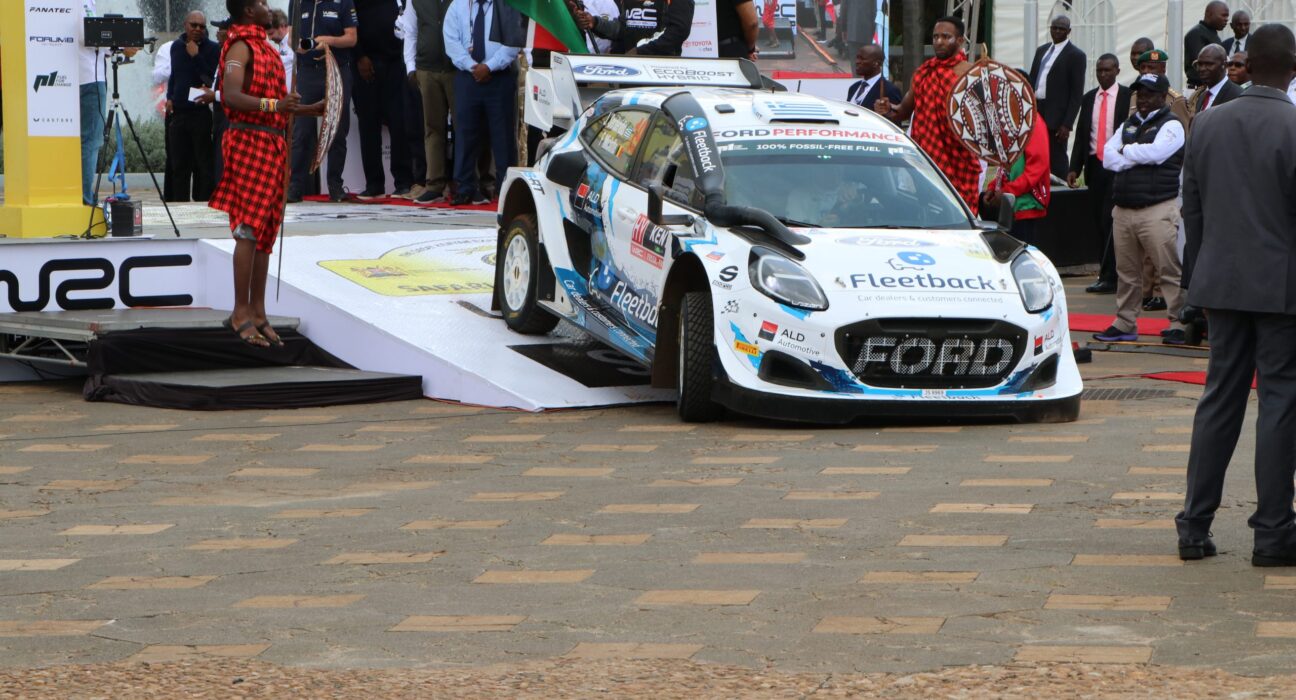
The World Rally Championship (WRC) Safari Rally Kenya remains one of the most legendary and punishing events in global motorsport, widely regarded as the world’s toughest rally. Held annually in Kenya’s dramatic Rift Valley terrain, it combines extreme gravel roads, unpredictable weather, wildlife crossings, and fesh-fesh dust to test drivers, co-drivers, and cars to their absolute limits. Often compared to the Daytona 500, Le Mans 24 Hours, or Dakar Rally, the Safari Rally is Africa’s premier motorsport spectacle and a national pride for Kenyans.
When is the Safari Rally 2026? Key Dates & Schedule
- Dates: March 12–15, 2026 (Thursday to Sunday)
- Round: Expected to be Round 3 of the 2026 WRC calendar (following Monte Carlo and Sweden, before Croatia).
- Base: Exclusively in Naivasha (no ceremonial start in Nairobi or Kasarani Super Special Stage this year).
- Competitive Distance: Approximately 350 km across ~20 special stages.
- Shakedown & Reconnaissance: Likely March 10–11 (exact times TBA).
- Power Stage: Final stage on Sunday, March 15, awarding bonus points.
The event returns to its traditional Easter-period slot in March after a brief July experiment post-revival. Exact stage maps, spectator zones, and ticket info will be released by the Kenya Motor Sports Federation (KMSF) and WRC closer to the date. Check wrc.com, safarirally.co.ke, or @wrc on X for live updates.
Full History of the Safari Rally
- 1953: Inaugural East African Coronation Safari (May 27–June 1) celebrated Queen Elizabeth II’s coronation. The 5,000 km, 5-day endurance test across Kenya, Uganda, and Tanganyika was conceived by Eric Cecil, Neil Vincent, and Eric Tromp.
- 1960: Renamed East African Safari Rally.
- 1973: Joined the newly formed World Rally Championship (WRC).
- 1974: Officially branded WRC Safari Rally.
- Peak Era (1970s–1990s): Day-and-night stages, massive crowds, helicopter scouting (banned 1996), and legends born. Toyota, Lancia, Peugeot, and Subaru dominated.
- Last Kenyan Win: Ian Duncan (1994, Toyota Celica GT4 “Flying Sausage”).
- 2002: Dropped from WRC due to funding issues after 28 years.
- 2003–2020: Survived as ARC (African Rally Championship) event; Carl “Flash” Tundo won 5 times. Hosted IRC in 2007/2009.
- 2019: Granted WRC Candidate Event status; successful July test run.
- 2020: Cancelled due to COVID-19 (first miss since 1953).
- 2021: Triumphant WRC return (June 23–26).
- 2024: Moved back to March/Easter slot.
- 2025: Elfyn Evans won (first British victory in 23 years).
- 2026: Confirmed for March 12–15; contract ends after this edition, but extension talks are advanced.
Legendary Winners & Kenyan Icons
Multiple WRC Safari Rally Winners:
- Shekhar Mehta (Kenya) – 5 wins (1973, 1979–1982)
- Björn Waldegård (Sweden) – 4 wins
- Juha Kankkunen (Finland) – 3 wins
- Tommi Mäkinen (Finland), Hannu Mikkola (Finland), Miki Biasion (Italy), Richard Burns (UK), Colin McRae (UK)
Recent WRC Winners:
- 2021: Sébastien Ogier (Toyota)
- 2022: Kalle Rovanperä (Toyota)
- 2023: Sébastien Ogier (Toyota)
- 2024: Kalle Rovanperä (Toyota)
- 2025: Elfyn Evans (Toyota)
Kenyan Heroes (especially pre-2000s):
- Joginder Singh, Ian Duncan, Patrick Njiru, Jonathan Toroitich, Gregory Kibiti, Jim Kahumbura, Phineas Kimathi, Ben Muchemi, John Ngunjiri
- Orie Rogo Manduli – First African woman to compete in WRC Safari
The 73rd edition in 2026 will cement its status as Kenya’s longest-running annual sporting event.
Why the Safari Rally Matters
- Unique open-road format (no closed circuits like most WRC events)
- Extreme conditions: fesh-fesh dust, river crossings, rocks, rain, altitude
- Massive local support: thousands line stages, villages celebrate
- Economic boost: tourism, jobs, global spotlight on Kenya
For live timing, stage results, tickets, spectator zones, road closures, and accommodation in Naivasha during March 2026, follow official sources:
- wrc.com
- safarirally.co.ke
- @wrc / @SafariRallyKe on X
- KMSF and Tourism Kenya channels