


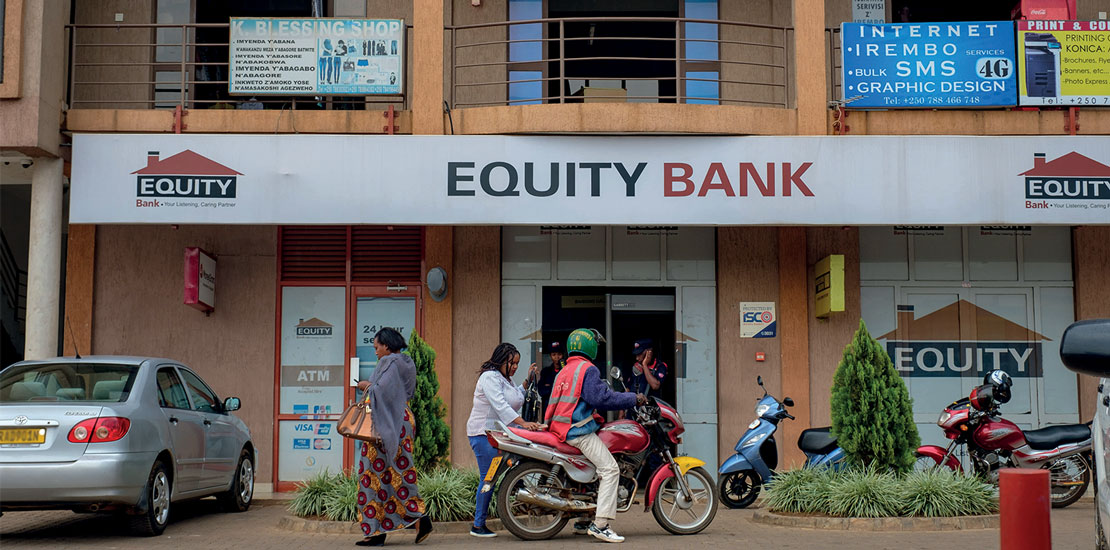
Equity Bank Kenya has announced a scheduled system maintenance exercise that will temporarily disrupt select mobile money integration services, highlighting the growing reliance on digital banking infrastructure and the need for periodic upgrades to sustain service efficiency.
In a customer notice issued on Wednesday, the lender said that account-to-mobile money and mobile money-to-bank transactions involving M-Pesa will be unavailable for one hour between midnight and 1:00 AM on Thursday, March 26, 2026.
The disruption will affect services accessed through multiple digital channels, including the Equity Mobile App, Equity Online for Individuals, Equity Online for Business, USSD platform (*247#), and Equitel. The bank clarified that all other services will remain operational during the maintenance window.
Growing Dependence on Mobile Money Integration
The temporary outage, while limited in duration, affects one of the most widely used financial service integrations in the country. The interoperability between bank accounts and mobile money platforms, particularly M-Pesa, has become a critical pillar of Kenya’s financial system.
Customers rely on these services for real-time transfers between bank accounts and mobile wallets, bill payments, business transactions, and short-term liquidity management. For small and medium-sized enterprises, seamless bank-to-mobile transfers are essential for daily operations, including supplier payments and customer collections.
Equity Bank, one of Kenya’s largest lenders by customer base, has been at the forefront of digitization, leveraging mobile platforms to expand financial inclusion. Its integration with mobile money services has helped extend banking access to underserved populations in rural and peri-urban areas.
Industry data shows that mobile money transactions in Kenya account for a significant share of digital payments volume, reinforcing the importance of system stability and uptime for both banks and telecom-linked financial platforms.
Maintenance as a Necessity for System Resilience
While short-term service interruptions can inconvenience customers, scheduled maintenance is essential for maintaining system resilience, improving security, and enabling platform upgrades.
Banks typically carry out such maintenance during off-peak hours to minimize disruption, with the midnight to early morning window being standard across the industry. The one-hour duration announced by Equity aligns with industry norms for routine updates and system optimization exercises.
The lender did not provide details on the nature of the maintenance. Such exercises often include system upgrades, security patching, performance enhancements, and infrastructure checks aimed at preventing outages during peak usage periods.
As Kenyan banks continue to scale their digital offerings, the complexity of maintaining these systems has increased, particularly with the integration of third-party platforms such as mobile money services, payment gateways, and fintech applications.
Customer Advisory and Fraud Awareness
Alongside the maintenance notice, Equity Bank issued a reminder to customers about fraud risks, reflecting growing concerns around social engineering and financial scams targeting digital banking users.
The bank reiterated that it only contacts customers using its official phone number and emphasized that it will never request sensitive information such as PINs, passwords, one-time passwords, or card details via phone calls or SMS.
This advisory comes amid a broader industry push to strengthen cybersecurity awareness as fraudsters increasingly exploit periods of system updates or service disruptions to target unsuspecting customers.
Financial institutions in Kenya have intensified customer education campaigns, warning against phishing attempts and impersonation schemes that seek to extract confidential information.
Digital Banking Competition and Customer Expectations
Equity’s maintenance notice reflects the heightened expectations among customers for uninterrupted access to financial services. As competition intensifies among banks, fintechs, and telecom operators, system reliability has become a key factor in customer retention.
Kenya’s banking sector has seen rapid digital transformation, with lenders competing to offer seamless, real-time services across multiple channels. These include mobile apps, USSD platforms, agency banking networks, and internet banking portals.
Even brief outages can draw customer scrutiny, particularly for businesses that depend on continuous transaction flows. Transparent communication, such as advance notice of planned maintenance, has become standard practice to manage expectations and maintain customer trust.
Implications for Businesses and Consumers
For most individual customers, the one-hour disruption is unlikely to have significant impact given its timing. However, businesses operating late-night or early-morning transactions may need to adjust their payment schedules.
The notice serves as a reminder for businesses to diversify payment channels and maintain contingency options, especially in a market where digital payments are deeply embedded in commercial activity.
It also reflects the broader reality that as financial systems become more digitized, occasional service interruptions remain part of maintaining robust and secure infrastructure.