


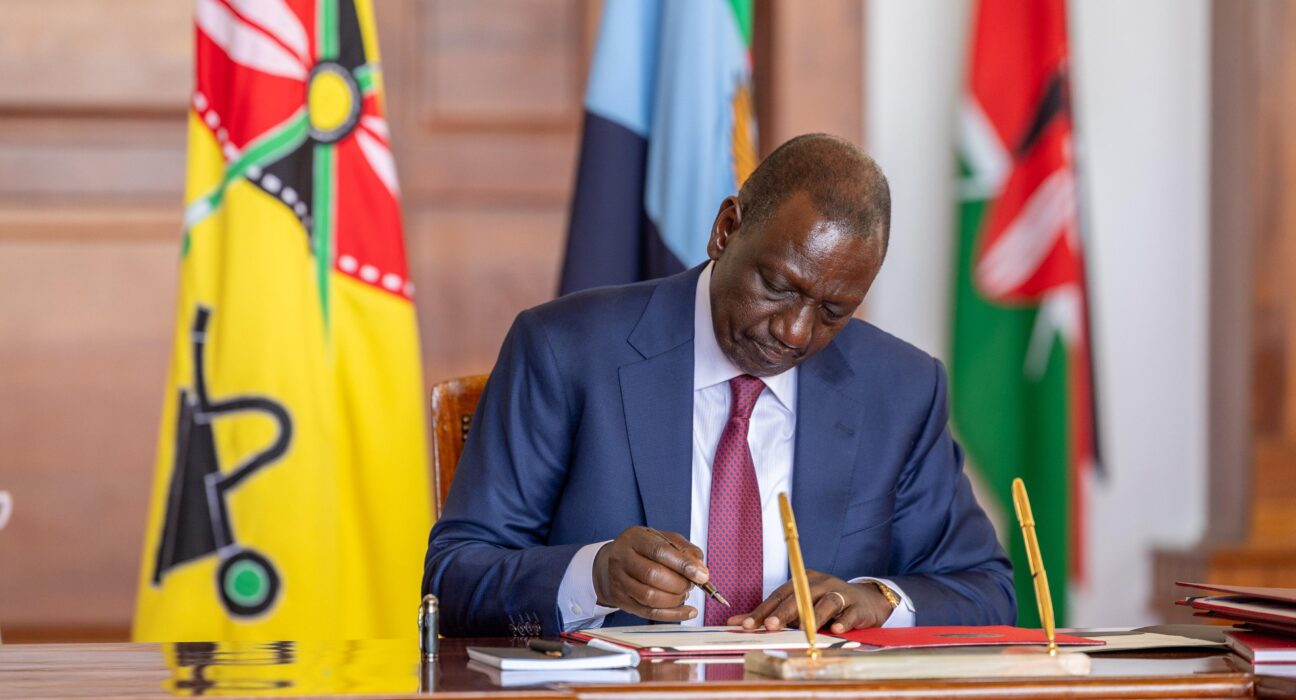
William Samoei Ruto has outlined a series of measures aimed at cushioning Kenya’s economy from supply chain disruptions linked to the ongoing conflict in the Middle East, as global markets face rising uncertainty.
In a statement issued on March 30, the President said the government is actively monitoring developments and coordinating responses across key ministries to mitigate potential economic shocks.
The conflict has already begun to affect global supply chains, with rising oil prices and logistical disruptions placing pressure on economies worldwide, including those in Africa.
Government Steps Up Monitoring and Coordination
President Ruto said he had received a comprehensive briefing from multiple government agencies, including the Ministries of Energy, Agriculture, and Trade, alongside the National Treasury and the Central Bank.
The consultations also involved private sector stakeholders, reflecting a coordinated approach to managing the evolving situation and identifying mitigation strategies.
The government has maintained close surveillance over the past month, relying on continuous assessments to guide policy responses.
Fuel Supply and Pricing Under Watch
One of the key areas of concern is the petroleum sector, where global price volatility is already impacting consumers.
While the full effect on local fuel prices is still being assessed, the government says measures are being put in place to ensure adequate supply and cushion consumers from sharp increases.
A key buffer has been Kenya’s government-to-government fuel procurement arrangement, which the President said has helped stabilise supply and moderate price shocks.
The Ministry of Energy is continuing to monitor international price movements and is working with the National Treasury to implement additional interventions if necessary.
Fertiliser Supply Secured for Planting Season
In the agriculture sector, the government moved to reassure farmers that fertiliser supply remains stable despite global disruptions.
According to the President, Kenya has sufficient fertiliser stocks to support the upcoming rainy season through to September, easing concerns over potential shortages that could affect food production.
This assurance comes at a critical time for the agricultural calendar, where input availability plays a key role in determining yields.
Tea Exports Show Resilience
Despite concerns about potential disruptions in key export markets, Kenya’s tea sector has demonstrated resilience.
The President noted that export performance remains strong, supported by diversification into new markets and strengthened trade relationships.
Recent data shows that 81 percent of tea offered for auction this month was sold, an improvement from 75 percent recorded in March 2025.
This performance highlights the sector’s adaptability in the face of shifting global trade dynamics.
Port Activity Signals Trade Opportunities
Kenya’s logistics and transport sector is also showing signs of resilience, particularly at the Ports of Mombasa and Lamu.
The Port of Lamu has recorded a significant increase in throughput, including the handling of more than 4,000 high-value motor vehicles destined for Gulf markets for onward transshipment.
This surge underscores the growing strategic importance of Kenya’s port infrastructure in regional and international trade.
The government plans to engage international logistics firms to capitalise on emerging opportunities and strengthen Kenya’s position as a regional trade hub.
Meat Exports Face Logistical Challenges
While some sectors are holding steady, others are experiencing strain.
Meat exports have been affected by logistical and freight challenges linked to the ongoing disruptions, impacting exporters reliant on affected routes.
The Ministries of Trade and Agriculture are expected to collaborate on identifying alternative solutions to support businesses in the sector and maintain export flows.
Balancing Risks and Opportunities
The government’s response reflects a dual approach of managing risks while leveraging emerging opportunities created by shifting global trade patterns.
By ensuring supply stability, supporting key sectors, and strengthening logistics networks, Kenya aims to maintain economic resilience amid external shocks.
President Ruto reaffirmed the government’s commitment to taking decisive action to safeguard the economic well-being of Kenyans as the situation continues to evolve.